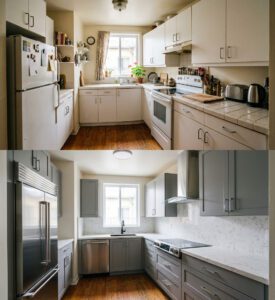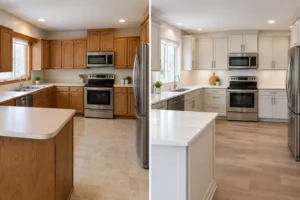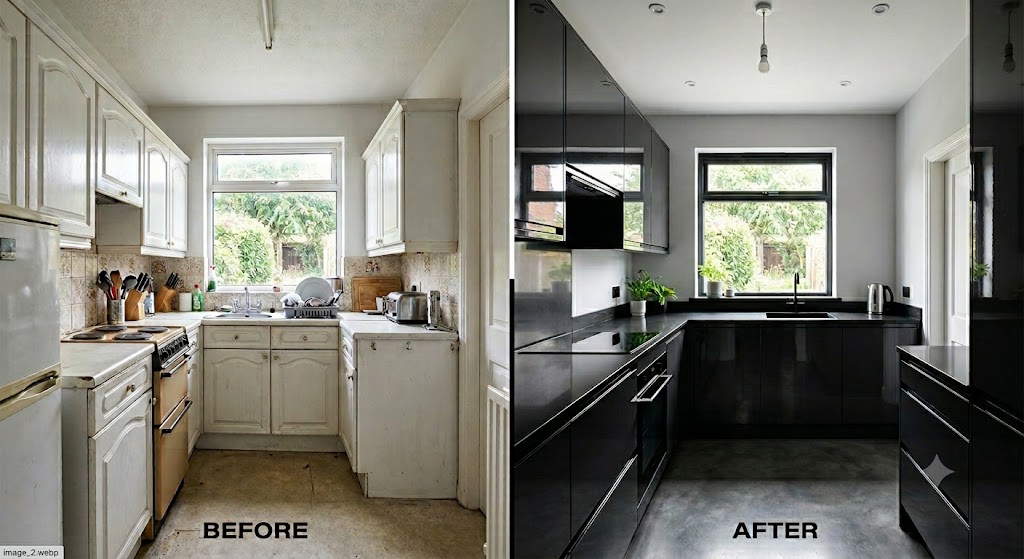
That question usually shows up at a very specific moment: you open a cabinet door for the hundredth time, notice it hangs a little crooked, and wonder whether you are looking at a minor update or the start of a full renovation. If you are asking when should cabinets be replaced, the honest answer is not based on age alone. It comes down to condition, function, and whether the boxes themselves are still worth keeping an this is where the experts at Kitchen Facelift can guide you.
For many homeowners, especially in well-built homes from the 1980s and 1990s, the cabinet structure is often better than the appearance suggests. The doors may look dated. The finish may feel tired. But that does not automatically mean everything needs to be torn out. In plenty of kitchens, replacement is necessary. In others, it is simply more disruption than the space requires.
When should cabinets be replaced instead of updated?
Cabinets should be replaced when the cabinet boxes are no longer structurally sound, the layout no longer works for how you live, or the existing materials cannot support the improvements you want to make. That is the practical threshold.
A worn finish is not the same as a failed cabinet. Neither are outdated door styles, old hinges, or shallow drawers. Those are often signs that the kitchen needs a facelift, not a full demolition. The bigger question is whether the underlying cabinetry still has life left in it.
If the boxes are solid, level, and properly attached, you may have options that preserve what works and improve everything you see. If the boxes are swollen, broken, pulling away from the wall, or built from materials that are deteriorating, replacement starts to make more sense.
The clearest signs your cabinets need replacement
Structural problems are usually the deciding factor. If cabinet sides are soft from water damage, bottoms are sagging, or the frames have shifted out of square, those are not cosmetic issues. They affect how the doors close, how shelves perform, and how safely the cabinetry functions over time.
Persistent moisture damage is another major red flag. A one-time leak under the sink can sometimes be repaired. But if water has repeatedly soaked the cabinet boxes, caused particleboard to swell, or led to mould concerns, replacement is often the wiser path. Once the core material breaks down, a beautiful new door on the front will not solve the problem.
Poor layout can also justify replacement. If your kitchen has too few drawers, awkward blind corners, insufficient storage, or appliance openings that no longer suit modern sizes, the issue may not be the finish. It may be the structure of the kitchen itself. Homeowners who want to move walls, change the footprint, add a large island, or fully redesign traffic flow are usually beyond refacing territory.
Then there is cumulative patchwork. If the kitchen has been modified repeatedly over the years, with mismatched cabinets, filler pieces, uneven heights, and improvised repairs, you may reach a point where starting fresh is simply cleaner and more sensible.
When cabinets look old but do not need replacing
This is where many homeowners spend more money and endure more disruption than they need to.
If your cabinets are solid wood or high-quality boxes with a dated door profile, faded stain, worn hardware, or a colour that no longer suits your home, replacement may be unnecessary. The same goes for kitchens that function well but feel visually stuck in another decade.
A lot of established homes across communities like Burlington, Oakville, Hamilton, and Waterloo were built with cabinetry that was actually made to last. The doors may say 1992. The boxes may still say another 20 years. When that happens, updating the visible parts of the kitchen can deliver a dramatic transformation without removing cabinetry that is still doing its job.
That is especially true for homeowners who like their current layout, want to protect existing stone countertops, or simply do not want weeks of trades moving through the house.
What refacing solves – and what it does not
Refacing works best when the cabinet boxes are in good condition and the goal is to modernize the kitchen without unnecessary demolition. New doors, drawer fronts, panels, hinges, and finishes can completely change the appearance of the room. In some cases, doors can be converted to drawers, end panels updated, and select modifications made for a more functional result.
It is a smart solution when the kitchen feels dated but not dysfunctional. You keep the sound structure and replace the surfaces that define the look.
What refacing does not do is fix severe structural damage or a fundamentally broken layout. If cabinets are failing, if walls need to move, or if the room needs a full redesign, preserving the old boxes can become more of a compromise than a benefit.
That is why a proper assessment matters. Good advice is not about steering every homeowner toward the biggest project. It is about understanding what the kitchen actually needs.
When should cabinets be replaced for functional reasons?
Sometimes cabinets are technically usable, but still not right for the household.
If daily frustration has become the norm, replacement may be worth considering. Maybe you have very little drawer storage and everything is buried behind doors. Maybe the cabinet depths are awkward, pantry space is inadequate, or the kitchen no longer fits the way your family cooks and gathers. Those are functional reasons, not cosmetic ones, and they deserve attention.
Still, there is a trade-off. Full replacement gives you more freedom to redesign, but it also tends to mean more demolition, a longer timeline, and more decisions. For some homeowners, that flexibility is exactly what they want. For others, especially those who already like the basic footprint, it is more than the project needs.
The right choice often comes down to this: are you trying to change the kitchen you have, or improve the kitchen you already like?
Age matters less than condition
People often assume cabinets have a clear expiration date. In reality, two kitchens built in the same year can be in completely different shape today.
One may have solid construction, careful use, and very little moisture exposure. The other may have swelling under the sink, broken drawer bases, peeling interiors, and misaligned boxes from years of wear. Age gives context, but it does not give the answer.
A well-built older cabinet can outperform a much newer one if it has been properly maintained. That is why the better question is not how old are the cabinets. It is how well are they built, and what shape are they in now?
A few decisions that help clarify the answer
If you are unsure which way to go, think about your kitchen in three layers.
First, look at structure. Are the boxes strong, level, and securely installed? If yes, that supports updating rather than replacing.
Second, look at function. Does the current layout still serve your life? If yes, preserving it may save time, mess, and unnecessary cost while still delivering a premium result.
Third, look at your finish goals. If what you want is a new style, better doors, updated drawer fronts, improved hardware, and a more current look, you may not need a full renovation to get there.
If all three layers point in the same direction, the decision usually becomes much easier.
The smartest choice is not always the biggest one
There is a common belief that if you are going to renovate, you might as well do everything. But homeowners who have been through renovations know that bigger is not always better. Sometimes it is just bigger.
If your cabinets are truly failing, replacement is the right move. If they are structurally sound and your layout still works, replacing them can mean throwing away value you already own. That is where a thoughtful cabinet facelift can be such a practical alternative. It respects the parts of the kitchen that still have years left in them while transforming the parts that make the whole room feel dated.
Kitchen Facelift has built its reputation on helping homeowners make that distinction clearly and confidently. Not every kitchen should be refaced. But many should.
The best renovation decisions usually feel less dramatic than people expect. They feel clear, well-timed, and right for the home you already have.