If your kitchen feels dated but the layout still works, you may be asking, how does kitchen cabinet refacing work? It is one of the most practical ways to give a kitchen a fresh, updated look without tearing the room apart. Instead of removing your existing cabinet boxes, refacing keeps the cabinet structure in place and updates the visible surfaces – typically the doors, drawer fronts, and exterior panels.
For many homeowners, that is the sweet spot. You get a dramatic visual change, a much faster project timeline, and far less disruption than a full remodel. When the bones of your kitchen are solid, refacing can make the whole space feel new in just a few days.
How does kitchen cabinet refacing work in a real kitchen?
Cabinet refacing starts with a simple idea: keep what is still working and improve what you see every day. The existing cabinet boxes stay in place as long as they are structurally sound and laid out in a way that still suits your needs. Then the old doors and drawer fronts are removed, the cabinet exteriors are covered with a matching finish, and new doors, drawer fronts, and hardware are installed.
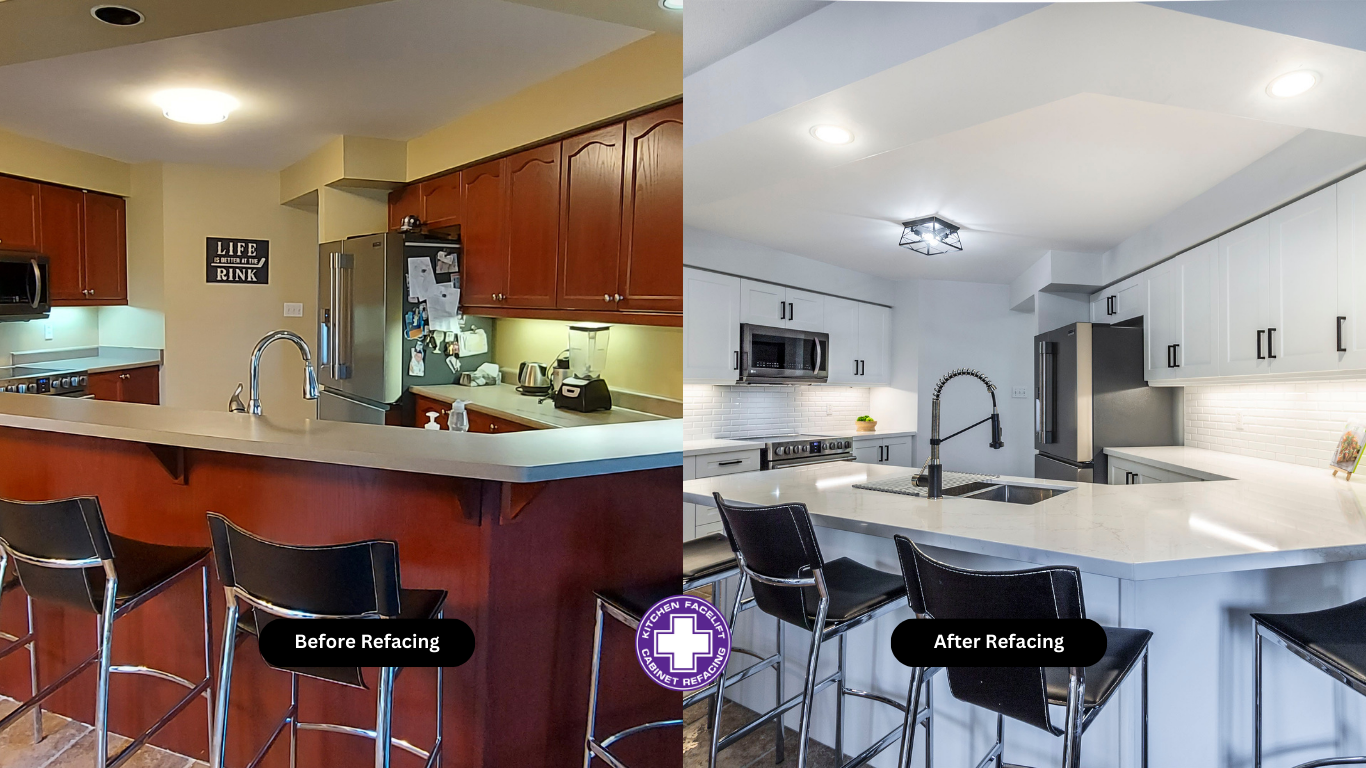
That means the shape of your kitchen usually stays the same, but the style can change completely. A dark oak kitchen can become a clean white shaker kitchen. A worn maple finish can shift to a warm wood tone with more current lines. New hinges, handles, and trim details help complete the transformation.
What makes this process attractive is not just the final look. It is the fact that your counters, plumbing, flooring, and daily routine are often far less affected than they would be during a full renovation.
What gets replaced and what stays?
This is where homeowners often want clarity. In a cabinet refacing project, the cabinet boxes usually stay. These are the fixed structures attached to the walls and floor. If they are sturdy, level, and in good shape, there is no need to remove them just to get a new appearance.
The parts that typically get replaced are the cabinet doors, drawer fronts, hinges, handles, and any visible end panels or trim that need updating. The exposed cabinet box surfaces are then finished to match the new doors and drawers. When done properly, the result looks cohesive, not patched together.
Some projects also include useful upgrades at the same time. Homeowners may add soft-close hinges, new drawer glides, crown molding, under-cabinet trim, or updated hardware. If you want a few functional improvements without redesigning the entire kitchen, refacing can often include those details.
The step-by-step cabinet refacing process
Every company has its own workflow, but the overall process tends to follow the same path.
It begins with an estimate and design discussion. This is where you share photos, measurements, or invite a specialist to your home to assess the space. You talk through door styles, finishes, colors, hardware, and any upgrades you want included. This early stage matters because refacing is only the right fit if your current cabinet layout still makes sense for how you use the kitchen.
Next comes measuring and product selection. Precise measurements are essential because the new doors and drawer fronts are made to fit your existing cabinetry. You also finalize the style details that shape the finished look.
Then installation begins. The old doors and drawer fronts are removed. Cabinet boxes are cleaned and prepared, and the exposed exterior surfaces are covered with matching material. New doors, drawer fronts, hinges, and handles are installed after that. Final adjustments are made so everything lines up, opens smoothly, and feels polished.
In many cases, the actual installation is completed in 2 to 3 days. That short timeline is one of the biggest reasons homeowners choose refacing.
Why refacing feels easier than a full remodel
A full kitchen renovation can be worthwhile when you need major structural changes, but it also brings a longer timeline, more trades, more dust, and more decisions. Refacing is appealing because it narrows the project to the parts that deliver the visual impact most people are after.
You are not replacing everything. You are improving the parts that shape the kitchen’s appearance every time you walk in. That usually means less mess, fewer moving pieces, and less time without a functional kitchen.
For busy households, that matters. If you have kids, work from home, or simply do not want your house to feel like a construction zone for weeks, refacing can be a much more manageable path.
When cabinet refacing is a smart choice
Refacing works best when your cabinet boxes are in good condition and your current layout is still functional. If you like where your sink, stove, and storage are located, but dislike the style, finish, or age of the cabinets, you are likely a strong candidate.
It is also a smart option when your kitchen needs a visual reset but not a full redesign. Maybe the doors are worn, the finish feels dated, or the overall room no longer matches the rest of your home. Refacing solves that kind of problem well.
For many long-term homeowners, it also feels like a more sensible investment. You can meaningfully improve the look and feel of the kitchen without committing to the larger scope of tearing everything out.
When refacing may not be the right fit
Refacing is not for every kitchen, and a trustworthy specialist should say that clearly. If your cabinet boxes are damaged, poorly built, water-stained, or unstable, keeping them may not make sense. The same goes for kitchens where the layout is frustrating and needs to be reworked.
If you want to move appliances, expand storage in a major way, add an island, or completely change the floor plan, a larger renovation may be the better route. Refacing improves what is there. It does not solve fundamental layout problems.
This is why the consultation stage matters so much. A good assessment helps you avoid putting a beautiful finish on cabinetry that no longer serves your needs.
What does the finished result look like?
When refacing is done well, the kitchen should not look like it had a partial update. It should look intentionally redesigned. The cabinet faces, doors, drawer fronts, and finishing details all work together to create a clean, consistent appearance.
The biggest visual difference often comes from style and color. Traditional raised-panel doors can be swapped for a simpler shaker profile. Dark finishes can be brightened. Outdated hardware can be replaced with something more current. These choices have an outsized effect because cabinetry takes up so much visual space in the kitchen.
A refaced kitchen can feel lighter, more modern, and more in step with the rest of your home without changing the room’s footprint.
How long does kitchen cabinet refacing last?
Homeowners often assume refacing is a temporary fix, but that depends on the materials and workmanship. Quality products, careful installation, and proper alignment make a big difference in durability. So does the day-to-day use of the kitchen.
A professionally refaced kitchen should hold up well for years when the existing cabinets are solid and the new components are made to fit properly. This is why product quality and specialist support matter. The process may be faster than a full remodel, but it still needs to be done with precision.
What affects the cost?
The final investment depends on the size of your kitchen, the number of doors and drawers, the finish you choose, and whether you add upgrades like soft-close hardware, trim details, or new accessories.
Refacing is often chosen because it offers meaningful savings compared with a full cabinet replacement, especially when your existing layout works well. But the real value is not only financial. It is also about time saved, disruption avoided, and the ability to transform the kitchen without starting from zero.
That balance is what makes it such a strong option for homeowners who want a noticeable update and a straightforward process.
Choosing the right company matters
Because refacing relies on fitting new materials to existing cabinetry, experience matters. Good measurements, clean finishing, and careful installation are what separate a kitchen that looks refreshed from one that looks obviously altered.
A strong refacing company should be clear about what is possible, what is not, and what results you can realistically expect. They should also make the estimating process feel approachable, not overwhelming. That is especially valuable if you want guidance on style choices and practical upgrades without turning the project into a months-long planning exercise.
Kitchen Facelift is built around that kind of homeowner-friendly process, with specialist support and a fast turnaround that helps make kitchen updates feel easier.
If your kitchen layout still works and your cabinets are structurally sound, refacing can be one of the smartest ways to refresh the heart of your home. A few well-chosen changes to the surfaces you see and touch every day can completely shift how the room feels – and that is often exactly the kind of update a home needs.