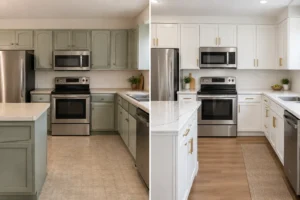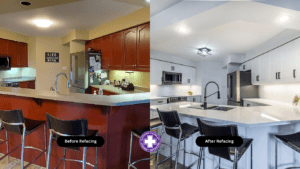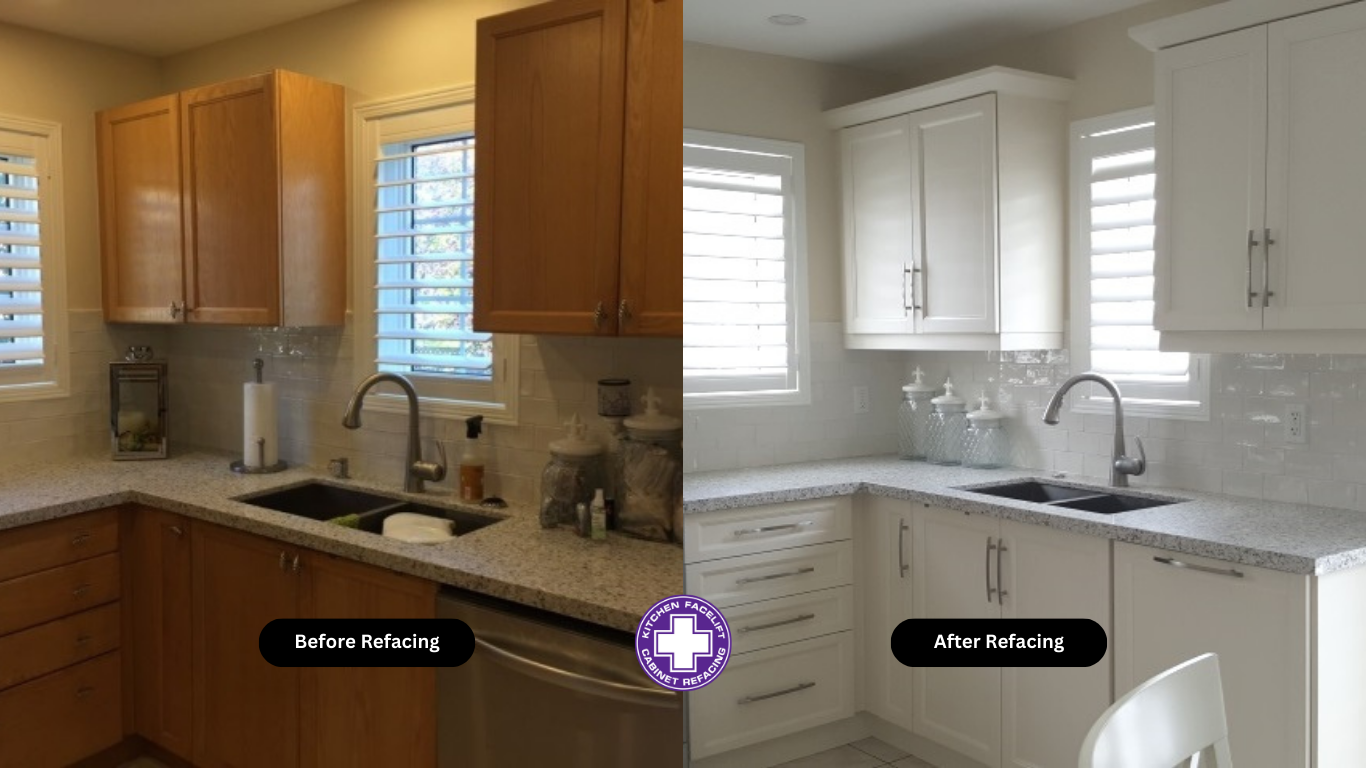
If you look around your kitchen and think, everything works, but nothing feels current, you’re asking the right question: is kitchen cabinet refacing worth it? For many homeowners, the answer is yes – especially when the layout still works, the cabinet boxes are solid, and the goal is a fresh new look without the cost, mess, and long timeline of a full renovation.
Refacing sits in a sweet spot. It gives you a major visual update by replacing cabinet doors and drawer fronts and applying a new finish to the existing cabinet structures. That means you keep what’s still working and improve what you see every day. If you want your kitchen to feel brighter, cleaner, and more modern without turning your home into a construction zone for weeks, refacing is often the smarter move.
When is kitchen cabinet refacing worth it?
Cabinet refacing is worth it when your kitchen needs a style update, not a full redesign. If your layout works, your cabinets are structurally sound and aren’t suffering from serious water damage, refacing can deliver the transformation most homeowners are after for a fraction of the cost of replacement.
That matters because, in many kitchens, cabinets take up the most visual space. Change the doors, drawer fronts, color, and finish, and the whole room feels different. What looked dated can feel clean and current in just a few days.
It’s also worth it if you’re trying to improve your home without overbuilding for your neighborhood or your long-term plans. A full remodel can be the right choice in some homes, but not every kitchen needs to be taken down to the studs to look better and function well.
Why homeowners choose refacing over replacing
The biggest reason is value. Full cabinet replacement is expensive because you’re paying for demolition, disposal, new boxes, installation, and often the ripple effects that come with disturbing countertops, flooring, backsplash, and plumbing connections. Refacing avoids much of that.
The second reason is speed. A kitchen remodel can drag on for weeks. Refacing is much faster because the cabinet framework stays in place. For busy households, that shorter timeline matters just as much as the price.
The third reason is disruption. Most homeowners don’t want to lose the use of their kitchen any longer than necessary. They want an easier process, a clear estimate, and a finished result that feels worth the investment. That’s where a focused service like Kitchen Facelift really stands out.
What you actually get with cabinet refacing
Refacing is more than a quick cosmetic patch. Done properly, it creates a polished, intentional update. The existing cabinet boxes are kept, then finished to match the new doors and drawer fronts. Hardware can be updated at the same time, and many homeowners also pair refacing with new countertops, backsplash, or lighting for an even bigger impact.
This approach works especially well in kitchens where the footprint already makes sense. If you like where things are and how your kitchen functions, there’s no need to pay for a complete reset just to get a more modern style.
That’s why homeowners are often surprised by how dramatic the change can be. You’re not changing one detail. You’re changing the surfaces that define the room.
The biggest trade-off to understand
Refacing alone, is not the best answer for every kitchen. If the cabinet boxes are damaged, the layout is awkward, or you want to move walls, appliances, or plumbing, a full or partial remodel may make more sense.
This is the key difference: refacing improves the kitchen you have, while a full or partial renovation changes the kitchen itself. If your frustration is mostly about appearance, just refacing is a great fit. If your frustration is about flow, storage design, or a poor layout, refacing may only solve part of the problem. Kitchen Facelift can fully replace or simply add to you existing kitchen.
That’s why an honest assessment matters. The best renovation choice isn’t always the biggest one. It’s the one that matches your goals.
Is kitchen cabinet refacing worth it financially?
In many cases, yes. Refacing typically costs far less than replacing all your cabinetry, and it allows you to put your budget where it will be noticed most. For homeowners who want strong visual improvement without the premium price tag of a complete remodel, that’s a practical win.
There’s also a hidden financial benefit: fewer project complications. Once you remove existing cabinets, other upgrades often become necessary. Walls may need repair. Flooring may need patching. Countertops may no longer fit. Timelines stretch, and so do budgets.
Refacing helps control that domino effect. It keeps the project focused, which is one reason so many homeowners find it easier to move forward with confidence.
Who gets the most value from refacing?
Refacing tends to make the most sense for long-term homeowners who want to enjoy their kitchen now, not someday. It also works well for families who can’t afford a drawn-out renovation and for homeowners preparing to sell who want a meaningful visual update without overspending.
It’s a strong fit if you want your kitchen to look custom and refreshed but don’t need to rework the floor plan. And if you appreciate a simpler process – ballpark pricing, photo-based estimates, in-home consultation, and a quick installation timeline – refacing becomes even more appealing.
For that reason, many homeowners see it as a practical middle ground. It’s not the cheapest cosmetic fix, but it’s far more substantial than repainting. And it’s not as invasive or expensive as starting over.
Signs refacing alone may not be the solution
There are times when a full or partial replacement may be required. If your cabinets are flimsy, warped, swollen from moisture, or poorly built to begin with, putting new fronts on them may not be a smart long-term investment.
The same goes for kitchens with serious functional problems. If you need more storage, better workflow, taller uppers, a new island, or a completely different layout, refacing alone won’t solve those issues.
This doesn’t make refacing less valuable. It just means the project has to match the condition of the kitchen and what you want the result to be.
If you believe your kitchen requires more than just refacing, Kitchen Facelift can add to or completely replace your existing kitchen.
What makes refacing feel worth it to homeowners
Usually, it comes down to the experience as much as the finished look. Homeowners want to feel that the process is manageable. They want to know what things will cost, how long the work will take, and whether the result will really make a difference.
A good refacing project checks those boxes. It feels efficient. It respects your time and your home. It gives you a visible upgrade without weeks of noise and disruption.
That’s why companies like Kitchen Facelift have built their service around simplicity as much as craftsmanship. When the path from estimate to installation feels clear, homeowners are more comfortable making a change they’ve often put off for years.
The real question to ask before you decide
Instead of only asking is kitchen cabinet refacing worth it, ask this: what exactly do I want to fix?
If the answer is dated style, worn finishes, and a kitchen that no longer feels like your home, refacing can be an excellent investment. If the answer is poor layout, broken cabinets, and major functional issues, you may need something more involved.
The good news is that many kitchens don’t need a total overhaul to feel transformed. They need the right update, not the biggest one.
A kitchen should work for real life – rushed mornings, family dinners, weekends at home, and all the little moments in between. If your cabinets are still solid and your layout still serves you, refacing can be one of the smartest ways to make the room feel new again without making the whole process harder than it needs to be.