A kitchen can feel dated long before it stops working. Maybe the honey-oak doors are showing their age, the hardware feels tired, or the room no longer reflects the rest of your home. But if your cabinets are solid, the layout works, and you are not eager to live through weeks of demolition, a full renovation may not be the right first move.
When homeowners look for the best alternatives to kitchen remodel projects, they are usually looking for more than a new look. They want a sensible investment, a clear process, and a result that feels genuinely finished. The right choice depends on what is behind the cabinet doors, what you hope to change, and how much disruption your household can reasonably take on.
Kitchen Facelift covers the area from Oakville to Kitchener/Cambridge and north to Milton.
Start With What Is Worth Keeping
A full kitchen remodel makes sense when the room has serious functional problems: failing cabinetry, water damage, unsafe electrical work, or a layout that no longer supports how you live. It can also be the right answer when walls need to move or plumbing and appliances must be relocated substantially.
But many kitchens, particularly those built in the 1980s and 1990s, have sturdy cabinet boxes that are still doing their job beautifully. Replacing them simply because the doors and finishes look dated creates more demolition than the project requires. If you like the footprint of your kitchen and the cabinet interiors are in good condition, preserving the structure can be the smarter path.
Before making a decision, look honestly at the cabinet boxes. Open doors and drawers. Check for soft, swollen areas around the sink, sagging shelves, loose joints, and signs of persistent moisture. Then ask a practical question: if the visible surfaces were completely updated, would you still like your kitchen?
1. Cabinet Refacing: The Complete Visual Transformation
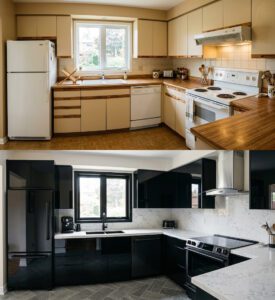
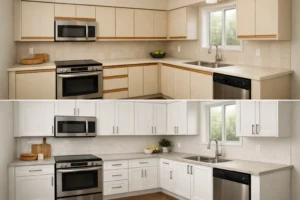
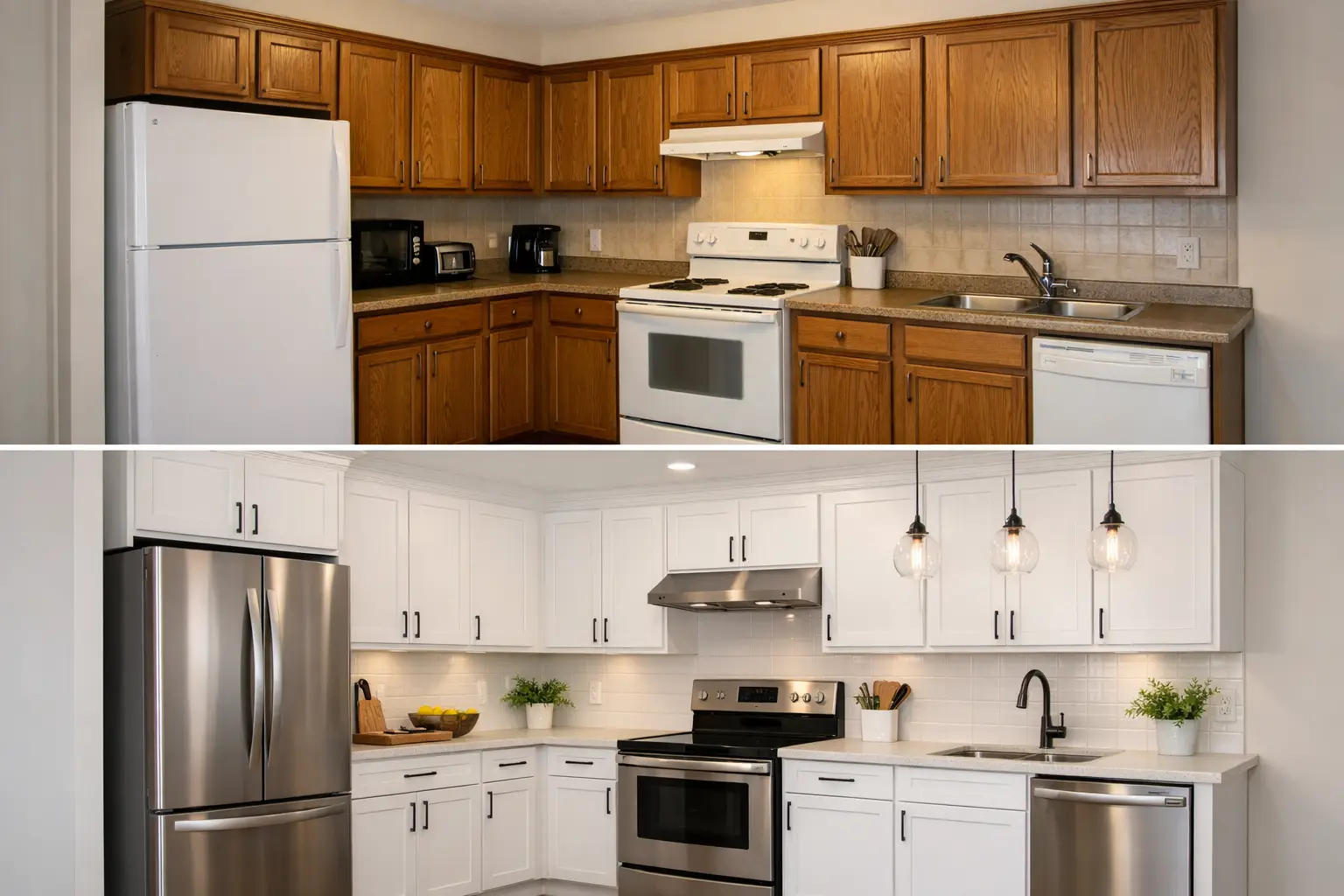
For homeowners with sound cabinetry and a workable layout, cabinet refacing is often one of the best alternatives to a kitchen remodel. The existing cabinet boxes remain in place, while the exterior is transformed with custom-fit doors, drawer fronts, panels, and finishes. New hardware completes the change.
This is not a coat of paint or a temporary cover-up. A professionally designed refacing project is tailored to the exact dimensions of your kitchen. It can update an older style with clean-lined doors, richer wood tones, modern painted finishes, or a more timeless profile that suits the rest of your home.
Refacing can also make meaningful improvements to function. Depending on the cabinet construction, doors can be converted to drawers, decorative sections can be refined, and adjustments can be made for a new appliance or countertop. The goal is to retain what is working while improving what you see and use every day.
The biggest advantage is the experience. Rather than dismantling an entire kitchen, the work focuses only on the elements being changed. At Kitchen Facelift, most transformations are completed in two to three days, which matters when your kitchen is at the center of family life.
Refacing is not the right fit for every home. It works best when cabinet boxes are structurally sound and the existing layout already serves you well. If you need to relocate the sink, remove walls, or correct major construction issues, a larger renovation may be more appropriate.
2. Cabinet Painting: A Lighter Refresh With Limits
Painting existing cabinet doors can change the mood of a kitchen quickly, especially when the door style itself is simple and in good condition. A fresh white, warm neutral, or deep accent color can make older cabinetry feel more current.
The trade-off is durability and detail. Painted cabinet surfaces need proper preparation, a controlled finishing process, and realistic expectations about wear in high-touch areas. Hinges, edges, interior surfaces, and ornate profiles can still reveal the age of the kitchen. Painting also does not change a door style that feels too dated for your taste.
This option can be a reasonable fit when you want a color change and your doors have a profile you still enjoy. It is less compelling when the kitchen needs a more complete redesign, improved drawer function, or a finish with the tailored look of new doors and drawer fronts.
3. New Countertops and Backsplash: A Surface-Led Update
Countertops and backsplash tile have a powerful effect on how a kitchen feels. Replacing a busy laminate counter with quartz, or updating an older backsplash with a clean, well-chosen tile, can bring light and polish into the room.
This approach is especially appealing when cabinet finishes are already current. It can also be a thoughtful next step for homeowners who have previously invested in stone countertops and want their cabinetry to look equally refined.
Still, surfaces cannot solve every visual problem. A beautiful countertop beside worn doors, dated hardware, or mismatched panels can make the contrast more noticeable. If both cabinetry and surfaces need attention, coordinating the decisions as one plan usually produces a more intentional result.
There are practical considerations, too. Countertop replacement may require backsplash removal, sink disconnection, and careful measuring. A good project plan accounts for these details upfront, rather than treating them as surprises once the work begins.
4. Hardware, Lighting, and Fixtures: The Finishing-Layer Option
Sometimes a kitchen does not need a transformation. It needs better finishing layers. New pulls and knobs, a refined faucet, updated pendants, under-cabinet lighting, or a more current dining fixture can shift the room from dated to considered.
These changes work best when the cabinets, counters, and flooring already have a cohesive foundation. Think of them as the accessories that make a well-designed room feel complete, not as a substitute for cabinetry that is visibly worn or no longer suits your style.
Lighting deserves particular attention. Bright, even task lighting makes food preparation easier, while warm accent lighting gives the room a more welcoming feel after dinner. It is a smaller change with an everyday payoff.
5. Selective Cabinet Changes: Improve How the Kitchen Works
You may not need to replace every cabinet to improve your kitchen experience. A selective update can target the places that frustrate you most: a difficult corner cabinet, a base cabinet that should become drawers, or a section that no longer accommodates a new refrigerator or range.
This route is highly specific, which is both its strength and its challenge. Matching finishes, door styles, dimensions, and proportions requires careful planning. An isolated change that does not blend with the surrounding cabinetry can look like an afterthought.
Selective updates are most successful when they are part of a broader design plan. For example, new drawer fronts, doors, hardware, and a targeted cabinet conversion can work together to create a kitchen that looks cohesive while improving daily function.
6. Keep the Layout, Rework the Look
Homeowners often assume a dramatic kitchen transformation requires a dramatic layout change. In reality, the layout is often the part they like best. The sink is where it should be. The work triangle functions well. The room connects naturally to the dining area or family room.
Keeping that footprint can protect your budget, reduce disruption, and avoid unnecessary plumbing and electrical work. It also lets you focus your attention on the changes that deliver the most visible value: cabinetry, counters, backsplash, lighting, and storage details.
This is the central idea behind the best alternatives to a kitchen remodel: do not replace what is functioning simply because the room needs a new chapter. A well-planned update should respect the home you have while making it feel like the home you want.
How to Choose the Right Path
The decision becomes clearer when you separate structural needs from aesthetic wants. If the cabinet boxes are damaged, the layout is genuinely frustrating, or major systems need work, explore a full renovation with a qualified professional. If the structure is sound and the kitchen mainly feels outdated, refacing or a coordinated surface update may give you the result you want with far less upheaval.
It also helps to consider timing. Busy households, families preparing to sell, and homeowners who simply do not want their home overtaken by construction often value a shorter, more contained project. That does not mean settling for a partial result. It means choosing a process designed around the parts of your kitchen that deserve to stay.
A good consultation should make the options feel clearer, not more complicated. Bring photos, talk through what bothers you most, and ask what can realistically be preserved. The most satisfying kitchen projects begin with that simple bit of honesty: keep the good bones, change what no longer feels like you, and make every decision count.