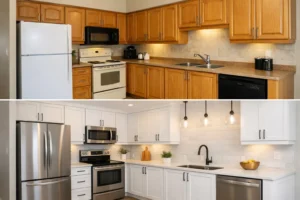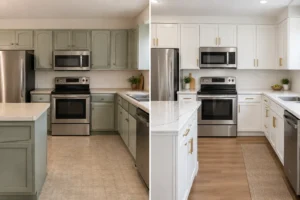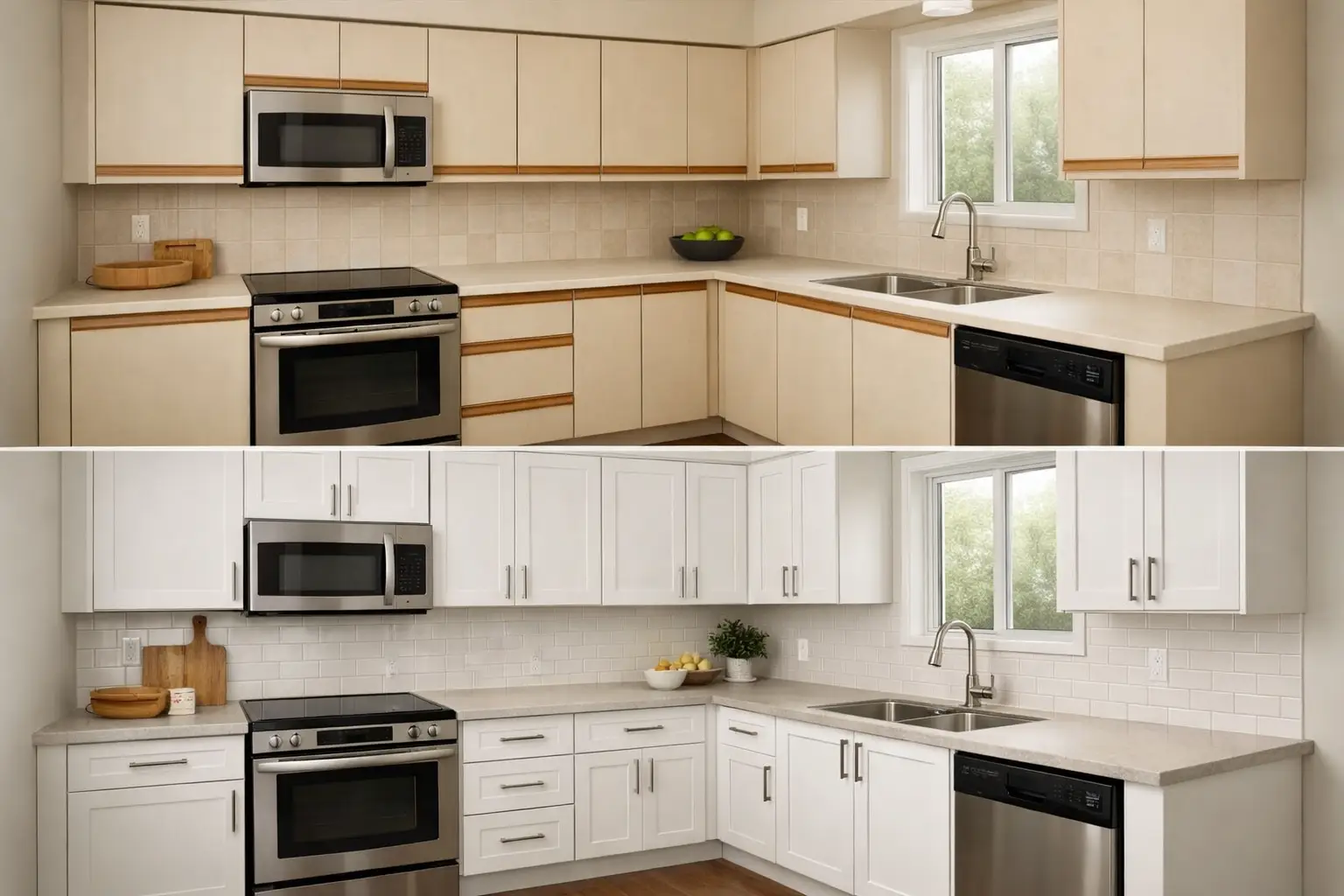
If you have looked at your kitchen and thought, “The layout still works, but everything looks tired,” you are asking the right question: how much is a kitchen cabinet refacing? For many homeowners, refacing lands in the sweet spot between living with an outdated kitchen and taking on a full renovation. You keep the cabinet boxes that still have life in them, and transform what you see every day.
That makes refacing a smart option when your cabinets are structurally sound, your kitchen footprint still suits your life, and you want a fresh, current look without weeks of disruption. The price can vary quite a bit, though, and the reasons behind that range matter just as much as the number itself.
How much is a kitchen cabinet refacing, really?
In most cases, kitchen cabinet refacing costs a fraction of a full kitchen remodel, but it is still a custom project. For an average-sized kitchen, many homeowners can expect a refacing investment somewhere in the range of roughly $8,000 to $18,000, with higher-end projects going beyond that depending on materials, upgrades, and scope.
That is a broad range for a reason. A smaller kitchen with straightforward door replacements and standard finishes will sit very differently from a larger kitchen with pantry walls, drawer conversions, new side panels, crown molding, hardware, and preparation for quartz countertops. Refacing is not one fixed product. It is a tailored transformation.
If you are comparing that number to a full renovation, the appeal becomes clear. A full gut project often brings demolition, trades, temporary kitchen disruption, and decisions that multiply quickly. Refacing is usually far more efficient because you are improving what matters visually and functionally without replacing what is already working.
What drives the cost of kitchen cabinet refacing?
The biggest factor is simply how much kitchen you have. More doors, more drawer fronts, more exposed end panels, and more trim all mean more materials and labor. A compact kitchen with one short run of cabinetry will naturally cost less than a large U-shaped kitchen with an island and floor-to-ceiling pantry units.
Material choice also has a meaningful impact. Some homeowners want a clean, durable painted finish in a classic style. Others prefer the warmth of woodgrain textures, more detailed door profiles, or specialty finishes. Premium materials tend to raise the investment, but they also shape the final look in a big way. This is one of those areas where choosing the right finish matters more than chasing the lowest number.
Then there is the level of transformation. Some projects are true refacing jobs – new doors, drawer fronts, hinges, handles, and matching panels over the existing cabinet frames. Others include smart upgrades that make the kitchen work better, like converting lower cabinets into deep drawers, adding custom trim, replacing valances, modifying cabinetry for a new fridge, or removing a backsplash to prepare for stone countertops.
Those upgrades are often worth it because they make the kitchen feel truly renewed, not simply re-skinned. But they do add to the total.
What is usually included in cabinet refacing?
A professionally done cabinet refacing project often includes new custom-fit doors and drawer fronts, new veneer or matching material on visible cabinet surfaces, updated hardware, soft-close options, and installation. Depending on the kitchen, it may also include decorative end panels, crown molding, light rail, toe kick updates, and small modifications to improve function.
This is where homeowners sometimes get tripped up when comparing quotes. One company may price only the visible basics, while another includes the finishing work that makes the kitchen look complete. A lower starting figure can sound attractive until you realize it does not include the side panels, trim details, drawer conversions, or adjustments needed to tie everything together.
A good estimate should make it clear what is included, what is optional, and what conditions could change the scope once measurements are confirmed.
When refacing makes financial sense
Refacing tends to make the most sense when your existing cabinet boxes are solid, well-built, and still function properly. That is especially true in many homes built in the 1980s and 1990s, where the cabinet construction itself often has plenty of life left. If the bones are good, replacing only the outward-facing components can be a very intelligent investment.
It also makes sense if you already have countertops you want to keep. Homeowners who have invested in granite or quartz often do not want to disturb them just to update the style of the kitchen. Refacing lets you modernize the look around those surfaces without tearing everything apart.
And for busy households, time matters. A project completed in a few days instead of several weeks has real value. That may not show up as a line item on a quote, but it absolutely affects the overall renovation experience.
When refacing may not be the right fit
There are times when refacing is not the best answer. If the cabinet boxes are damaged, poorly installed, or no longer suit your storage needs, replacing them may be the better long-term path. The same is true if you want a major layout change, such as moving appliances, relocating plumbing, or completely reworking the footprint.
Refacing works best when the structure is worth preserving. It is not a workaround for cabinets that have reached the end of their useful life. A trustworthy cabinet specialist should tell you that plainly.
Why prices can vary so much between companies
Not all cabinet refacing is equal. The design process, quality of materials, precision of fit, and skill of installation all affect the outcome. So does the level of care taken in your home.
A custom-measured, professionally installed project using Canadian-made components will usually be priced differently than a more basic approach. That does not just reflect materials. It reflects consistency, finish quality, hardware performance, and how well the final kitchen holds up to daily life.
The estimating process matters too. Some companies provide a fast number with very little detail. Others begin with ballpark pricing, review photos, and then confirm the project in person with samples and exact measurements. That extra clarity helps you understand where your money is going and whether the proposal truly matches your goals.
How to budget for a kitchen cabinet refacing project
If you are trying to set a realistic budget, start by deciding whether you want a visual refresh or a fuller transformation. A simple style update is one thing. Adding drawers, trim details, new panels, appliance modifications, or countertop-related prep is another.
It helps to think in layers. First, there is the core refacing work – doors, drawer fronts, finished surfaces, and hardware. Then there are the upgrades that improve function and polish the final look. Finally, there are project-specific needs, such as backsplash removal or cabinet adjustments for a new appliance.
This layered approach gives you a more honest planning number. It also helps you prioritize. Sometimes the right move is to invest a little more in the details that make the kitchen feel custom and complete, rather than spending broadly on changes you will barely notice.
A quick note on value, not just price
When homeowners ask how much is a kitchen cabinet refacing, they are usually asking two questions at once. The first is, “What will I spend?” The second is, “Will it be worth it?”
That second question is the more important one. A well-executed refacing project can give you the visual impact of a much larger renovation while preserving what already works. It can protect existing countertops, avoid unnecessary demolition, and spare your household from a long, messy process. For the right kitchen, that is not a compromise. It is the smarter path.
At Kitchen Facelift, that is why the process starts with clarity. Homeowners get a realistic ballpark first, then a more precise assessment based on photos, samples, and measurements. It keeps the experience grounded, practical, and far less overwhelming.
If your kitchen layout still makes sense and your cabinets are worth saving, refacing may be one of the most satisfying upgrades you can make. The best next step is not guessing from generic numbers online. It is getting a real assessment of your kitchen, your goals, and the level of transformation you actually want. That is where the price starts to make sense, and where the right decision gets much easier.