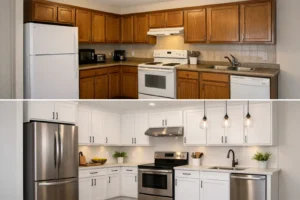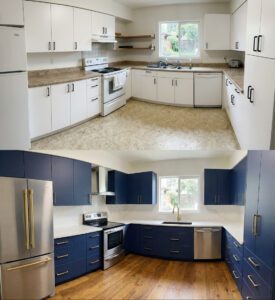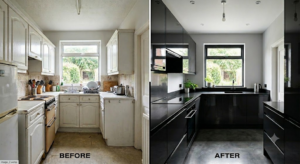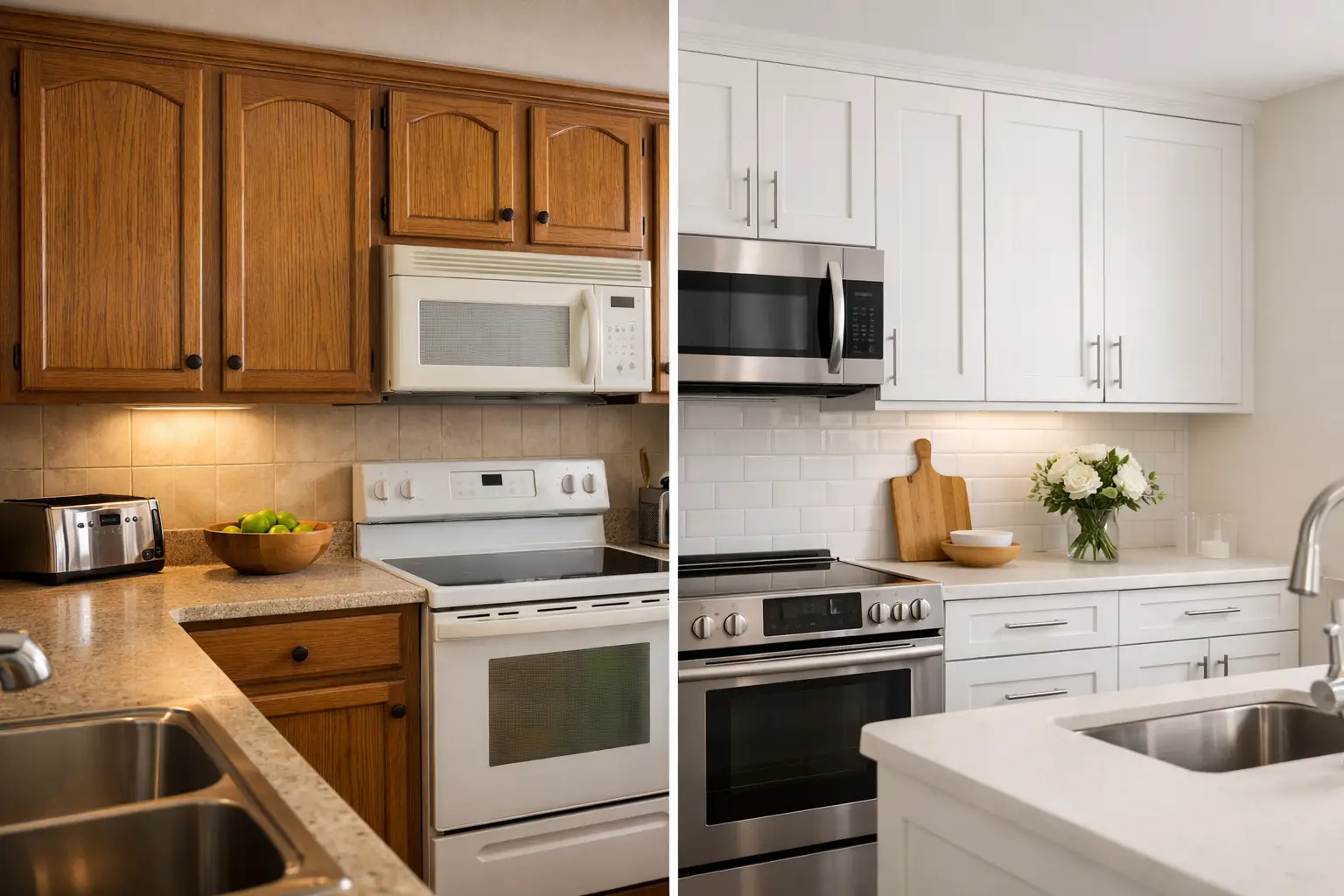
You usually know the moment your kitchen starts feeling tired. The cabinet boxes are still solid. The layout still works. But the doors, drawer fronts, and finishes make the whole room feel stuck in another decade. That is exactly where kitchen cabinet refacing before and after becomes so compelling – not because everything changes, but because the right things do.
For many homeowners, the surprise is how dramatic the transformation can be without tearing the kitchen apart. When the cabinet structure is in good shape, refacing gives you a genuine visual reset with far less disruption than a full renovation. The “before” is often dated oak, worn thermofoil, faded stain, or a style that no longer matches the rest of the home. The “after” can look brighter, cleaner, more current, and far more intentional in just a few days.
What kitchen cabinet refacing before and after really means
A lot of people assume refacing is just swapping out a few doors. In practice, a well-executed project is much more complete than that. The cabinet boxes stay in place, but the visible surfaces are updated with new doors, drawer fronts, matching finishes, and finishing details that make the kitchen feel cohesive.
That before-and-after difference matters because kitchens are visual spaces. Even if your layout remains exactly the same, changing the color, profile, hardware, and surface finish can completely alter how the room feels. A heavy, dark kitchen can become bright and open. A plain builder-grade look can become more custom. A dated style can start to fit the home again.
The key is understanding what refacing can and cannot do. It is ideal when your cabinet boxes are structurally sound and your layout already serves your daily life. It is not the right fit if the cabinets are damaged beyond repair or if you need a full redesign of the room.
The most common before-and-after transformations
The biggest change is usually visual weight. Many older kitchens have dark wood tones, visible wear around handles, and door styles that make the room feel crowded. After refacing, the same footprint can feel calmer and more spacious simply because the surfaces are cleaner and the design choices are more current.
Color plays a huge role here. Light painted finishes can make a compact kitchen feel bigger. Warm woodgrains can make an older space feel more grounded and updated at the same time. Homeowners who already have quartz or granite often find that refacing helps the cabinets finally match the quality of the countertops they invested in years ago.
Storage can also improve, even without changing the overall layout. In some cases, doors can be converted into drawers, which makes lower cabinets more practical for pots, pans, and everyday kitchen tools. That means the “after” is not just prettier. It can also be easier to live with.
Before: functional but dated
Most refacing projects start with a kitchen that still works. The cabinet boxes open and close. The footprint suits the home. The countertops may even be worth keeping. What is not working is the appearance. The style feels old, the finish shows its age, or the kitchen no longer reflects the rest of the house.
This is especially common in homes built in the 1980s and 1990s, where the cabinetry itself was often made well but the look has simply fallen behind. Replacing everything in that situation can be unnecessary. Preserving what still has value is often the smarter move.
After: modernized without the chaos
A strong after result looks intentional, not patched together. The new doors fit properly, the finish is consistent, and the kitchen feels designed rather than updated in pieces. Hardware, crown details, side panels, and trim all help create that effect.
What homeowners tend to appreciate most is that the room feels new without the drawn-out stress of a major demolition. When the process is handled properly, there is less mess, less downtime, and far less disruption to everyday life.
Why the transformation feels bigger than it is
There is a practical reason kitchen cabinet refacing before and after gets such a strong reaction. Cabinets occupy a huge amount of visual space in a kitchen. Change them, and you change the room.
That makes refacing one of the highest-impact ways to modernize a kitchen when the bones are still good. You are not paying to remove and rebuild things that already function. You are focusing your investment on the parts your eyes actually notice every day.
For homeowners who are happy with their layout, this often feels like the most intelligent path forward. It respects what is working while still delivering a dramatic improvement.
What can be changed during a refacing project
This is where expectations matter. Refacing is not one fixed package. Depending on the kitchen, the before-and-after scope may include new doors and drawer fronts, updated exposed ends, new hardware, trim details, and adjustments to support other upgrades.
Sometimes that means preparing for quartz countertops. In other cases, it means removing an outdated backsplash, modifying an area for a new appliance, or converting select cabinet sections for better function. These details are important because they are often what make the finished kitchen feel complete rather than halfway updated.
It is also why custom assessment matters. Two kitchens can look similar at first glance and need very different solutions behind the scenes.
The trade-offs homeowners should know
Refacing is a strong option, but not every kitchen should be refaced. The right answer depends on the condition of your cabinetry and your goals.
If you love your current layout and your cabinet boxes are solid, refacing can deliver excellent value with far less disruption. If your kitchen has serious structural issues, poor flow, or major storage limitations that require a new floorplan, a full renovation may make more sense.
There is also a quality spectrum. A rushed or poorly matched refacing job can look obviously redone. A professionally installed, custom-fit project looks integrated and polished. That difference shows up in the before-and-after result more than anything else.
Timeline matters more than most people expect
One of the most appealing parts of a refacing transformation is the speed. A full renovation can turn daily routines upside down for weeks. Refacing is appealing because the kitchen is not being dismantled down to the studs when that level of work is unnecessary.
For busy households, that matters. Families still need breakfast. People still need to get out the door for work and school. The appeal of a beautiful kitchen is real, but so is the appeal of getting your home back quickly.
That is why many homeowners choose refacing even when they could afford a larger project. They are not settling. They are choosing a more efficient path that aligns with how they want to live.
What to look for in before-and-after examples
Photos can be helpful, but they only tell part of the story. A good before-and-after example should show more than a trendy color swap. Look for consistency in finish, clean installation lines, thoughtful hardware placement, and details that make the kitchen feel complete.
Ask yourself whether the after photo looks believable for a lived-in home, not just a staged image. Does it solve the right problem? Does it preserve good existing elements? Does it feel like the kind of update that will still look right a few years from now?
Those questions matter because the best kitchen transformations are not only dramatic. They are durable in both style and workmanship.
Is kitchen cabinet refacing right for your before and after?
If your kitchen feels outdated but the layout still works, refacing is worth serious consideration. It is especially well suited to homeowners who want premium results without unnecessary demolition, long timelines, or waste. It also makes particular sense when you already have quality countertops or well-built cabinet boxes that do not need replacing.
A company like Kitchen Facelift approaches this process the way many homeowners wish all renovations were handled – clearly, professionally, and with respect for the home. The goal is not to create more work than necessary. The goal is to create a kitchen that feels genuinely transformed, with as little disruption as possible.
That is the real power of before and after. Not the shock factor of a dramatic photo, but the relief of seeing your kitchen become current, functional, and beautiful without putting your life on hold.
If your cabinets are solid and your frustration is mostly with what you see every day, the smartest renovation may not be a full teardown at all. It may be the one that keeps the good, fixes the dated, and lets you enjoy your kitchen again much sooner.