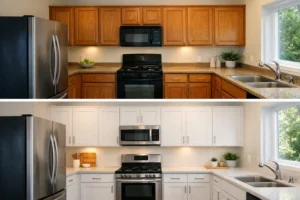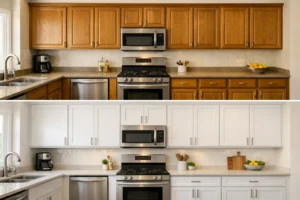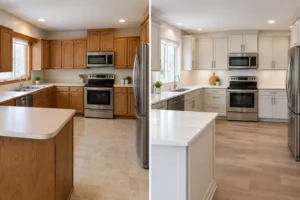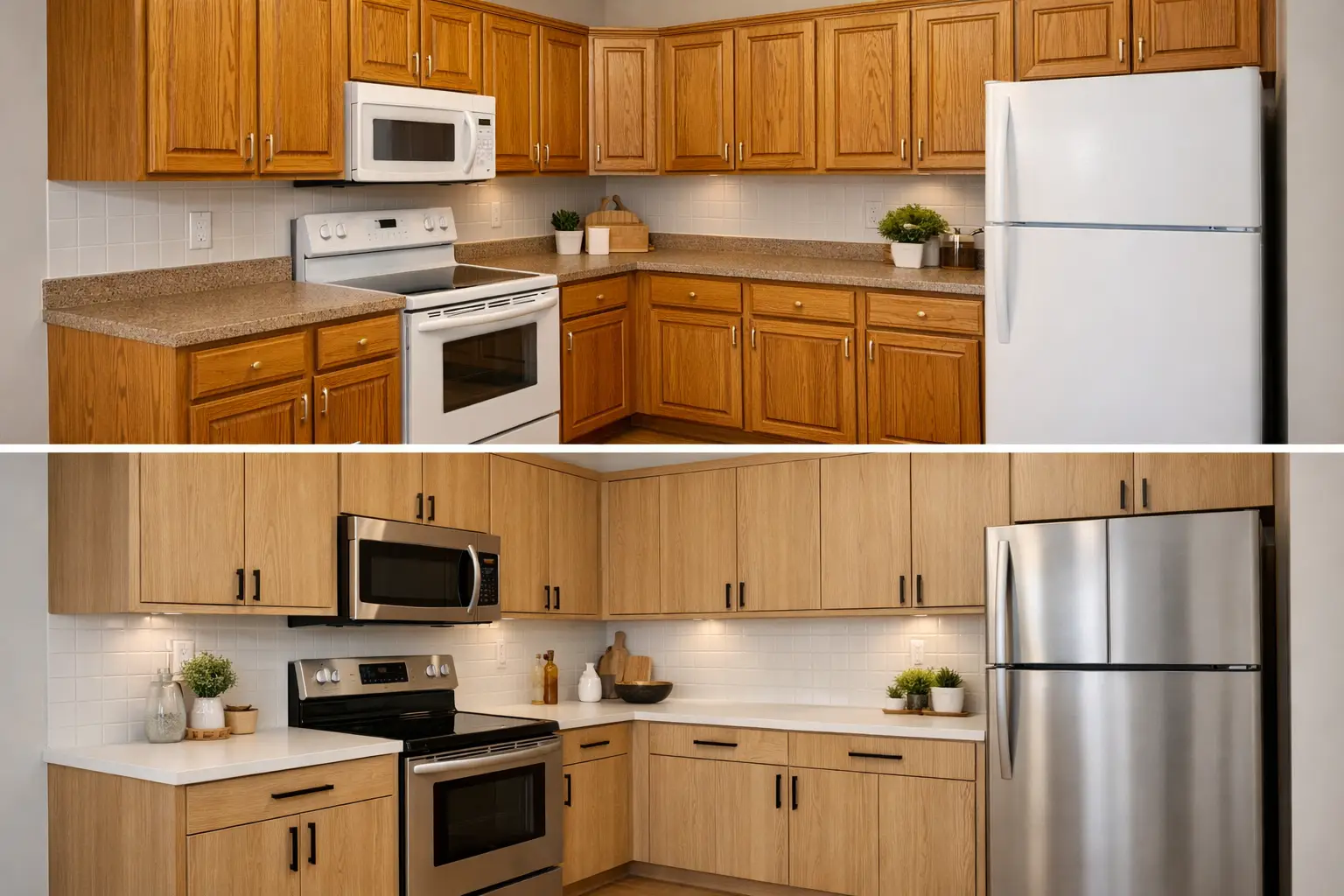
If your kitchen still has honey oak cabinets from the 1980s or 1990s, you do not need to start from scratch to make it feel current. One of the most practical answers to how to modernize oak cabinets is also the one many homeowners overlook – keep the solid cabinet boxes that still work, and change the parts that make the room look dated.
That approach matters because oak itself is not the problem. In many homes, those cabinets were built well. What dates the kitchen is usually the orange-toned finish, raised-panel doors, older hardware, busy trim details, and the way everything competes with newer flooring, counters, and lighting. When you separate structure from style, the path forward gets much clearer.
How to modernize oak cabinets without over-renovating
The first question is not what color to paint them. It is whether your existing cabinets are worth keeping.
If the boxes are sturdy, the layout works, and your drawers and doors still line up reasonably well, a full tear-out may be more disruption than value. Many homeowners are happy with the footprint of their kitchen. They simply want it to feel brighter, cleaner, and more in step with the rest of the home. In that case, modernizing is less about demolition and more about editing what people see.
That can mean replacing doors and drawer fronts, updating exposed end panels, adding new hardware, changing the backsplash, and coordinating finishes with countertops and flooring. It can also mean converting a few lower doors into drawers or making small functional upgrades that improve daily use without rebuilding the entire room.
If, on the other hand, your cabinets are damaged, the layout is frustrating, or you need major structural changes, modernization may need to go further. This is where honesty matters. Not every kitchen is a refacing candidate, and the right solution depends on how well the bones of the space still serve you.
Start with the oak finish, not the oak itself
When people say they dislike oak cabinets, they are usually reacting to the finish. The glossy golden-orange stain that was once common can make a kitchen feel heavy, especially under warm lighting. It also tends to clash with the cooler whites, soft greiges, natural wood tones, and matte surfaces that define a more current look.
That does not mean every oak kitchen should be painted white. Sometimes the best update is to reduce the visual weight, not erase the wood entirely.
A few finish directions tend to work especially well. Soft painted tones such as warm white, taupe, greige, mushroom, and muted sage can give older cabinetry a calmer, more architectural feel. Wood-look finishes in lighter natural tones can modernize the room while still keeping warmth. And for homeowners who want contrast, a two-tone kitchen can be a smart middle ground – perhaps lighter uppers, a deeper island, or wood texture paired with painted surfaces.
The right choice depends on your counters, flooring, wall color, and natural light. A finish sample that looks beautiful on its own can feel very different once it sits beside granite with beige movement or a floor with red undertones. This is one reason surface-level advice online often falls short. Kitchens are not updated in isolation.
Doors change the entire style
If your cabinet doors have cathedral arches, heavy grain, routed details, or thick decorative edging, changing the door style can do more than changing the stain alone.
Flat-panel and shaker-style doors are among the most reliable ways to modernize an oak kitchen. They simplify the visual lines and make the room feel fresher without chasing trends too aggressively. Slim shaker profiles are especially useful when a homeowner wants something current that will still feel right years from now.
This is where refacing becomes especially compelling. Rather than sanding and repainting every original door and hoping for a clean finish, refacing replaces the visible door and drawer surfaces with custom-made components that fit your existing cabinetry. When done well, it gives the kitchen a fully transformed appearance while avoiding the mess and extended downtime of a complete renovation.
That is a meaningful difference for busy households, especially if the kitchen is otherwise functioning well. You get a new look, improved consistency, and a faster installation process, without turning the home into a construction site for weeks.
Modern hardware matters more than people expect
Hardware is one of the simplest updates, but it only works if the rest of the kitchen supports it.
Long brushed nickel or matte black pulls can sharpen the look of older cabinetry, but they will not fully modernize ornate doors with heavy orange stain. Think of hardware as a finishing move, not the lead strategy. Once the cabinet style and finish are updated, the right pulls or knobs bring proportion and polish.
Placement matters too. Oversized bar pulls can look excellent on wide drawers and pantry doors, but awkward on smaller upper cabinets. Sometimes a more restrained profile creates the cleaner result. This is one of those details that seems minor until it is wrong.
The fastest way to date a cabinet update is mismatched surroundings
Cabinets do not exist on their own. If you want to know how to modernize oak cabinets successfully, look at the whole kitchen, not just the wood.
An updated cabinet front beside a tumbled stone backsplash, yellowed wall paint, and outdated light fixture will still feel like an unfinished transition. The goal is not perfection. It is visual consistency.
Backsplashes are often the biggest supporting player. A simple tile with less movement and cleaner lines can make cabinet updates feel intentional. Lighting helps too. Swapping an older fixture for something quieter and more architectural can instantly change how finishes read in the room.
Countertops deserve special care. If you already have granite or quartz that you like, your cabinet update should work with it, not fight it. This is where customized planning matters. The best modernization is not the one that follows a trend board. It is the one that makes your existing investments look better.
Paint can work, but it is not always the best answer
Painting is often the first idea homeowners explore, and sometimes it is the right one. If the cabinet profile is already simple and the boxes are in good condition, a high-quality professional paint finish can improve the look.
But oak presents challenges. Its grain pattern tends to show through paint unless extensive prep and grain filling are done. Some homeowners like that texture. Others expect a smoother finish and are disappointed when the grain telegraphs through. Painted oak can also chip or wear differently depending on the condition of the original surfaces and the quality of prep.
This is why refacing often wins out for homeowners who want a truly transformed look. Instead of trying to force old surfaces into a new identity, you install new visible components designed for that finish from the start.
Small functional upgrades make the kitchen feel newer
A kitchen feels modern because of how it works, not just how it photographs.
If you are already updating cabinetry, consider whether a few targeted changes would improve daily use. Converting a lower cabinet to deep drawers can make pots and pans much easier to access. Adding soft-close hinges and drawer slides gives the kitchen a more refined feel. Updating a valance, removing dated trim, or changing an old microwave cabinet detail can quietly shift the whole room forward.
These are not dramatic structural changes, but they often deliver the feeling homeowners are actually after. The kitchen becomes easier to live in, and that comfort reads as modern.
When refacing is the smartest modernization move
For many established homes, cabinet refacing sits in the sweet spot between cosmetic patchwork and full renovation. It preserves what is still serving you, replaces what dates the space, and keeps disruption to a minimum.
That is especially true if your current cabinet boxes are solid, your layout still makes sense, and you want premium results without unnecessary demolition. A professionally planned refacing project can also coordinate with backsplash removal, appliance adjustments, or preparation for new countertops where needed, so the final kitchen feels cohesive rather than pieced together.
This is the kind of transformation Kitchen Facelift focuses on for homeowners who want the kitchen to look dramatically better without living through a full tear-out. It is a practical decision, but it does not feel like a compromise when the design, fit, and installation are done properly.
A good modernization should feel obvious once it is done
The best updated oak kitchens do not announce how much work went into them. They simply feel lighter, cleaner, and more current the moment you walk in.
If you are weighing your options, start by asking a simple question: what still works here? When you keep the answer in focus, it becomes much easier to modernize with confidence – and create a kitchen that feels fresh without replacing more than you need to.