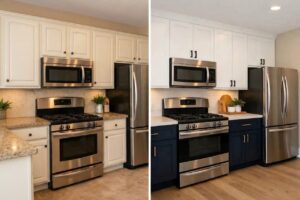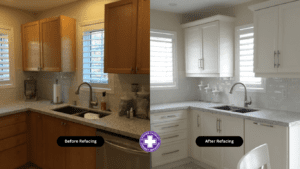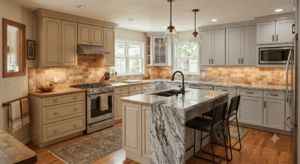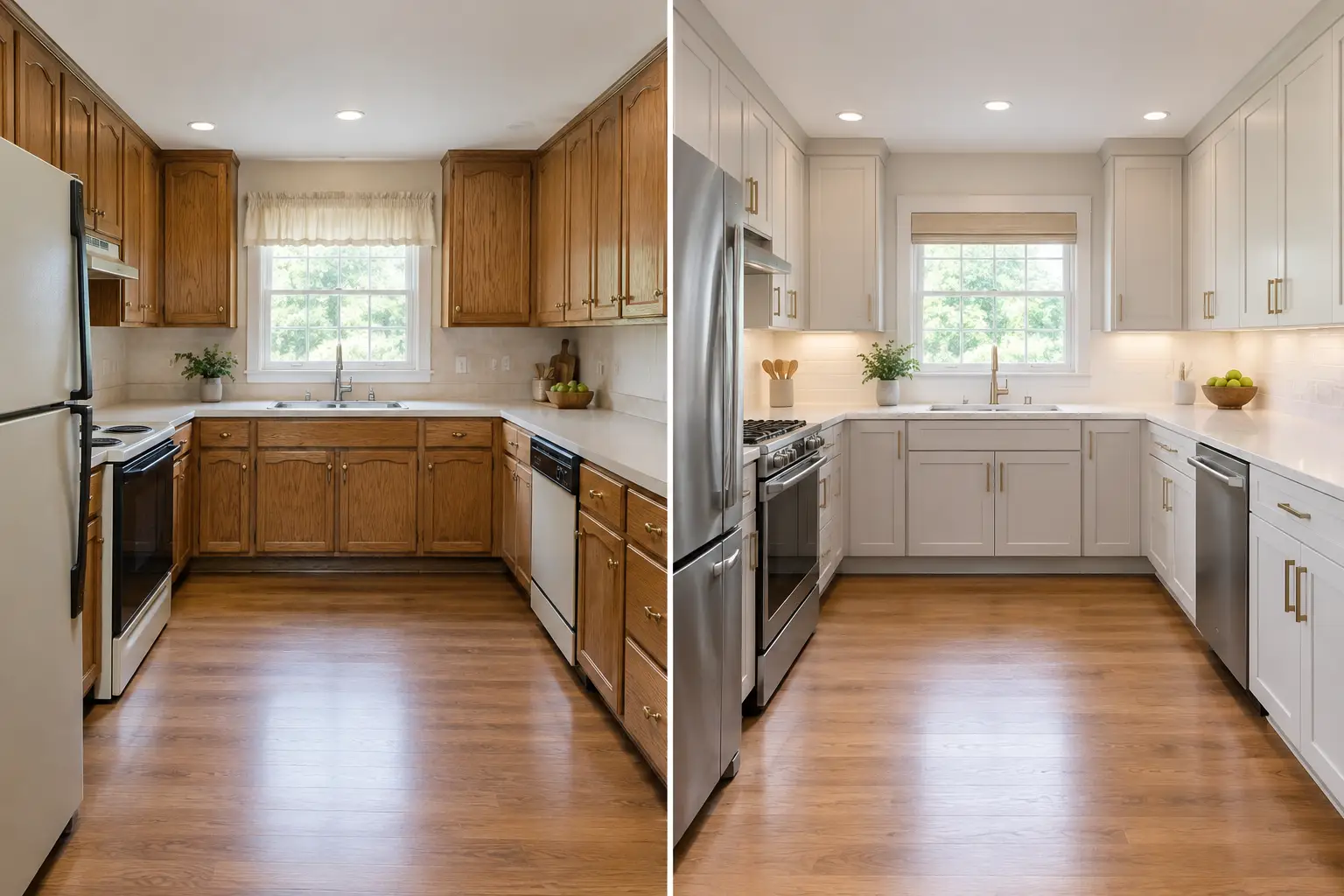
Your cabinet doors may be faded, chipped, dated, or difficult to close, but that does not automatically mean your whole kitchen needs to come out. The better question is: can refacing fix worn cabinets in a way that looks beautiful and holds up? For many homeowners, the answer is yes – provided the cabinet boxes are still structurally sound.
Refacing is designed for kitchens where the layout works, the cabinets are well built, and the visible surfaces have simply reached the end of their best years. It replaces what you see and touch every day while preserving the solid foundation behind it. The result can be a kitchen that feels entirely new without turning your home into a construction zone for weeks.
Kitchen Facelift is your planning expert if you live in the Greater Hamilton Area.
Click to see the map for the area (Oakville to Hamilton to Niagara and north to Milton).
Can Refacing Fix Worn Cabinets?
Cabinet refacing can address most cosmetic wear: peeling or faded door finishes, scratched drawer fronts, outdated profiles, mismatched replacement doors, worn edge banding, and hardware that no longer suits the room. During a professional refacing project, old doors and drawer fronts are removed, the exterior faces of the existing cabinet boxes are renewed, and custom-made doors and drawer fronts are installed.
This is why refacing can create such a dramatic change. The cabinet boxes stay in place, but nearly every visible surface is updated. A 1990s oak kitchen, for example, can become a clean, modern space with contemporary door styles, a new finish, updated hardware, and thoughtfully adjusted storage.
It is not a surface-level touch-up. Quality refacing is a carefully fitted renovation service. Doors, drawer fronts, panels, and finishes need to work together precisely so the finished kitchen looks intentional, not patched together.
The cabinet boxes must be worth keeping
The condition of the boxes is the deciding factor. Many older kitchens, especially those built in the 1980s and 1990s, have exceptionally sturdy cabinet construction. If the boxes are level, securely fastened, dry, and functioning properly, they are often excellent candidates for refacing.
A consultation should look beyond the doors. An experienced professional will assess whether cabinet sides are stable, whether shelves are sagging, whether there is evidence of persistent moisture, and whether doors and drawers can be properly aligned. They will also consider how the new doors will relate to your floors, backsplash, countertops, and appliances.
If the underlying cabinets have extensive water damage, severe swelling, major structural failure, or ongoing mold concerns, refacing is not the responsible answer. Those issues should be corrected before investing in a new exterior. Honest advice matters here: refacing is an intelligent way to preserve good cabinetry, not a way to hide a cabinet box that is failing.
What Refacing Can Improve Beyond Wear
Worn cabinets often come with frustrations that go beyond appearance. Perhaps you have a narrow door over a stack of awkward shelves, a drawer that no longer glides smoothly, or hardware that makes the kitchen feel older than it is. Refacing creates an opportunity to improve how the kitchen works within its existing footprint.
Depending on the cabinet configuration, doors can sometimes be converted to drawers, drawer fronts can be updated, and new hardware can make daily use feel more comfortable. Select panels can be modified to accommodate a new appliance, and necessary preparation can be completed for a countertop update. These changes are planned around what your kitchen needs, rather than treating every project as a full tear-out.
That distinction is especially valuable if you already have a countertop you love. Homeowners with granite or quartz often want a fresh cabinet style without disturbing the investment above it. A properly planned refacing project can modernize the cabinetry while respecting the surfaces that are staying.
A new look without changing the layout
For homeowners who like where everything is, refacing offers a practical path forward. You can choose a door style and finish that better reflects your home now, whether that means a warm wood look, a timeless painted style, or a more tailored contemporary design.
The visual impact is substantial because cabinetry occupies so much of the kitchen. Replacing dated doors and drawer fronts changes the lines, color, texture, and overall mood of the room. Add thoughtfully selected handles, and the kitchen can feel lighter, calmer, and much more current.
That said, refacing will not solve a layout that genuinely does not work. If you need to move plumbing, remove walls, relocate appliances, or significantly expand the kitchen, a larger renovation may be the better fit. The goal is not to force refacing into every kitchen. It is to choose the level of renovation that makes sense for your home and your plans.
How to Tell Whether Your Cabinets Are Good Candidates
You do not need to diagnose your cabinetry alone, but a few observations can help you begin the conversation. Look inside the sink cabinet for signs of old leaks or swollen material. Open drawers and doors to see whether the boxes feel firm and whether the hardware can be adjusted or replaced. Notice whether the cabinet layout serves your household, even if the finishes no longer do.
A kitchen is often a strong refacing candidate when the boxes are solid, the footprint is functional, and the concern is mainly what is visible from the outside. It is also a compelling option when your household wants to minimize disruption. Because the main cabinet structures remain in place, there is less demolition and far less upheaval than a complete replacement project.
At Kitchen Facelift, each project is custom assessed because no two kitchens age in exactly the same way. A photo-based estimate can provide an early sense of scope, while an in-home visit allows for precise measurements, material samples, and a closer look at the condition of your cabinetry. That process helps ensure the recommendation fits the kitchen you actually have.
What the Refacing Process Feels Like at Home
The best renovation experience is one that respects your time as much as your home. With refacing, the work is focused. Existing doors and drawer fronts come off, the cabinet exteriors are prepared and refinished, and custom components are installed with care.
Most cabinet transformations can be completed in two to three days, depending on the project scope and any additional modifications. There may be targeted demolition when it is needed – for example, removing a backsplash, making room for new appliances, or preparing for new countertops – but there is no reason to remove functional cabinetry simply for the sake of starting over.
This approach also reduces the number of decisions that can make a full renovation feel overwhelming. Rather than coordinating a complete rebuild, you can focus on the details that have the greatest visual and practical impact: door style, finish, hardware, storage improvements, and how the finished kitchen should feel when you walk into it each morning.
Quality is in the fit, not just the finish
A lasting result depends on more than attractive doors. Cabinet faces must be properly prepared, new components need accurate sizing, and installation must account for the realities of an existing home: walls that are not perfectly square, floors that have settled, and cabinet boxes that may need fine adjustments.
Custom-fit, Canadian-made doors and drawer fronts help create that tailored appearance. Professional installation is what brings it all together, with consistent reveals, smooth operation, and details that make the kitchen feel finished from every angle.
A Smart Answer for Cabinets That Are Tired, Not Finished
If your cabinets are worn on the outside but strong underneath, refacing can be one of the most satisfying ways to renew your kitchen. It preserves the cabinetry that is still doing its job, updates the elements you see every day, and avoids disruption that does not add value to your home.
Before assuming replacement is your only option, take a closer look at what is actually worn. A solid cabinet box with dated doors is not necessarily a problem waiting to be removed. It may be the beginning of a kitchen transformation that is thoughtful, efficient, and a pleasure to come home to.