Kitchen Facelift is your planning expert if you live in the Greater Hamilton Area. For homeowners from Oakville to Hamilton, Niagara, and north to Milton, this guide to Canadian made cabinets starts with a practical question: do you need entirely new cabinet boxes, or do you need a better version of the kitchen you already have?
That distinction can save considerable time, disruption, and unnecessary waste. Many homes built in the 1980s and 1990s have solid cabinet structures that were made to last. The dated doors, worn finishes, limited drawer access, and old hardware may be the problem – not the cabinets themselves.
Canadian-made cabinetry can be an excellent choice whether you are building new, renovating fully, or refacing a kitchen with a layout you already love. The key is knowing what you are paying for, what will stand up to daily life, and which approach fits your home.
Click to see the map for the area (Oakville to Hamilton to Niagara and north to Milton).
What Canadian-Made Cabinets Really Mean
“Canadian made” is often used broadly, so it is worth asking a few clear questions. A cabinet company may manufacture doors and drawer fronts in Canada while sourcing hardware, hinges, specialty finishes, or some sheet goods elsewhere. That does not automatically reduce the quality. What matters is transparency, material selection, construction standards, and who stands behind the finished installation.
For homeowners, the advantage of working with Canadian-made components is often less about a label and more about accountability. Local manufacturing generally makes custom sizing, replacement pieces, finish matching, and communication more manageable. It can also mean your cabinet doors are made for your measurements rather than adapted from a limited selection of standard sizes.
A thoughtfully built cabinet or refacing system should feel intentional at every touchpoint: doors sit evenly, drawer fronts align, edges are clean, and hardware operates smoothly. Those details are what you notice every morning in your kitchen, long after the project is complete.
A Guide to Canadian Made Cabinets: Start With the Cabinet Boxes
Before selecting a door style or paint color, assess the cabinet boxes. In an established home, this is the decision that determines whether cabinet refacing makes sense or a full replacement is warranted.
Solid boxes that are level, firmly attached, dry, and structurally sound are often excellent candidates for refacing. Plywood or quality furniture-board construction can continue serving a household for decades when it has been properly cared for. If the existing layout works for how you cook, gather, and store everyday items, keeping those boxes is often the more intelligent renovation choice.
Replacement may be appropriate when cabinets have significant water damage, major structural failure, severe warping, or a layout that no longer works at all. If you need to move plumbing, remove walls, relocate appliances, or create a fundamentally different kitchen footprint, new cabinetry may offer more flexibility.
There is no prize for replacing cabinetry that is still doing its job. Likewise, there is no benefit in preserving boxes that cannot support the kitchen you need. A good consultation should give you an honest answer rather than steering you toward more demolition than necessary.
Materials That Make a Difference
The best cabinet material depends on where it will be used and how your household lives. A busy family kitchen needs durable surfaces and dependable hardware. A quieter home may prioritize a particular painted finish, grain pattern, or design detail.
For cabinet doors and drawer fronts, MDF is a strong choice for many painted styles because it provides a smooth, consistent surface. It is especially well suited to crisp shaker profiles and contemporary slab doors. Wood doors offer natural grain and character, but can show more movement with seasonal changes in humidity. Thermofoil and laminate options can provide a clean, practical look in a wide range of colors and textures, provided the product and installation are of high quality.
Cabinet boxes commonly use plywood or furniture-grade particleboard. Plywood is valued for its strength and screw-holding ability. Quality furniture board can also perform very well in dry, stable conditions, particularly when edges and exposed areas are properly finished. The material alone does not tell the whole story. How it is assembled, supported, and installed matters just as much.
When comparing options, look beyond a sample’s appearance. Ask how edges are finished, how doors are constructed, whether the finish is repairable, and how the material performs near sinks, dishwashers, and high-traffic drawers.
Construction Details You Will Feel Every Day
Cabinet quality becomes most obvious in daily use. A beautiful kitchen can become frustrating quickly if doors rub, drawers sag, or hardware feels loose after a short time.
Look for full-extension drawer slides so the back of each drawer is usable. Soft-close hinges and slides reduce noise and protect the cabinetry from repeated impact. Adjustable hinges help maintain consistent reveals between doors, which is especially valuable as a home naturally settles over time.
Drawer construction matters, too. Dovetail drawers are often associated with premium craftsmanship, though a well-built drawer with strong mechanical joints can also perform exceptionally well. What you want to avoid is a drawer that depends on thin material, staples, or weak joints to carry the weight of pots, dishes, and pantry items.
A professional installer should also account for walls, floors, appliance clearances, and countertops. Even the finest Canadian-made doors will not look their best if they are installed without careful measuring and adjustment.
Why Refacing Can Be the Right Fit
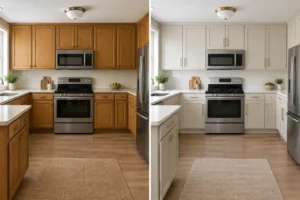
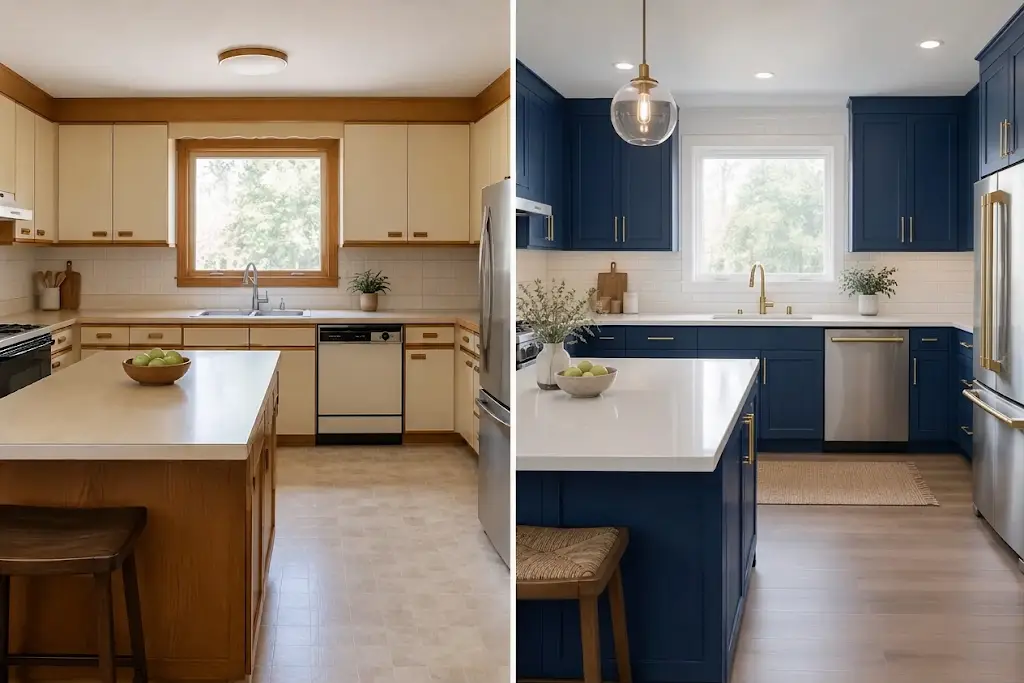
Cabinet refacing replaces the visible elements of your kitchen – doors, drawer fronts, hinges, and finishes – while preserving sound cabinet boxes. It is not simply a cosmetic shortcut. Done properly, it is a custom transformation built around your existing kitchen.
For homeowners who like their layout, refacing offers a way to create a completely different look without dismantling a functional kitchen. You can shift from raised-panel oak to a tailored painted shaker style, update to modern pulls, add drawers where doors once were, and prepare the space for a new quartz countertop.
The practical benefits are meaningful. Less demolition means less mess in your home and less material sent away unnecessarily. A well-planned refacing project can often be completed in two to three days, rather than leaving your kitchen out of service for weeks.
There are limits, and they should be discussed openly. Refacing does not change the location of your sink or create a new wall of cabinetry from nothing. It works best when the footprint is sound and the goal is a major visual and functional refresh within that footprint. Strategic changes, such as converting a lower cabinet to drawers or making adjustments for a new appliance, may still be possible.
Questions to Ask Before You Commit
Before choosing a cabinet maker, refacing specialist, or full renovation path, ask questions that make the scope clear. You should understand exactly what is being made in Canada, what is being retained, and what work will happen inside your home.
A helpful conversation should cover the following:
- Are my existing cabinet boxes structurally sound enough to retain?
- Which door and drawer-front materials suit my kitchen’s use and desired finish?
- Can the design include better drawer storage, updated hardware, or appliance adjustments?
- How will nearby countertops, backsplashes, flooring, and walls be protected?
- What is the expected installation timeline, and what disruption should I plan for?
- How are measurements verified and final details approved before production begins?
These questions are not about making the process complicated. They are about avoiding surprises. A trusted professional will welcome them and explain the trade-offs in plain language.
Make Samples Do the Hard Work
Photos are useful for inspiration, but samples tell you more. Hold a door sample beside your flooring, countertop, wall color, and backsplash. Look at it in morning light, evening light, and under your kitchen lighting. A warm white can read very differently next to a cool quartz surface, and a wood-tone finish can shift depending on the direction of the grain.
Pay attention to sheen as well as color. A matte finish can feel calm and contemporary, while a higher sheen may reflect more light but show fingerprints more readily. There is no universally right answer. The better choice is the one that fits your home, your maintenance preferences, and the way you want the room to feel.
Your kitchen does not need to be torn apart to feel new again. If the structure is sound and the layout supports your life, Canadian-made doors, drawer fronts, and finishes can give the room the lasting, carefully considered update it deserves.