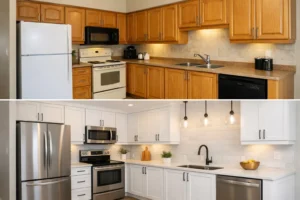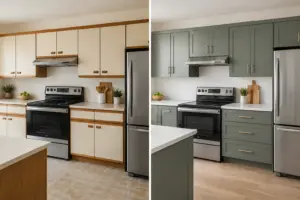
Quartz countertops have a way of raising the stakes in a kitchen refresh. Once you have chosen a beautiful slab, the cabinetry beneath it cannot simply look good from across the room. It needs to provide a stable, level, well-planned foundation for a heavy, precisely fabricated surface. Knowing how to choose quartz friendly cabinets helps you protect that investment while creating a kitchen that feels thoughtfully finished from every angle.
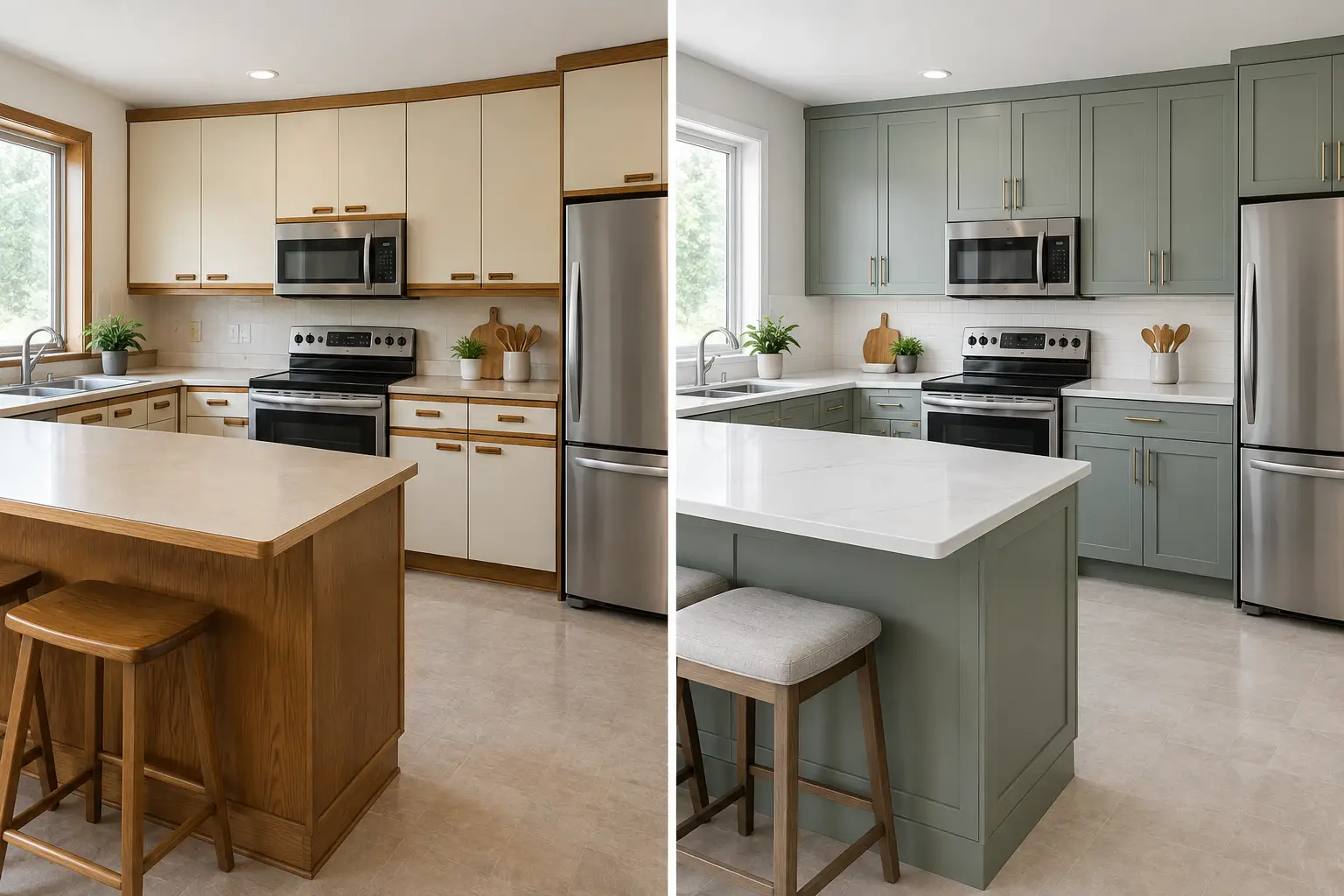
For many homeowners, this does not require removing sound cabinet boxes or turning a kitchen update into a long, disruptive renovation. The right cabinet refacing plan can modernize what you see, make smart functional changes where they count, and prepare the space properly for quartz.
Kitchen Facelift is your planning expert if you live in the Greater Hamilton Area.
Click to see the map for the area (Oakville to Hamilton to Niagara and north to Milton).
Start With the Cabinet Boxes, Not the Door Style
The first question is not whether you prefer a white oak look, a painted finish, or a sleek slab door. It is whether the existing cabinet boxes are structurally worth keeping.
Well-built cabinetry from the 1980s and 1990s is often an excellent candidate for refacing. If the boxes are securely attached, generally square, free of serious water damage, and built from durable material, they may have plenty of life left. New custom-fit doors, drawer fronts, panels, and hardware can transform their appearance without unnecessary demolition.
Quartz does add considerable weight, so a professional should assess the cabinet run before installation. Areas around the sink, dishwasher, cooktop, and long unsupported spans deserve particular attention. A cabinet box that has shifted, softened from a historic leak, or lost its level over time may need repair or reinforcement before a countertop template is made.
This is where an honest assessment matters. Refacing is a smart choice when the foundation is solid. If a specific section needs work, address that section properly rather than covering a problem with beautiful new finishes.
Confirm That the Cabinets Can Be Made Level
Quartz is fabricated to fit the cabinets and walls as they exist at the time of templating. That makes leveling one of the most important parts of choosing quartz friendly cabinets.
Cabinets do not need to be perfect when you first begin planning. Homes settle, floors vary, and older kitchens often have a few surprises. What matters is whether the cabinet bases can be adjusted or prepared so the countertop has a consistent, stable surface to rest on.
A good installer checks the cabinet run carefully, especially at corners and where tall pantry units meet base cabinets. Small discrepancies can affect the fit of a rigid stone surface. Proper shimming, secure fastening, and targeted adjustments create the dependable support quartz needs.
Do not assume a new countertop will hide an uneven kitchen. It will not. In fact, quartz can make a lack of preparation more visible through inconsistent reveals, awkward backsplash gaps, or stress points along the slab.
Pay Extra Attention to Long Runs and Peninsulas
A long countertop run, island, or peninsula needs thoughtful support. Cabinet boxes should be connected securely, anchored appropriately, and checked for movement. If you are extending an overhang for seating, the depth of that overhang may require concealed steel supports or brackets.
The right support depends on the design, slab thickness, overhang depth, and how the seating area will be used. A quiet breakfast spot has different demands than a peninsula where children climb onto stools every morning. Planning this early keeps the finished kitchen both elegant and practical.
Plan Cabinet Changes Before Quartz Is Measured
Quartz is not a material you want to work around after the fact. Once it is measured, fabricated, and installed, changes to cabinet height, layout, or major openings become far more complicated.
Before templating, decide whether you want to convert a lower cabinet to drawers, add a pull-out waste solution, change the sink base, remove a dated desk area, or make room for a new appliance. These improvements are often possible during a refacing project, but they should be completed before the countertop team takes final measurements.
This is especially relevant if you are replacing appliances. A new range may sit at a different height than the old one. A deeper refrigerator can affect adjacent panels. A slide-in range, under-mount sink, or new cooktop may change the countertop cutout requirements. Having appliance specifications in hand prevents last-minute compromises.
Think of the cabinet plan and quartz plan as one decision, not two separate projects. When the details are coordinated from the start, the result looks intentional.
Choose Door and Finish Styles That Belong With Your Quartz
Cabinets do not need to match quartz exactly. In fact, the most successful kitchens usually balance the two rather than asking both surfaces to compete.
If your quartz has bold veining or dramatic movement, a calmer cabinet door style often gives it room to stand out. A warm white, soft greige, natural wood tone, or simple painted shaker profile can create a polished contrast. If the quartz is subtle and quiet, you may have more freedom to introduce texture through wood-grain cabinetry, a deeper paint color, or more distinctive hardware.
Door profile matters as much as color. Slim shaker doors suit many established Ontario homes because they feel current without looking overly trendy. Flat-panel doors can create a cleaner, more contemporary look. Raised profiles may work beautifully in a traditional home, although the countertop selection should be considered carefully so the overall design does not become visually busy.
Samples are essential. View cabinet finishes beside the quartz in your actual kitchen, not only under showroom lighting. Morning light, evening light, and the undertones of your flooring can change what you see.
Do Not Forget the Details Around the Countertop
Quartz friendly cabinets are about more than cabinet strength. The surrounding details influence how well the entire installation performs and how finished it looks.
An under-mount sink is a popular pairing because it creates a clean transition from counter to basin. It also needs a properly prepared sink base and secure support. Faucet placement, window trim, outlets, and backsplash thickness should all be reviewed before fabrication.
Consider the countertop edge as well. A simple eased edge suits most kitchens and is easy to live with. More decorative profiles can add character, but they may feel less aligned with a streamlined refacing transformation. Your choice should reflect the home, the door style, and how much visual detail you want in the room.
Backsplash decisions belong in this conversation too. If you are replacing an existing backsplash, its removal and wall preparation should happen before quartz is installed. If you plan to use a full-height quartz backsplash, confirm the wall condition and any outlet adjustments early. These steps may sound small, but they help avoid delays and protect the precision of the finished work.
Let Function Guide the Investment
A beautiful countertop is most satisfying when the cabinetry below it makes daily life easier. Before choosing finishes, pause at the spots that frustrate you now. Is the corner cabinet difficult to use? Do you need more drawers for pots and dishes? Is the waste bin always in the way? Would a deeper drawer beside the range make cooking easier?
Refacing gives homeowners the opportunity to improve these everyday details without discarding cabinet boxes that still serve the kitchen well. Selective modifications can have an outsized effect: drawer conversions, better organizers, updated hardware, and cabinet adjustments for new appliances all bring the room closer to how you actually live.
There are trade-offs. Keeping the existing layout is usually the most efficient path, but it may not solve every storage issue. Moving plumbing or changing the footprint can expand possibilities, yet it also adds time and complexity. A good plan identifies which changes genuinely improve your kitchen and which ones simply create more disruption.
Work With a Team That Coordinates the Sequence
Quartz installation is a sequence-sensitive project. Cabinet preparation comes first, followed by precise measurements, fabrication, and countertop installation. Doors, panels, hardware, and finishing details must be scheduled around those steps so the work stays clean and organized.
Ask clear questions before you begin: Who checks cabinet condition? When are appliance dimensions confirmed? What preparation is needed for backsplash removal? When is the countertop templated? What happens if a cabinet needs adjustment? Straight answers are a sign that the project has been properly thought through.
The best kitchen refresh does not feel like a collection of separate trades arriving at random. It feels planned, respectful of your home, and calm from the first measurement to the final adjustment. With solid cabinet boxes, smart preparation, and finishes chosen to complement your stone, quartz can become the finishing touch that makes your kitchen feel entirely new.