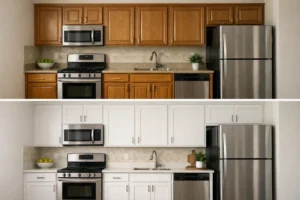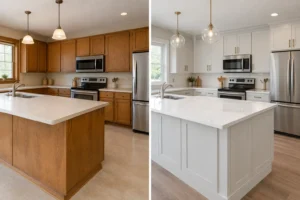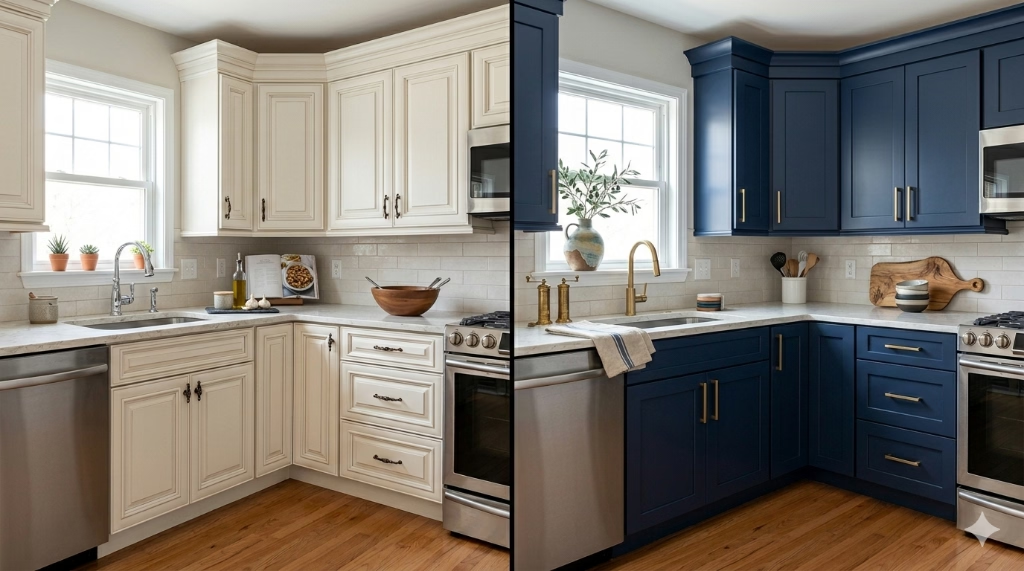
If your kitchen cabinets are solid but the finish is tired, the real question usually is not whether you need a full renovation. It is cabinet refacing vs painting – and which option gives you the result you actually want to live with.
That choice matters because both options can improve the look of your kitchen without tearing everything out. But they solve different problems. Painting changes colour. Refacing changes the visible surfaces, the style, and often the overall feel of the room. One is a surface update. The other is closer to a full visual transformation.
Cabinet refacing vs painting: the core difference
Painting keeps your existing cabinet doors and drawer fronts. They are cleaned, sanded, primed, and coated in a new finish. If your doors are in good condition and you like their current profile, painting can be a reasonable way to freshen things up.
Refacing keeps the cabinet boxes if they are structurally sound, but replaces the doors, drawer fronts, and exterior-facing surfaces. That means you are not just changing colour. You are changing the look and often the function too, especially if you want upgrades like new drawer configurations, updated hardware placement, or a style that feels more current.
This is why the decision is less about which option is better in the abstract and more about what is bothering you about your kitchen right now. If the issue is simply an outdated stain or colour, painting may be enough. If the issue is that the kitchen looks dated, worn, and stuck in another decade, refacing usually gets closer to the result homeowners are hoping for.
When painting makes sense
There are kitchens where painting is the right call. If your cabinet doors are smooth, in excellent condition, and you genuinely like the current style, paint can give the room a lift without changing much else.
This tends to work best when the cabinets already have a relatively simple profile and the goal is modest. Maybe the orange-toned wood no longer suits the rest of the home. Maybe you are preparing to sell and want a cleaner, lighter look. Maybe you renovated other parts of the kitchen and the cabinetry is the one element that now feels out of step.
Painting can also make sense if you are comfortable with some maintenance over time. Even a well-done painted finish is still paint. In busy kitchens, especially around handles, corners, sink cabinets, and garbage pullouts, wear can appear sooner than many homeowners expect. Touch-ups are possible, but touch-ups are still a sign that the finish lives a harder life than factory-finished materials.
That does not make painting a poor choice. It just means it is usually best for homeowners who want cosmetic improvement and understand the trade-off.
When refacing is the smarter move
Refacing shines when the cabinet boxes are worth saving but everything you see needs to change. That is especially true in many 1980s and 1990s kitchens, where the bones are solid but the doors, drawer fronts, and finishes make the room feel older than it is.
With refacing, you can move from arched oak doors to a clean shaker style, from heavy wood grain to a bright modern finish, or from a dated layout of doors to more practical drawer storage in key areas. The kitchen still respects the footprint that works, but visually it feels rebuilt.
For many homeowners, that is the sweet spot. You avoid the disruption of a full gut renovation, but you get a result that feels far beyond a paint job. This is also why refacing appeals to people who have already invested in stone countertops. If your quartz or granite still works beautifully, replacing the entire kitchen can feel unnecessary. Refacing lets you modernize the cabinetry around what is already worth keeping.
Appearance: refreshed vs transformed
This is the part homeowners often underestimate.
A painted kitchen can look cleaner, brighter, and more current. But unless the door style already fits the look you want, the kitchen may still read as dated. Fresh paint on an old raised-panel door is still an old raised-panel door.
Refacing gives you more control over the final aesthetic. Door style, finish, colour, edge details, hardware placement, and matching end panels all work together. That cohesion is what makes a kitchen feel intentionally redesigned rather than simply updated.
If your goal is for people to walk in and say, “This looks like a new kitchen,” refacing is usually what gets you there.
Durability and day-to-day life
Durability is where the gap often widens.
Painted cabinets can look beautiful at first, but kitchens are hardworking spaces. Steam, hand oils, repeated cleaning, bumps from dishes, and daily contact around knobs and pulls all add up. Even quality prep and application cannot change the fact that paint is more vulnerable to chipping and wear than a professionally manufactured door and finish.
Refacing typically offers a more durable long-term surface because the new doors and drawer fronts are made for kitchen use, not simply recoated versions of old components. For households with kids, frequent cooking, or a kitchen that truly gets lived in, that matters. A finish that still looks sharp years later is worth more than one that looked great for the first season.
Cost is only part of the equation
Most homeowners start here, but cost alone can lead to the wrong decision.
Painting usually costs less than refacing upfront. That is real, and it matters. But the better question is what you are buying with that difference. If painting gives you the look you want and the durability you expect, it may be the right investment. If it leaves you wishing you had changed the style, improved the function, or chosen something built for longer wear, the lower initial spend can become frustrating.
Refacing is a more substantial investment because it delivers a more substantial change. New doors, drawer fronts, finished surfaces, custom sizing, careful installation – those things add up to a kitchen that feels intentionally rebuilt without the waste and disruption of replacing everything.
For homeowners who care about value, not just the invoice total, that distinction matters.
Timeline and disruption
This is one of the biggest reasons people lean toward either painting or refacing.
Painting can stretch longer than expected, especially if the process happens on site, involves curing time, or requires your kitchen to be partially out of commission for longer than planned. The work may sound simple, but anyone who has lived through a finish project knows the reality can be less convenient than it appears.
Professional refacing is often surprisingly efficient because the process is built around keeping what works and replacing only what needs to change. When done well, it can deliver a major visual upgrade in days rather than dragging on for weeks. For busy households, that matters just as much as the final appearance.
At Kitchen Facelift, this is exactly why so many homeowners choose refacing. They want premium results without turning their home upside down.
So which should you choose?
Choose painting if you like your current cabinet style, your doors are in strong condition, and your main goal is a colour change. It is the simpler answer when you want a lighter-touch update and are comfortable with the realities of a painted finish.
Choose refacing if your cabinet boxes are solid but the kitchen looks dated, the door style no longer suits your home, or you want a transformation that feels finished and lasting. It is often the better fit for homeowners who want to modernize intelligently rather than start from scratch.
There is also an emotional side to this decision. Some updates make you feel like you checked a box. Others make you enjoy being in the room again. If your kitchen is the centre of daily life, that difference is not small.
The best choice is the one that matches your expectations honestly. If you want a fresh coat of confidence, painting may be enough. If you want your kitchen to look custom, current, and thoughtfully renewed, refacing is usually the clearer path.
A good kitchen update should feel proportionate to your home, your routine, and what you actually need. When the cabinets are worth saving, the smartest renovation is often the one that keeps the right parts, replaces the tired ones, and lets you get back to enjoying your space sooner.