A television mounted on a blank wall can feel unfinished fast. The cords show, speakers land wherever they fit, and everyday clutter somehow gathers underneath. Good entertainment wall unit design solves that problem in a way that looks intentional, feels calm, and actually works for the way your household lives.
For most homeowners, the goal is not just to create a place for the TV. It is to make the whole wall feel integrated with the room. That might mean adding concealed storage for game consoles and remotes, open shelving for books and decor, or a fireplace feature that gives the space more presence. The best designs are not built around trends alone. They are built around habits, proportions, and the realities of daily life.
What good entertainment wall unit design gets right
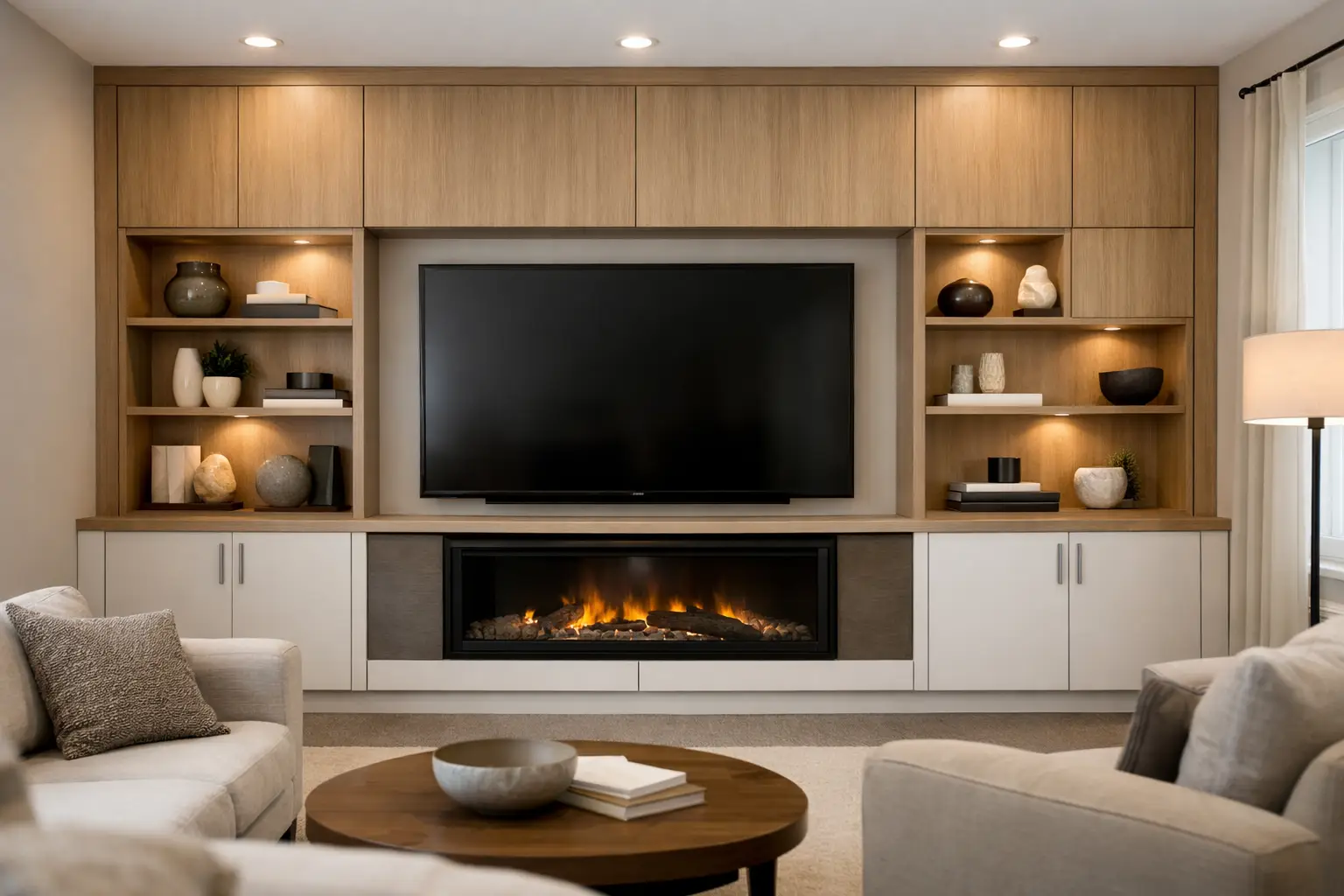
A well-designed wall unit does three jobs at once. It gives the television a proper home, it adds storage without looking bulky, and it improves the overall balance of the room.
That balance matters more than many people expect. If the TV is too small for the wall, the room can feel sparse. If the cabinetry is oversized or overly ornate, the wall can dominate everything around it. Strong design finds the middle ground. It gives the wall enough visual weight to feel finished without making the space feel crowded.
This is also where custom work tends to stand apart from off-the-shelf furniture. Built-in or made-to-measure units can be designed around ceiling height, awkward corners, existing stone or flooring, and the exact size of the television and components. The result usually feels quieter and more polished because it belongs to the room instead of simply sitting in it.
Start with the room, not the cabinet
The most practical way to approach entertainment wall unit design is to begin with the room itself. Before thinking about finishes or shelf styling, look at sightlines, traffic flow, natural light, and viewing distance.
A large family room can often handle a full-wall installation with a central TV zone and symmetrical storage on both sides. A smaller living space may need a lighter approach, with lower cabinetry and a floating look that keeps the room open. If the wall sits opposite major windows, glare becomes part of the design decision too. Sometimes a beautiful layout on paper needs adjustment once you consider how the screen will actually be used during the day.
Ceiling height matters just as much. In a standard-height room, full-height cabinetry can look elegant and substantial, but only if the proportions are handled carefully. In some homes, stopping short of the ceiling creates a more relaxed feel. In others, taking cabinetry all the way up makes the room look more custom and complete. It depends on the architecture and on whether you want the wall unit to blend in or become a true focal point.
Storage should reflect real life
One of the biggest mistakes in entertainment wall unit design is adding storage that looks good in a rendering but does not match how the household actually lives. Open shelving is a good example. It can be beautiful, but it also asks you to keep things tidy. If your family uses the space hard, closed storage often carries more value.
Think in categories. What needs to be hidden, what needs ventilation, and what deserves display space? Media boxes, routers, gaming equipment, and charging stations usually benefit from enclosed cabinets with thoughtful access for wiring and airflow. Decorative objects, framed photos, and a few books can sit comfortably on open shelves without making the wall feel busy.
There is also a difference between storage that merely holds items and storage that reduces stress. Deep drawers for board games, cabinets sized for baskets, and designated spots for everyday electronics can make the room feel easier to maintain. That is where custom planning pays off. You are not forcing your belongings into standard dimensions. The storage is shaped around your life.
Finishes set the tone of the whole space
Because an entertainment wall unit often takes up significant visual space, the finish choice influences the room more than homeowners sometimes expect. Colour, texture, and door style all help determine whether the final look feels modern, traditional, transitional, or somewhere in between.
A painted finish in a soft white, warm greige, or muted taupe can keep the installation bright and timeless. Woodgrain finishes add warmth and depth, especially in homes where the living area needs a little softness. Dark finishes can look striking and upscale, but they work best when the room has enough light and the overall palette supports the weight.
This is one of those areas where restraint usually wins. A wall unit does not need complicated detailing to feel high-end. Clean lines, well-proportioned panels, and quality materials often create the strongest result. If you already have cabinetry elsewhere in the home, echoing those finishes can also help the living space feel connected rather than pieced together.
The details that make custom feel worth it
The value of custom entertainment wall unit design often shows up in the details homeowners notice every day. Wires disappear. Doors align properly. Shelves fit the items they are meant to hold. The installation feels integrated instead of improvised.
This is particularly important in established homes where walls are rarely perfect and dimensions can vary more than expected. A precise fit makes the whole room look more finished. It also reduces the visual clutter that comes from filler pieces, mismatched furniture, or media components left in plain sight.
Thoughtful details might include touch-latch doors for a cleaner look, integrated lighting to highlight shelving, or a mix of closed and open sections to soften the wall. Even the depth of the cabinetry matters. Too shallow, and the unit loses function. Too deep, and it can intrude into the room. The best measurements are rarely arbitrary.
For homeowners who value premium results without unnecessary upheaval, the process matters too. A carefully planned custom installation is not just about the final photo. It is about getting a refined result with less mess, less guesswork, and a much clearer sense of what to expect.
Entertainment wall unit design ideas that age well
Trends come and go quickly in living spaces, especially around media walls. What feels current now can start to look overly specific a few years from now. That is why the strongest entertainment wall unit design ideas usually rely on lasting principles rather than trend-driven extras.
Simple door profiles, balanced proportions, practical storage, and finishes that complement the architecture tend to hold up well. So does flexibility. If the unit can adapt to a future television size, changing technology, or evolving decor, it will serve you longer.
It also helps to think beyond the screen itself. The wall should still look good when the television is off. That is often the difference between a room that feels elevated and one that feels purely functional. Texture, symmetry, lighting, and thoughtful negative space all help achieve that.
If you are planning a custom wall unit, be honest about how much display you want, how tidy the space usually stays, and whether this room is meant for everyday family use or more occasional entertaining. Those answers will shape the right design more reliably than any inspiration photo.
A good wall unit should make the room easier to live in and nicer to come home to. When it is designed around your space instead of squeezed into it, that difference is hard to miss.