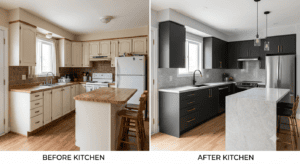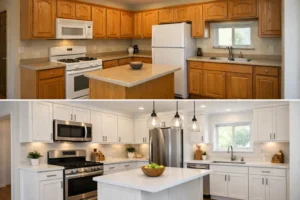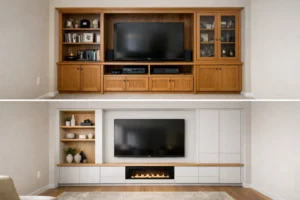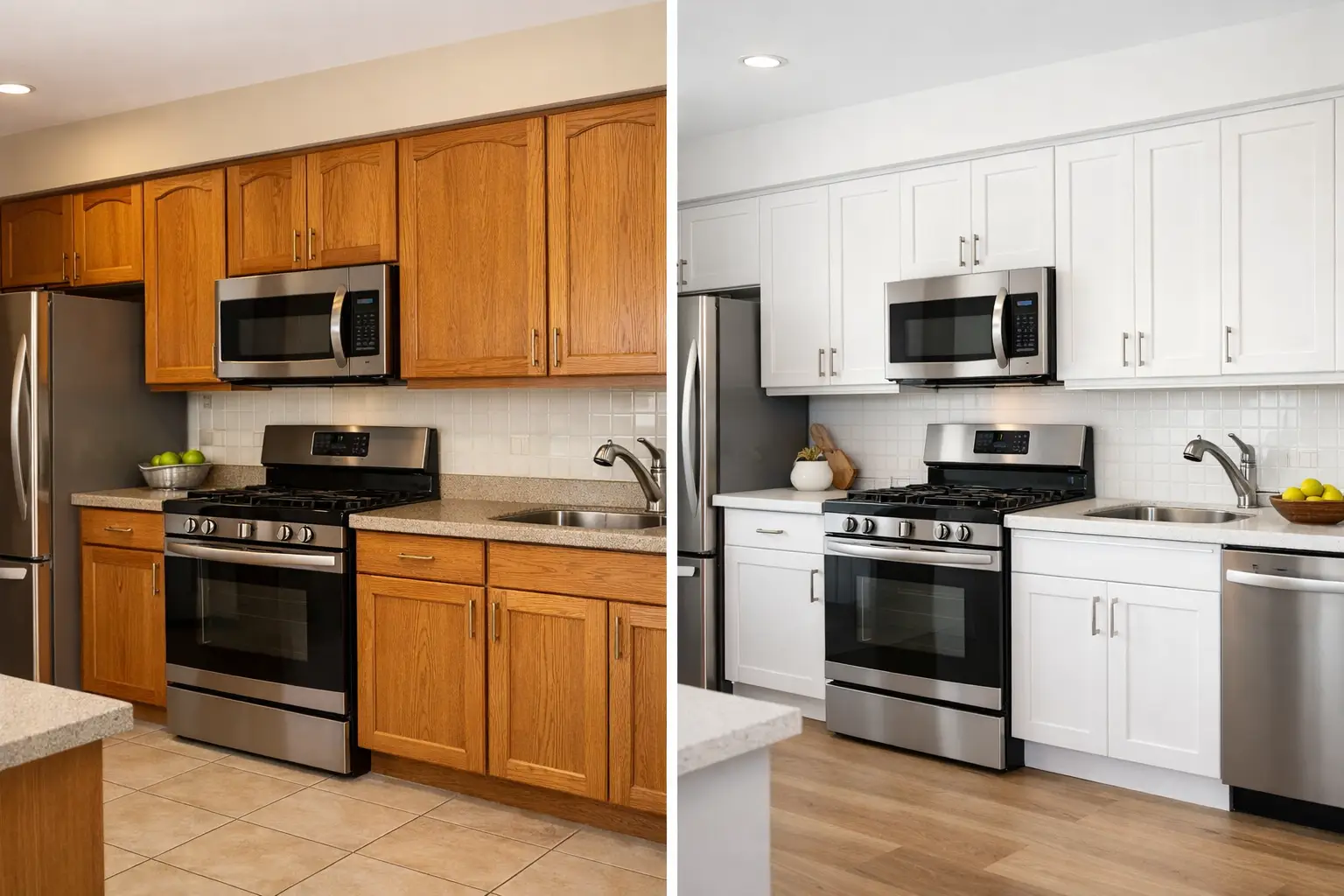
If your kitchen still works well but looks tired, dated, or darker than you’d like, a full tear-out may be solving the wrong problem. For many homeowners, kitchen cabinet refacing is the better fit – especially when the layout works, the cabinet boxes are solid, and the goal is a cleaner, more current look without turning the house upside down for weeks.
That matters more than people expect. The kitchen is the room that disrupts daily life fastest. When it is out of service, everything from school lunches to morning coffee becomes harder. Refacing appeals to homeowners who want meaningful change without unnecessary demolition, and that is often the smartest place to start.
What kitchen cabinet refacing actually means
Cabinet refacing is not a paint job, and it is not a shortcut dressed up as a renovation. Done properly, it means keeping the existing cabinet boxes that are still structurally sound, then replacing the visible parts that define the look of the kitchen – doors, drawer fronts, finished panels, moldings, and hardware. Exterior surfaces are updated to match, so the finished kitchen looks cohesive rather than patched together.
In many homes built in the 1980s and 1990s, the cabinet boxes themselves are still in good shape. What dates the kitchen is the door style, the finish, the trim details, or the fact that the room feels heavy compared to how people live now. Refacing addresses exactly that. It preserves what still has value and transforms what you actually see every day.
For most homeowners, this approach often makes sense because many properties in established neighborhoods were built with durable cabinetry and practical layouts. If the footprint works, replacing everything can be more demolition than improvement.
When kitchen cabinet refacing is the right choice
Refacing works best when your existing kitchen has a strong foundation. If your cabinet boxes are level, sturdy, and well-built, and you are not planning a full layout change, refacing can deliver a major visual transformation with far less disruption.
It is especially appealing if you already have stone countertops you want to keep. Many homeowners have invested in granite or quartz and do not want the risk, mess, or cost of disturbing those surfaces just to modernize the cabinetry below. Refacing lets you refresh the room around what is already working.
It is also a strong option for households that value time. A traditional renovation can stretch on for weeks and sometimes longer once surprises appear. Refacing is more controlled. Because the core cabinet structure remains in place, the project moves faster and with fewer variables.
That said, it is not right for every kitchen. If your cabinet boxes are damaged, the layout is awkward, or storage function needs a complete rethink, a larger renovation may be the better path. Good advice should make that clear. The goal is not to force refacing into every situation. It is to recognize when it is the intelligent option.
What you can change without a full renovation
One of the biggest misconceptions about refacing is that it only changes the color of the doors. In reality, the scope can be much more substantial.
A kitchen can shift from raised-panel oak to a clean shaker style. Heavy trim can be simplified. Standard doors can become drawer banks in places where better storage would improve daily use. End panels, valances, crown details, and hardware can all be updated so the kitchen feels intentional from every angle.
Some projects also involve selective demolition where it adds real value. A backsplash may need to come out. Cabinetry may need minor adjustment to suit a new appliance. Prep work may be required for new quartz countertops. The key is restraint – only removing what is necessary to achieve the finished result, not tearing apart the room out of habit.
That is where experience matters. Good refacing is not about doing less care. It is about doing less unnecessary work.
Why homeowners often choose refacing over a full gut job
Most people do not want renovation drama. They want a kitchen that feels current, functions well, and respects the investment they have already made in their home. Refacing meets that need in a very practical way.
First, there is the timeline. A properly planned refacing project is often completed in two to three days. That changes the entire renovation experience. You are not living around trades for weeks, washing dishes in the laundry sink, or wondering when the next delay will appear.
Second, there is the mess. Because the cabinet boxes stay, the process is cleaner and more contained. That matters in busy households, in homes with children or pets, and frankly in any home where people would rather not have a renovation take over every room nearby.
Third, there is the value question. Full renovation has its place, but replacing solid cabinetry just because the doors look dated is not always the wisest use of your budget. Refacing channels investment into what changes the look and feel most dramatically.
For many smart premium buyers, that is the whole point. They could do more demolition. They simply do not see the need.
What to expect from the process
A good cabinet refacing experience should feel clear from the start. Homeowners are often relieved to learn they can begin with a ballpark estimate rather than a long in-home sales visit. Photos and basic measurements can establish whether the project is a fit before anyone starts making decisions too early.
From there, the in-home visit should narrow everything down with real samples, precise measurements, and a practical conversation about what you want to change. This is where details matter. Do you want warmer wood tones or a brighter painted finish? Are there doors that would function better as drawers? Are you keeping the counters? Are you planning a new backsplash? The answers shape the project.
Installation is where the value of a specialist becomes obvious. Refacing is precision work. Doors need to align properly. Panels need to fit cleanly. The finished kitchen should look built for the space, not retrofitted in a rush. When the work is done well, the result feels like a new kitchen, not an update trying to pass as one.
Questions worth asking before you commit
If you are considering kitchen cabinet refacing, a few questions can quickly tell you whether the approach is right.
Are your existing cabinet boxes worth keeping? Do you like your current layout? Are your countertops staying? Is your main frustration visual rather than structural? Do you want a faster, cleaner project without sacrificing a premium result?
If the answer to most of those is yes, refacing is probably worth serious consideration.
You should also ask about materials and manufacturing. Custom-fit components and Canadian-made craftsmanship tend to show up in the final result – in the consistency of the finish, the fit of the doors, and the durability of the kitchen after installation. This is not the kind of project where generic sizing and rushed installation feel good six months later.
The real trade-off
The honest trade-off is simple. Refacing gives you a dramatic visual upgrade and a better renovation experience, but it does not reinvent the room from scratch. If you want to move walls, relocate plumbing, or completely redesign the footprint, that is outside the lane.
But many homeowners do not need a reinvention. They need a kitchen that finally looks as good as the rest of the house. They want to stop apologizing for honey oak doors, dated profiles, or finishes that absorb light. They want to enjoy the room again without signing up for chaos.
That is exactly why this option continues to resonate in established homes across the Golden Horseshoe. It respects what is already working while delivering a visible, high-impact change where it counts.
Kitchen Facelift has built its reputation around that kind of transformation – premium results, thoughtful planning, and a process that feels manageable from the first estimate to the final install.
If your kitchen does not need to be gutted to be beautiful, that is good news. Sometimes the smartest renovation is the one that leaves the right things in place.