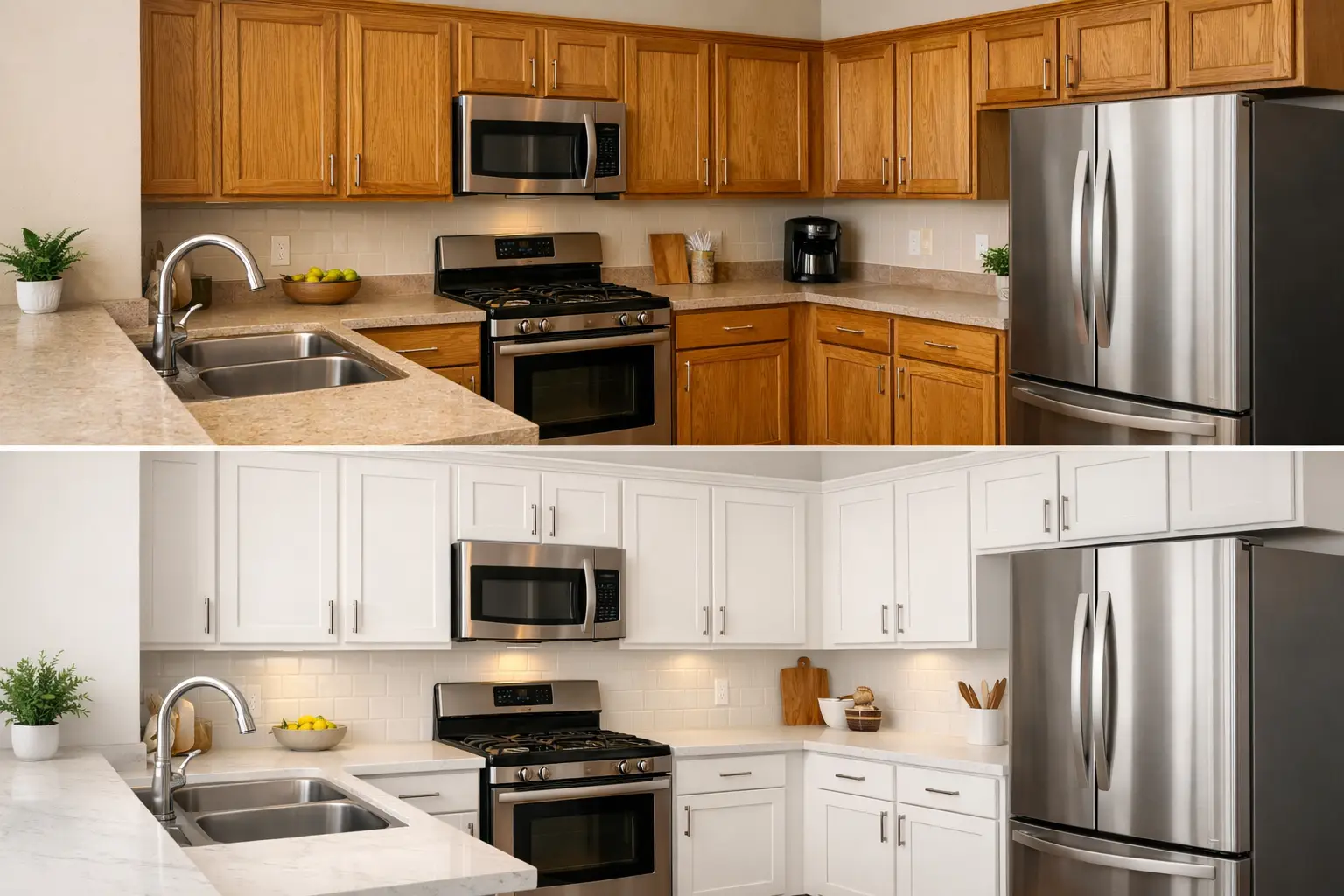
Your kitchen may not need to be torn apart to feel entirely new. If the cabinet boxes are sturdy, the layout still works, and the storage meets your needs, a guide to cabinet door replacement can point you toward a smarter kind of transformation: changing what you see while preserving what already serves your home well.
For many homeowners, cabinet doors are the reason a kitchen feels dated. Worn finishes, ornate profiles, mismatched hardware, and older wood tones can make a perfectly functional room feel stuck in another decade. Replacing the doors and drawer fronts can change that feeling quickly, with far less demolition than a full renovation.
Kitchen Facelift is your planning expert if you live in the Greater Hamilton Area.
Click to see the map for the area (Oakville to Kitchener/Cambridge and north to Milton).
Start With the Cabinet Boxes, Not the Doors
Cabinet door replacement works best when the existing cabinet boxes are structurally sound. Open a few doors and drawers. Look for solid sides, secure shelves, stable bases, and frames that have not been damaged by long-term moisture. Minor cosmetic wear is usually not a concern. Swollen particleboard, loose construction, significant water damage, or cabinets that no longer sit level may call for a broader renovation plan.
The question is not whether your cabinets look old. That is precisely what new doors, drawer fronts, and matching exterior finishes can address. The question is whether the underlying cabinetry is worth keeping.
Many kitchens built in the 1980s and 1990s have exceptionally solid cabinet boxes. Their doors may be dated, but their construction often remains practical and durable. Keeping those boxes avoids unnecessary waste and preserves a layout you already know works for your household.
What Cabinet Door Replacement Can Change
New cabinet doors affect much more than the face of each cabinet. They establish the kitchen’s style, influence how light moves through the room, and determine whether the space feels current, calm, traditional, or clean-lined.
A simple slab door can give a kitchen a tailored contemporary look. A shaker profile offers definition without feeling busy and works comfortably across many home styles. More detailed profiles can bring warmth and character, especially in homes where a stark modern finish would feel out of place.
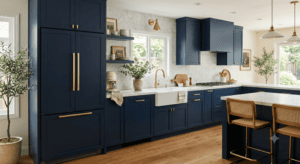
The finish matters just as much. Soft whites can brighten a kitchen with limited natural light. Warm wood looks can bring balance to stone countertops and hard flooring. Deep, grounded colors can make an island or lower cabinets feel purposeful, though they tend to show dust and fingerprints more readily than mid-tone finishes. There is no universal best choice. The right finish depends on your light, countertops, flooring, and how you want the room to feel at the end of a busy day.
A thoughtful door replacement project may also include new drawer fronts, updated hinges, new hardware, crown molding, light valances, and finished end panels. These details are what make the finished kitchen look designed as a whole rather than simply refreshed in pieces.
A Guide to Cabinet Door Replacement: Know Your Options
There is a meaningful difference between replacing a few doors and professionally refacing a kitchen. Replacing doors alone may suit a small repair or a limited update. Cabinet refacing is a coordinated process in which custom doors and drawer fronts are paired with a matching finish applied to the visible cabinet frames and exterior surfaces.
That matching work matters. Without it, new doors can make older cabinet frames look more noticeable. With it, the cabinetry reads as one cohesive, custom-built installation.
Custom-fit doors are also important. Cabinet openings are not always perfectly uniform, particularly in established homes. Doors that are made to measured specifications allow for consistent reveals, smooth operation, and a refined appearance once installed. This is where professional assessment earns its place. A knowledgeable installer can identify whether a door conversion, drawer upgrade, filler adjustment, or appliance-related modification will improve both the look and daily function of the kitchen.
Think Beyond the Existing Door Configuration
A door replacement project is an opportunity to correct small frustrations you may have lived with for years. Perhaps a lower cabinet would work better as deep drawers. Maybe a narrow opening beside the range could become a pull-out. You may want to update an awkward cabinet around a new refrigerator or prepare the kitchen for a quartz countertop.
Not every change is possible within an existing cabinet footprint, and it is worth being honest about that early. If your kitchen needs a completely different layout, more electrical capacity, or major structural changes, cabinet refacing may not be the complete answer. But when the footprint is right and the visible elements need a new direction, targeted modifications can deliver an impressive improvement without turning your home into a construction zone.
This is especially valuable for homeowners who have already invested in granite or quartz. Preserving the existing countertop while updating the cabinetry beneath it can protect a substantial investment and give the entire room a more current appearance.
Choose Materials and Hardware for Real Life
Your kitchen is not a showroom. Door materials and finishes should be selected for how your household actually uses the space. Families with active kitchens may prefer finishes that are easy to wipe down and profiles with fewer grooves. Homeowners who cook frequently should think about heat, steam, and the areas around the sink and dishwasher where moisture exposure is highest.
Hardware deserves the same practical attention. Knobs and pulls should feel comfortable in your hand and suit the scale of the doors. Long pulls can look elegant on wide drawers, while smaller knobs may be better suited to upper cabinets. Mixing knobs on doors and pulls on drawers can work beautifully when the finishes and proportions are consistent.
Soft-close hinges and drawer systems are often worth considering because they improve the everyday experience in quiet, subtle ways. They will not change the kitchen’s style on their own, but they contribute to the feeling that the space has been thoughtfully renewed.
Plan the Project Around the Details That Affect Timing
A smooth cabinet door replacement begins with clear measurements and a full view of the scope. Before ordering, confirm the details that can affect fit: appliance dimensions, backsplash plans, countertop overhangs, flooring changes, and any areas where doors may collide when opened.
If you are replacing appliances, their specifications should be part of the planning conversation from the start. A taller refrigerator, a different hood, or a new dishwasher can require adjustments to surrounding cabinetry. Similarly, if a new countertop is planned, the sequence of work should be coordinated so the cabinetry is prepared properly and the finished lines are clean.
Professional installation also makes a difference in the final result. Doors need to be aligned, gaps made consistent, hinges adjusted, and finished surfaces handled carefully in your home. The work may be faster than a full renovation, but it should never feel rushed.
At Kitchen Facelift, most cabinet refacing transformations are completed in two to three days once materials are ready. That timeline is possible because the design, measurements, custom manufacturing, and project planning are handled before installation begins.
Set a Budget Based on Scope, Not Just Door Count
It is natural to begin by asking what replacement cabinet doors will cost. The more useful question is what is included in the transformation. The overall investment can vary based on the number of doors and drawer fronts, selected materials, finish, hardware, cabinet modifications, and whether visible cabinet frames are being refinished to match.
A clear estimate should distinguish between the essentials and the upgrades you are considering. That gives you room to decide where premium details will have the greatest impact. In some kitchens, the strongest result comes from a refined door style and coordinated frame finish. In others, converting a frequently used base cabinet to drawers is the improvement you will appreciate most every day.
Ask for realistic timing, a clear installation scope, and an explanation of how your existing cabinetry will be protected during the work. A well-planned project respects both your investment and your home.
The Best Update Is the One That Solves the Right Problem
Cabinet door replacement is not about pretending an older kitchen is brand new. It is about recognizing what is already good, then improving the parts that no longer fit your style or routine. When the cabinet boxes are sound and the layout still supports the way you live, that is often the most intelligent place to begin.
Take a closer look at your kitchen with a cup of your favorite beverage in hand. Notice what you would keep, what you would change, and which daily frustrations are worth solving. The right plan can make the room feel fresh, polished, and genuinely yours without asking your life to stop while it happens.