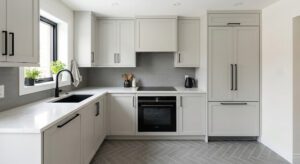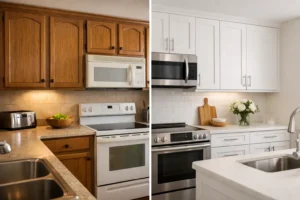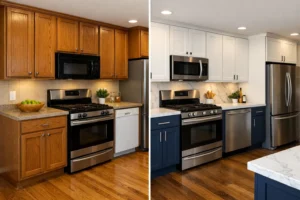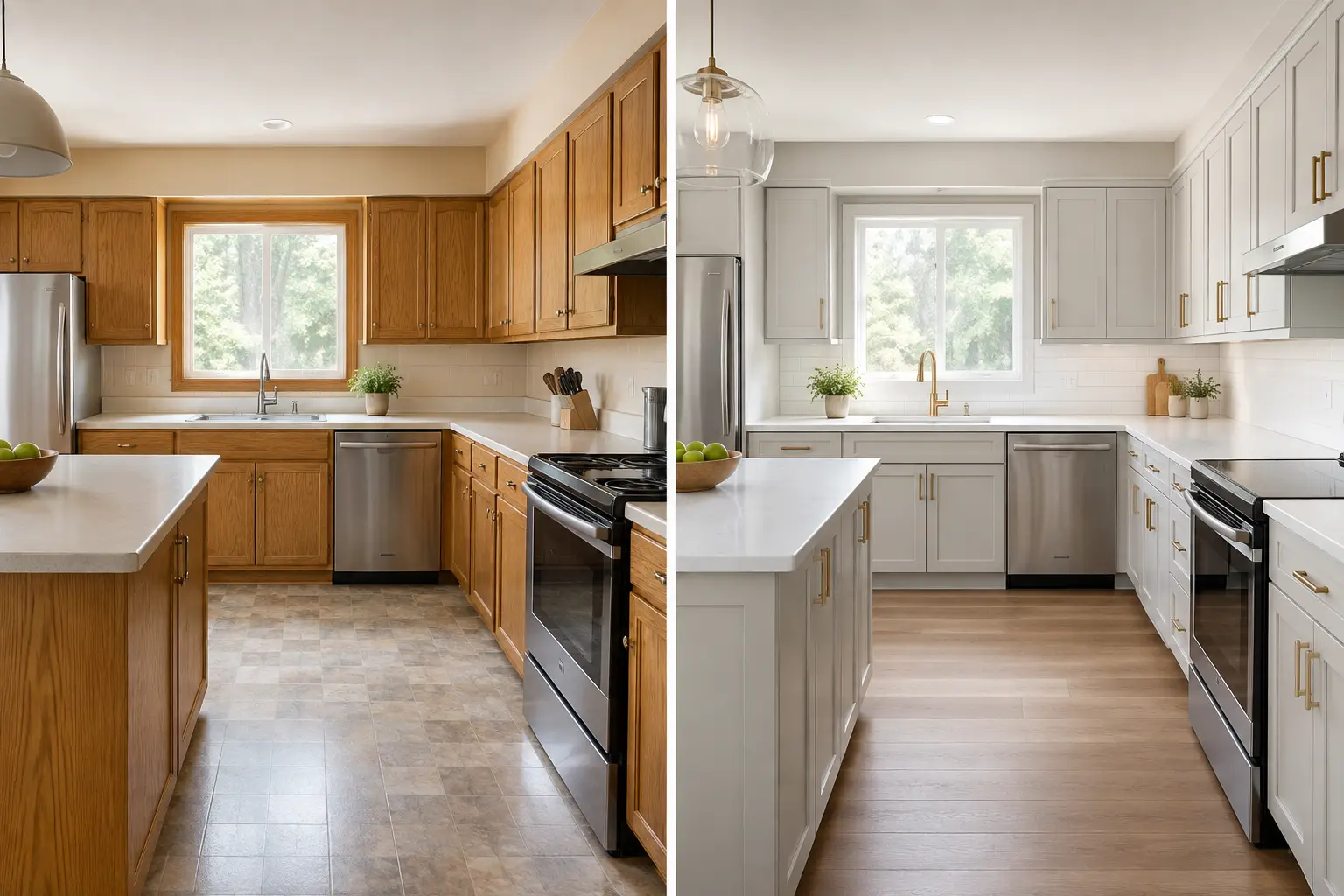
A kitchen can look decades older than it functions. That is often the moment homeowners begin asking about kitchen transformation costs: not because they want the smallest number, but because they want to know what a beautiful, sensible update will really require.
The answer depends less on the size of your wish list than on what is already worth keeping. If your cabinet boxes are solid, your layout works, and you are ready for a fresh look, cabinet refacing can change the entire room without treating a functional kitchen like a demolition project.
Kitchen Facelift is your planning expert if you live in the Greater Hamilton Area.
Click to see the map for the area (Oakville to Hamilton to Niagara and north to Milton).
What do kitchen transformation costs include?
A transformation is not one product with one fixed price. It is a custom project shaped by the kitchen you have, the finish you choose, and the improvements needed to make the final result feel complete.
With cabinet refacing, the existing cabinet boxes remain in place when they are structurally sound. New custom-fit doors and drawer fronts are installed, visible cabinet surfaces are refinished to match, and hardware is updated. The result is a cohesive kitchen that looks newly designed while preserving the cabinetry already doing its job.
That core scope is usually the starting point. From there, costs can change based on cabinet quantity, door style, material selection, drawer conversions, countertop plans, backsplash removal, appliance adjustments, and finishing details. A smaller kitchen with many drawers, for example, can require more detailed work than a larger kitchen with simple door fronts.
The most useful number is not a broad online average. It is a clear ballpark based on your specific kitchen and the result you want to achieve.
The biggest factors that shape the investment
The condition of your existing cabinetry
Refacing is an excellent fit for well-built cabinet boxes that are still level, secure, and functional. Many kitchens from the 1980s and 1990s were built with strong cabinetry that has simply fallen behind visually. Preserving those boxes can direct more of your investment toward the finishes and features you will see and use every day.
If cabinets have significant water damage, structural issues, or a layout that no longer supports how your household lives, the conversation may need to be broader. An honest assessment matters. The right approach should serve the kitchen, not force the kitchen into a predetermined solution.
Your kitchen’s size and cabinet configuration
More doors, drawer fronts, panels, and end cabinets mean more custom components and installation time. A kitchen with a large island, a pantry wall, or floor-to-ceiling cabinetry has more surface area to transform than a compact galley kitchen.
Configuration matters just as much as square footage. Decorative range hoods, glass-door cabinets, integrated refrigerator panels, open shelving, and angled cabinets all call for careful measuring and fabrication. These details can make a kitchen feel personal and polished, but they should be accounted for early rather than added as an afterthought.
Door style, finish, and hardware
The door and finish selection has a major influence on both appearance and kitchen transformation costs. A clean shaker profile offers a timeless direction for many homes, while slab fronts create a more streamlined look. The best choice is the one that suits your home, light levels, and long-term taste.
Finish also affects the mood of the room. Warm whites can brighten a traditional space; natural wood tones can add depth; darker colors can give an island or lower cabinets a grounded, tailored feel. Because doors and drawer fronts are custom-made, a professional consultation is valuable. A finish that looks right on a small sample needs to feel right beside your flooring, wall color, and countertops.
Hardware is a smaller line item compared with cabinetry, yet it has an outsized visual impact. Handles and knobs can reinforce a modern, classic, or transitional style. They should also feel comfortable in hand and work well for the people who use the kitchen most.
Functional changes that make daily life easier
A refacing project does not have to be only cosmetic. Converting selected doors to deep drawers, adding pullout storage, improving waste and recycling organization, or adjusting cabinets for a new appliance can make the kitchen work better without changing its footprint.
These upgrades add to the project scope because they involve more than replacing a door front. They may require cabinet modifications, new drawer systems, or careful adjustments around adjacent components. For many homeowners, that is money well spent: the kitchen gains not only a new look, but a better rhythm for weeknight meals, entertaining, and busy mornings.
Countertops, backsplashes, and the work around them
New countertops and backsplashes are often planned alongside cabinet refacing because they complete the visual change. Quartz, for example, can give a kitchen a crisp, durable surface, but it requires precise preparation and coordination.
If you already love your granite or quartz countertops, refacing may be especially appealing. The cabinetry can be renewed around the stone you have invested in, with careful attention to protecting it throughout the process. If new counters are coming, necessary backsplash removal and cabinet preparation should be clearly included in the scope before work begins.
Refacing versus a full renovation
A full renovation can be the right choice when walls need to move, plumbing must be relocated, or the kitchen layout truly no longer works. It also brings a wider range of decisions, trades, timelines, and disruption.
For homeowners who like their kitchen’s footprint, refacing is often the more focused investment. It preserves functional cabinetry, avoids unnecessary removal, and concentrates the work on the parts of the kitchen that define its appearance. That can reduce the amount of mess in the home and shorten the period when the kitchen is unavailable.
Most Kitchen Facelift transformations are completed in two to three days. That does not mean the planning is rushed. Measurements, materials, custom manufacturing, and project coordination happen before installation day, so the work in your home can be efficient and respectful of your routine.
How to get a useful estimate for your kitchen
A good estimate starts with a clear picture of the space. Photos of the full kitchen, close-ups of cabinetry, and notes about desired changes can provide an initial ballpark. From there, an in-home consultation allows for precise measurements, an inspection of cabinet condition, and a chance to see physical door, finish, and hardware samples in your own lighting.
Come to that conversation with priorities, not necessarily a complete design plan. Perhaps you want to keep the layout but lose the dated oak finish. Perhaps you want more drawers, a brighter island, or cabinetry that complements existing stone counters. Sharing what bothers you about the current kitchen is just as helpful as sharing inspiration photos.
It is also wise to separate must-haves from nice-to-haves. New doors, drawer fronts, and a finish may be essential; a pantry conversion or new backsplash may be something you phase later. A thoughtful professional can help you understand which decisions are connected and which can wait.
The value is in what you avoid, too
Kitchen transformation costs should be measured against the full experience, not only the materials installed. Keeping sound cabinet boxes out of the landfill, avoiding needless demolition, and returning your kitchen to you in days rather than weeks all have real value.
There is value in knowing who is responsible for the work, seeing samples before committing, and having custom-made components professionally installed. There is also value in choosing a transformation that respects the home you already have instead of making your life more complicated than it needs to be.
If your cabinets are solid and your layout still makes sense, start with the possibility that your kitchen does not need to be rebuilt to feel entirely new. A clear consultation can turn that possibility into a plan you can feel good about.