A television can be the center of family life without becoming the center of visual clutter. The best entertainment centres give the screen a proper home, conceal the wires and devices that come with it, and make the whole room feel considered. For busy households, that shift is more meaningful than it sounds: less visual noise, more storage, and a space that feels good whether the TV is on or off.
A full-wall media unit is not simply cabinetry around a television. It is a custom solution for the way your family relaxes, hosts, stores, and lives. Done well, it can make an awkward wall feel purposeful and turn a living room into one of the most inviting spaces in the home.
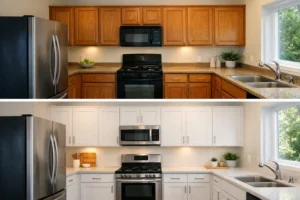
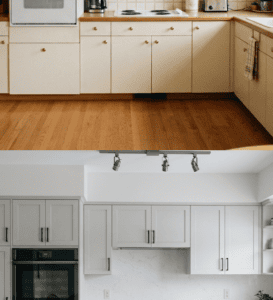
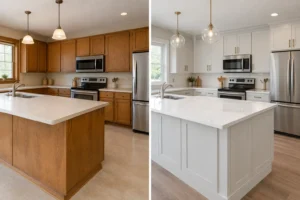
Kitchen Facelift does so much more than just reface kitchens. We build cabinets also and so can build not only full kitchens, but custom Entertainment Centres.
What a Custom Entertainment Centre Solves
Many living rooms have the same familiar problem. The television is mounted on the wall, but the soundbar, game consoles, remotes, cables, routers, baskets, and children’s accessories gather beneath it. A stand-alone console may hold some of it, but it rarely looks intentional or uses the full potential of the wall.
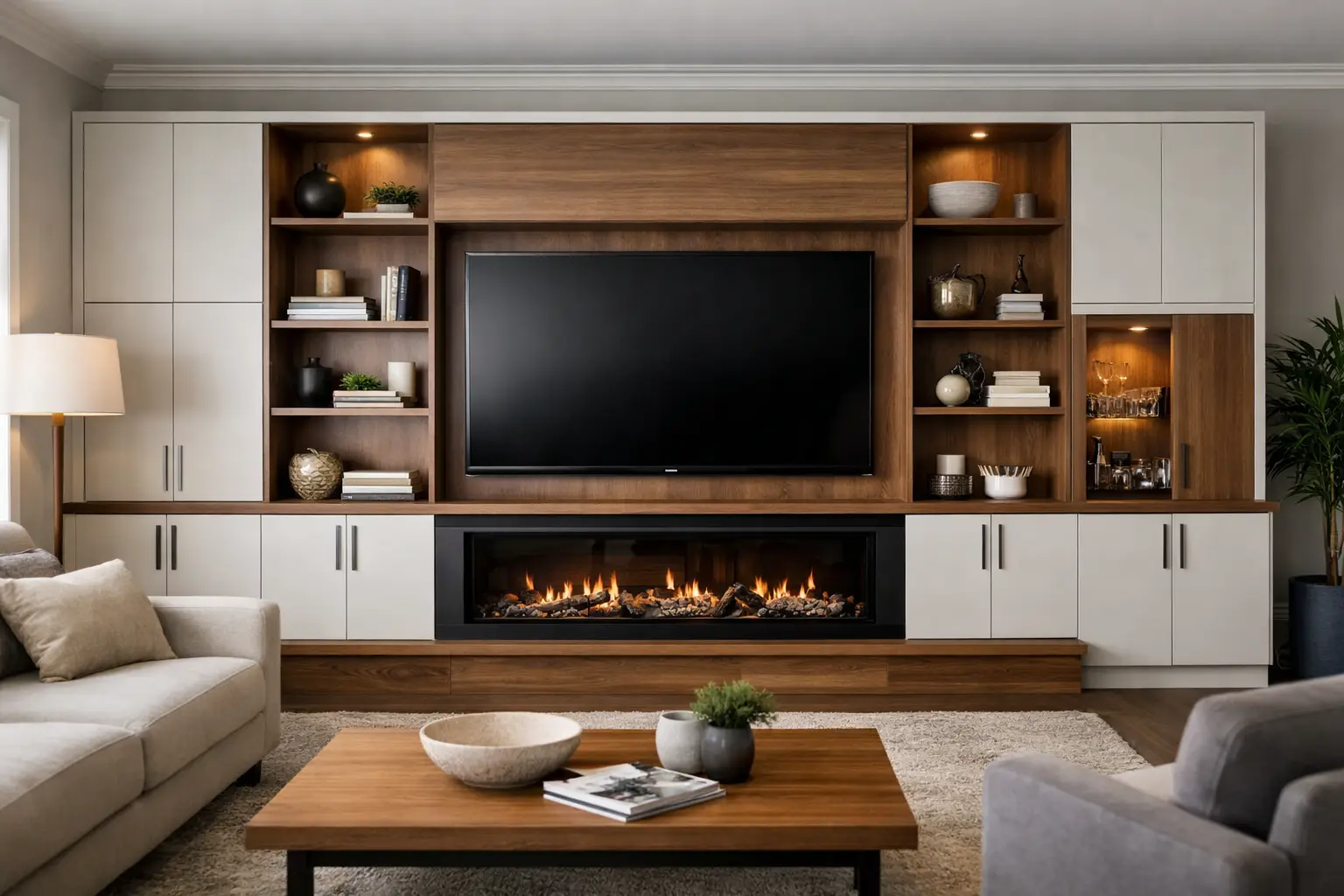
Custom entertainment centres create a place for each of those details. Closed base cabinets can hold games, blankets, speakers, and everyday extras. Open shelves can display books, pottery, or a few meaningful family pieces. Vertical cabinetry can add storage where floor space is limited. The result is not a room that feels overbuilt. It is a room that works harder while looking calmer.
There is also a practical benefit in designing around the television instead of adding furniture after the fact. Cable paths, ventilation, outlet locations, and component storage can be planned from the beginning. That means fewer visible cords and fewer compromises once installation day arrives.
Start With the Wall, Not the Television
The television is often the first thing homeowners mention, but it should not be the only measurement guiding the design. A wall unit needs to relate to the scale of the room, the ceiling height, nearby windows, and the furniture arrangement.
A large blank wall can carry a full-width composition with base cabinetry, open shelving, and upper cabinets or a feature panel. In a smaller family room, a lower profile may be the better fit: a substantial media cabinet beneath a wall-mounted TV, with select shelving rather than cabinetry that reaches too high.
It depends on what the room needs most. If storage is the priority, more closed cabinetry may make sense. If the room already has plenty of storage and needs warmth, open shelves and a textured back panel can create a more relaxed, furniture-like look. The goal is balance, not filling every available inch.
Consider the Viewing Experience
Comfort matters as much as appearance. The TV should sit at a height that feels natural from the main seating area, rather than being pushed too high to accommodate a design detail. A beautiful unit is not successful if everyone has to look upward through a movie.
Before finalizing a layout, consider where people sit most often, whether the room is used for gaming, and whether glare from windows will affect the screen. These small decisions help the finished space feel easy to use from day one.
Choose Storage That Matches Real Life
The most satisfying custom cabinetry is built around the items you actually own. That may mean a dedicated cabinet for board games, deeper drawers for blankets, or a discreet location for a printer, router, or charging station.
Closed storage is especially valuable in family spaces because it allows the room to reset quickly. A few doors closed at the end of the day can make the difference between a space that feels busy and one that feels peaceful. Open shelves, meanwhile, are best when they are used with intention. They create personality, but they also ask for a little editing.
For many homeowners, the right mix is simple: practical storage below, a clean television zone in the middle, and a limited amount of open display space at the sides. It keeps the unit useful without asking you to constantly style it.
Plan for Technology Before Installation
Technology changes, but the need for access does not. Cabinets that house electronic components need appropriate airflow, and cords need a route that is hidden but still reachable. It is also wise to think beyond the current setup. You may add a soundbar, gaming system, streaming device, or new television later.
This is where custom planning pays off. Instead of forcing equipment into a cabinet designed for something else, the cabinetry can be sized and configured around your needs. Clean lines are easier to maintain when the practical details have already been considered.
Select a Finish That Belongs in the Room
An entertainment centre should feel connected to the rest of your home, particularly when the living room opens to the kitchen or dining area. That does not mean every finish must match exactly. It means the colours, materials, and proportions should feel like they belong together.
A warm wood-look finish can add softness to a room with pale walls and upholstered furniture. Painted cabinetry can create a tailored, built-in appearance, especially when paired with subtle hardware. A darker finish can ground a large wall, while a lighter finish can help a compact room feel open.
The trade-off is maintenance and visual weight. Very dark finishes can show dust more readily, while bright white cabinetry may need more frequent wiping in an active family room. Open shelving in a contrasting finish can add interest, but too many competing colours can make the wall feel busy. Samples viewed in your actual room, under your own lighting, make these choices far easier.
Built-In Style Without Disrupting Your Home
Homeowners often assume custom wall cabinetry requires a long, disruptive construction project. It does not have to. The right process begins with a thoughtful consultation, accurate measurements, and a clear design that accounts for the wall, electrical needs, and the pieces you want to store.
At Kitchen Facelift, custom full-wall media and entertainment centres are designed and manufactured in Canada, then professionally installed with the same respect for your home that guides our kitchen transformations. The focus is on precision fit, clean installation, and a finished result that looks like it was always meant to be there.
For homeowners in the Golden Horseshoe, this is particularly appealing when the home already has good bones. You do not need to rebuild a room to make it feel more current and functional. A tailored media wall can bring structure and polish to the space you use most, while preserving the layout that already serves your family.
Details That Keep the Design Timeless
Trends can be useful for inspiration, but a full-wall unit is a meaningful addition to your home. The most enduring designs tend to rely on proportion, thoughtful storage, and finishes you will still enjoy years from now.
Keep decorative elements focused. One attractive back panel, a well-chosen finish, or integrated lighting can add character without making the unit feel tied to a passing look. Hardware should feel comfortable in your hand and suit the wider home. If you are unsure about a bold choice, use it in a smaller area, such as open shelving or a feature section, rather than across the entire wall.
Lighting deserves special attention. Soft, integrated shelf lighting can make evening reading or entertaining feel warmer, but it should support the room rather than compete with the television. Dimmable lighting offers the most flexibility for different times of day.
A well-designed entertainment centre does more than frame a screen. It gives your family room a place to settle, store what matters, and feel finished. Start with the way you want to live in the room, and the right design decisions become much clearer.