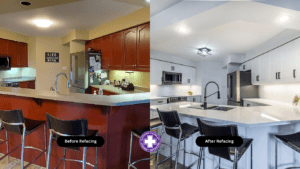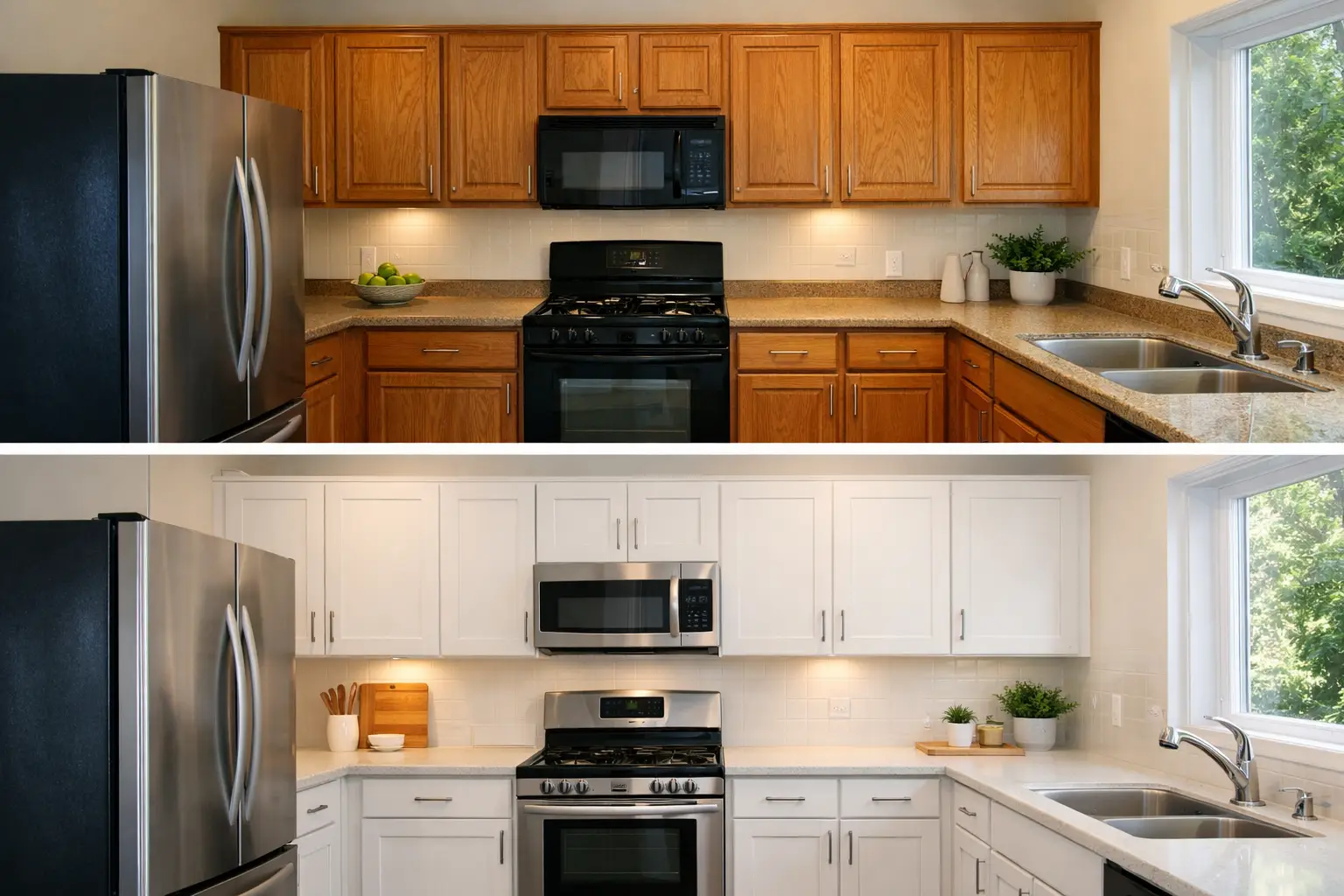
A kitchen can feel dated long before its cabinets stop doing their job. If your cabinet boxes are solid, your layout works, and you are tired of worn doors or an old finish, this cabinet refacing savings guide can help you make a more informed renovation decision. The biggest savings often come from preserving what is still valuable instead of paying to remove and replace it.
Cabinet refacing is not a shortcut or a cover-up. Done properly, it is a custom kitchen transformation built around the structure you already own. New doors, drawer fronts, panels, and finishes change nearly everything you see, while the existing cabinet boxes remain in place. The result can feel like a completely new kitchen, with far less disruption to your home.
Kitchen Facelift is you planning expert if you live in the Greater Hamilton Area.
Kitchen Facelift covers the area from Oakville to Kitchener/Cambridge and north to Milton.
Where Cabinet Refacing Creates Savings
The value of refacing begins with what does not have to happen. A full kitchen replacement typically involves removing cabinets, disconnecting elements around them, repairing walls and flooring, and rebuilding before the new cabinetry is installed. Each stage adds labor, materials, scheduling, and opportunities for the scope to expand.
With refacing, sound cabinet boxes stay where they are. That means less demolition, fewer materials headed to disposal, and less time spent putting the room back together after removal. For homeowners who like their kitchen footprint, keeping the existing structure is often the most sensible place to start.
There is also a practical saving that is harder to put on a proposal: disruption. A kitchen that is out of service for weeks changes everyday life. Meals become complicated, family routines are interrupted, and dust can reach beyond the renovation area. A professionally planned refacing project can often be completed in two to three days, which gives busy households a much clearer path from old kitchen to finished kitchen.
The Cabinet Refacing Savings Guide: What You Keep
Refacing works best when the existing cabinet construction is worth preserving. Many kitchens built in the 1980s and 1990s have sturdy cabinet boxes that were made to last. Their doors may be dated, but their structure can still be an excellent foundation for a modern design.
When those boxes are square, secure, and free from significant water damage, you may be able to retain the parts of the kitchen that are doing their job well. That can include the cabinet framework, the basic layout, and in some cases an existing stone countertop. Homeowners with granite or quartz often appreciate being able to refresh their cabinetry without automatically disturbing an investment they already enjoy.
The savings are not limited to materials. Keeping the cabinet locations can reduce the need to move plumbing, electrical connections, flooring, and appliance hookups. Those changes may be worthwhile when a layout truly fails your needs, but they should be purposeful, not automatic.
A Fresh Look Without Starting From Scratch
A refaced kitchen does not have to look like the kitchen you started with. Custom-fit doors and drawer fronts can shift the style from traditional raised panels to clean Shaker profiles, warm wood tones, or a tailored modern finish. New hardware, crown molding, light valances, end panels, and cabinet accessories can complete the change.
You can also make targeted functional improvements while preserving the overall layout. Converting a lower cabinet door section into drawers, adding pull-out storage, adjusting cabinets for a new appliance, or removing a backsplash in preparation for a countertop update can improve how the kitchen works without turning the project into a full rebuild.
What Affects Your Actual Savings
Every kitchen is different, so refacing is not a fixed-price formula. The condition and size of the cabinets matter, as do the door style, finish, hardware, modifications, and any surrounding work needed to create the finished look you want.
A straightforward kitchen with healthy cabinet boxes and a layout you love will usually deliver the clearest financial advantage. A project becomes more involved when cabinetry needs structural repairs, major layout changes, or extensive work to accommodate appliances and countertops. None of those needs automatically rule out refacing, but they change the conversation.
It also depends on your expectations. If you want to relocate the sink, remove walls, enlarge the kitchen, or completely redesign how the room flows, a full renovation may be the better route. Refacing is the intelligent choice when the bones of the kitchen are right and the goal is to transform the appearance and improve selected functions with intention.
That distinction matters. The best renovation decision is not the one with the most demolition. It is the one that solves the problems you actually have.
Avoiding Costs That Do Not Add Value
Homeowners often begin by looking at door styles and colors, but a smart project starts one step earlier: identifying what is worth keeping. Before planning a replacement kitchen, assess the cabinet boxes, your day-to-day workflow, countertop condition, and appliance plans.
Ask yourself whether the layout truly creates frustration or simply looks tired. Are you short on storage, or would drawers and organizers make the current storage easier to use? Is the countertop damaged or no longer your style, or would new doors and a refreshed backsplash make it feel at home again? Clear answers prevent you from spending on changes that will not improve your life in the kitchen.
A professional consultation should make these choices easier, not more confusing. You should receive a realistic ballpark early, then have the opportunity to see physical samples and discuss precise measurements, finishes, and possible modifications in your home. This process helps keep expectations aligned before installation begins.
Savings Beyond the Initial Project
Choosing refacing can also make sense from a long-term perspective. Quality custom-made doors and professionally installed finishes are designed for regular use, not just a quick visual update. When paired with durable hardware and thoughtful storage improvements, the finished kitchen can continue to serve your household well for years.
There is an environmental consideration, too. Preserving usable cabinet boxes reduces unnecessary disposal and the demand for replacement materials. For many homeowners, this is not the only reason to choose refacing, but it is a welcome benefit of making better use of what is already in the home.
A faster, more contained project can also be particularly valuable if you are preparing to sell, welcoming family, or simply trying to avoid living through an extended renovation. A kitchen transformation should enhance your home, not put it on hold.
When Refacing Is Not the Right Fit
Honest advice includes knowing when to look beyond refacing. Cabinets with severe water damage, failing construction, pest damage, or boxes that cannot support the changes you need may require replacement. The same is true when the kitchen layout no longer fits your household and needs major structural rethinking.
A good assessment is not about pushing one solution for every home. It is about understanding the condition of the cabinetry and the outcome you want. In established homes across the Golden Horseshoe, many homeowners discover that their existing cabinets are far more substantial than they assumed. Others learn that replacement is the right next step. Both outcomes are useful because both are based on the real condition of the kitchen.
Make the Decision With Confidence
The strongest savings are created before work begins. Preserve solid cabinetry, focus your investment on visible quality and useful upgrades, and avoid demolition that does not serve your goals. That approach can deliver a kitchen that feels current, personal, and beautifully finished while respecting your time and your home.
If you are considering refacing, take a few photos of your kitchen, note what you would change, and look closely at what is still working. A thoughtful conversation with an experienced specialist can turn those observations into a plan that feels clear, manageable, and right for your home.