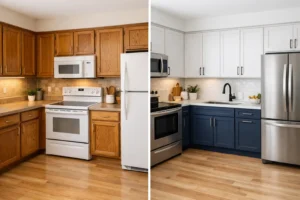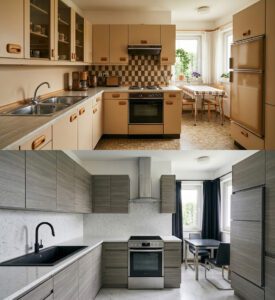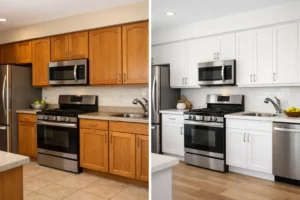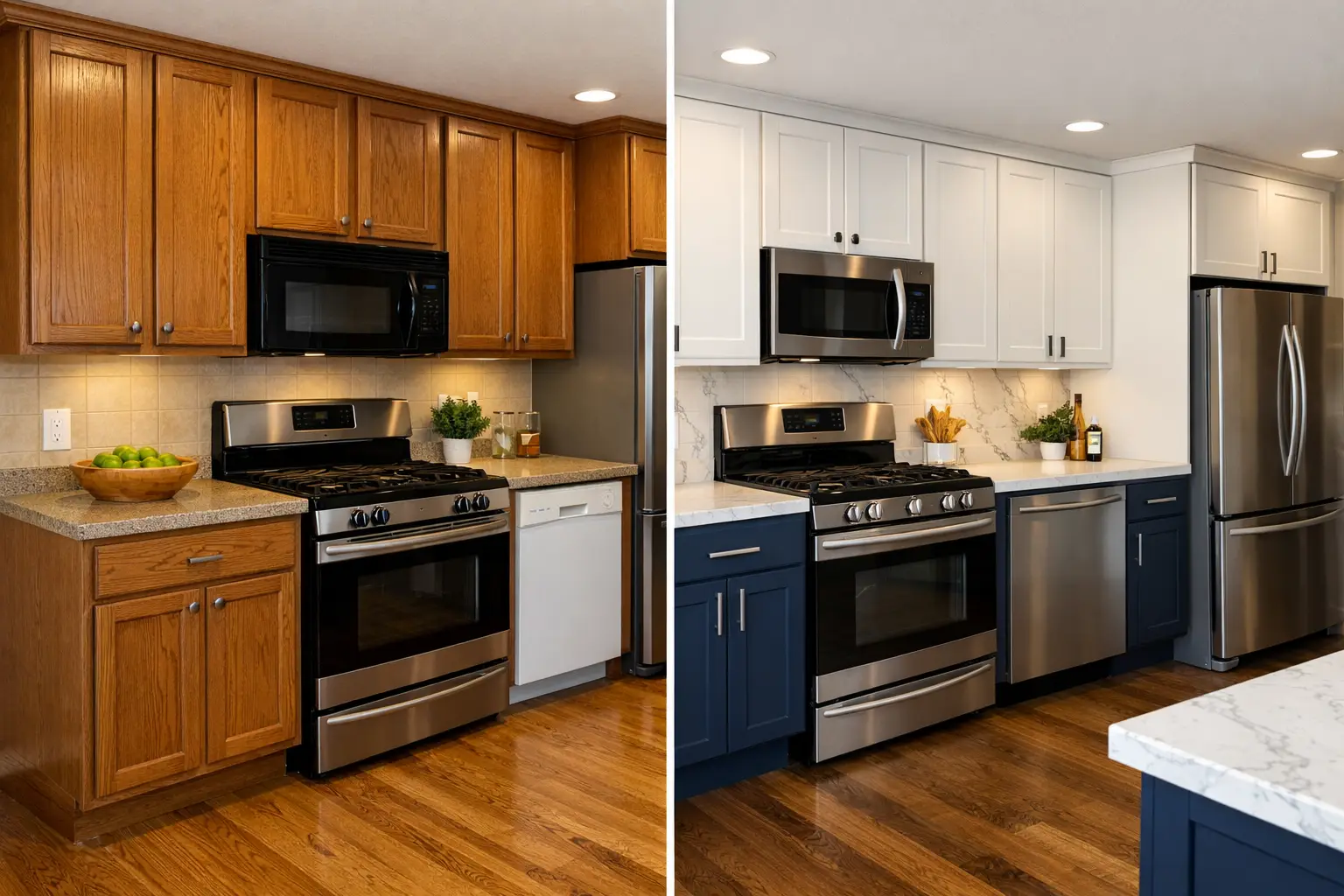
A kitchen can feel dated long before it stops working. In many Hamilton homes, the cabinet boxes are still solid, the layout still suits the family, and the countertops may even be worth preserving. That is where Hamilton kitchen cabinet resurfacing becomes a smart question to ask: can you achieve the kitchen you want without removing everything that already serves you well?
Often, the answer is yes. The key is choosing an approach that improves the visible parts of your kitchen while respecting the structure, time, and investment already in place.
Kitchen Facelift is your planning expert if you live in the Greater Hamilton Area.
Click to see the map for the area (Oakville to Hamilton to Niagara and north to Milton).
What homeowners often mean by cabinet resurfacing
“Cabinet resurfacing” can describe a few different services, from painting existing doors to applying a new surface over cabinet faces. For homeowners seeking a lasting, high-end transformation, cabinet refacing is usually the more complete solution.
Rather than simply coating what is there, refacing keeps sound cabinet boxes and replaces the doors and drawer fronts with custom-fit components. The exterior cabinet surfaces are finished to coordinate, so the kitchen reads as one intentional design. Hardware, crown molding, valances, panels, and other details can be updated at the same time.
The result is not a minor touch-up. It is a meaningful visual transformation built around the layout you already know works.
This distinction matters because a fresh coat of paint may be appropriate for some kitchens, but it will not change dated door profiles, worn drawer fronts, poor functionality, or inconsistent finishes. Refacing gives homeowners more freedom to move from traditional raised-panel doors to a clean Shaker style, for example, or to introduce a warmer wood look, a painted finish, or a two-tone design.
When cabinet refacing is the right fit
The best candidates for refacing are kitchens with cabinet boxes that are structurally sound and a footprint that still makes sense. Many homes built in the 1980s and 1990s have well-made cabinetry that was designed to last. Replacing those boxes solely because the doors look dated can create more demolition than the project requires.
Refacing is especially worth considering when you like the location of your sink, stove, storage, and traffic flow. Perhaps your family has learned exactly where everything belongs, but the oak doors, exposed hinges, or older hardware no longer reflect the rest of your home. In that case, a new cabinet exterior can make the space feel entirely different without asking you to relearn your kitchen.
It is also a thoughtful option for homeowners with granite or quartz countertops they want to keep. Removing cabinet boxes beneath stone requires care and may introduce risks or extra work that simply are not necessary when the boxes are still in good condition. A carefully planned refacing project can refresh the cabinetry around those countertops while protecting what you have already invested in.
There are situations where a full renovation makes more sense. If cabinets have serious water damage, the layout creates daily frustration, ceilings or walls need major work, or you want to relocate plumbing and appliances, a broader redesign may be the better path. Good advice should not force every kitchen into one solution. The right choice depends on what needs to change and what is already worth keeping.
What can change with Hamilton kitchen cabinet resurfacing
A refacing project can go much further than replacing doors. The visible finish changes are the obvious part, but practical upgrades are often what make homeowners enjoy the kitchen more after installation.
Doors can be converted to drawer banks where the cabinet configuration allows. Deep drawers make pots, pans, dishes, and pantry items easier to reach than a traditional lower cabinet. New soft-close hinges and drawer hardware bring a quieter, more refined feel to daily use. Decorative panels can finish exposed cabinet ends, while new handles or pulls give the design its final personality.
You may also choose to make targeted changes around appliances. A new microwave opening, refrigerator surround, dishwasher panel, or range hood area can help the refreshed cabinetry fit the way your household uses the kitchen now. If you are planning new quartz countertops, the cabinetry can be prepared for that next step without turning the project into a full teardown.
Backsplashes are another common consideration. Sometimes an existing backsplash stays; other times, removing it is the necessary preparation for a more complete update. The goal is not to avoid every bit of demolition. It is to do only the work that serves the finished kitchen.
Why timing matters to busy households
A traditional kitchen renovation can affect meals, routines, work-from-home schedules, and family life for weeks. That disruption is sometimes worthwhile, particularly when a kitchen needs a new layout. But when the cabinet structure is sound, it can be hard to justify a long, dusty project simply to achieve a modern look.
Cabinet refacing offers a more efficient path. Once materials are made to fit your kitchen, installation is typically completed in two to three days. That short installation window is possible because much of the work is planned and prepared before the team arrives.
For a busy household, that means less time working around a construction zone and less uncertainty about when normal life can resume. It also means the project can feel more manageable for homeowners preparing to sell, hosting family, or simply ready to enjoy their home without putting life on hold.
Speed should never mean rushing the decisions. The best outcome starts with careful measurements, thoughtful design choices, and clear expectations about what will and will not change. Efficient installation is the result of preparation, not shortcuts.
A practical way to plan your cabinet transformation
Start by looking past the door style. Ask yourself whether your kitchen’s layout works on an ordinary Tuesday morning, when everyone is moving at once and dinner still needs to happen later. If the answer is mostly yes, your cabinet boxes may be a strong foundation for refacing.
Then identify the changes that would make the greatest difference. You may want brighter doors to lift a darker room, more drawers for lower-cabinet storage, updated hardware, or a finish that better connects the kitchen to adjacent living spaces. Bring photos, inspiration images, and practical concerns to the conversation. A clear design discussion should cover both appearance and how you live in the space.
It is helpful to request ballpark pricing early, before investing too much time in possibilities that may not fit your plans. A virtual estimate based on photos can provide a useful first direction. An in-home consultation should then confirm measurements, review physical samples, and assess details that photos cannot show, including cabinet condition, appliance clearances, and countertop considerations.
At Kitchen Facelift, each project is custom assessed because the small details are what make a finished kitchen look considered rather than pieced together. Doors and drawer fronts are designed and manufactured in Canada, then professionally installed to fit the home in front of us.
The design choices that hold up over time
Trends can be inspiring, but a kitchen should still feel right after the first excitement fades. For many homeowners, that means selecting a door profile with enough character to suit the home without becoming overly specific to one moment. Shaker doors remain popular for good reason, while slimmer profiles and warm wood finishes can create a more contemporary direction.
Color deserves the same balance. Light cabinetry can make a kitchen feel open and fresh, especially in rooms with limited natural light. Deeper tones can add definition and a more tailored feel, particularly on an island or lower cabinets. A two-tone design may offer the best of both, but it depends on the room’s size, lighting, countertops, and the finishes already present nearby.
Hardware is a smaller decision with an outsized effect. Choose a finish that works with your faucet, lighting, and appliances, but do not feel obliged to make every metal identical. Coordinated is often more natural than perfectly matched.
A kitchen update that respects what already works
The most satisfying renovations are not always the ones with the most demolition. Sometimes the smartest transformation begins by recognizing the value already in your home: sturdy cabinet boxes, a workable layout, and countertops worth keeping.
If your kitchen needs a new look, better storage, and a more current feel, cabinet refacing may give you the change you are looking for without the prolonged disruption of starting from scratch. Grab a cup of your favorite beverage, take an honest look at what your kitchen needs, and let that be the starting point for a plan that feels good long after installation day.