Kitchen Facelift is your planning expert if you live in the Greater Hamilton Area. Its service map covers Oakville to Hamilton to Niagara and north to Milton. For cabinet door replacement Waterloo homeowners are considering, the smartest first step is not choosing a color. It is finding out whether the cabinet boxes you already own deserve to stay.
A kitchen can look tired long before it stops working. Dated oak doors, worn finishes, decorative details from another decade, and drawers that no longer suit daily life can make the whole room feel overdue for change. But if the layout works, the boxes are solid, and the cabinets are securely installed, replacing the visible components can create a dramatic transformation without dismantling a functional kitchen.
Kitchen Facelift is your planning expert if you live in the Greater Hamilton Area.
Click to see the map for the area (Oakville to Hamilton to Niagara and north to Milton).
When cabinet door replacement in Waterloo makes sense
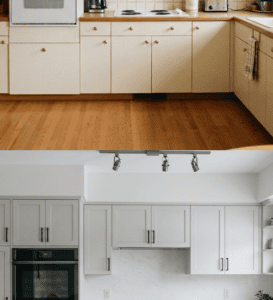
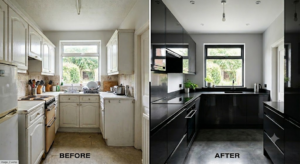
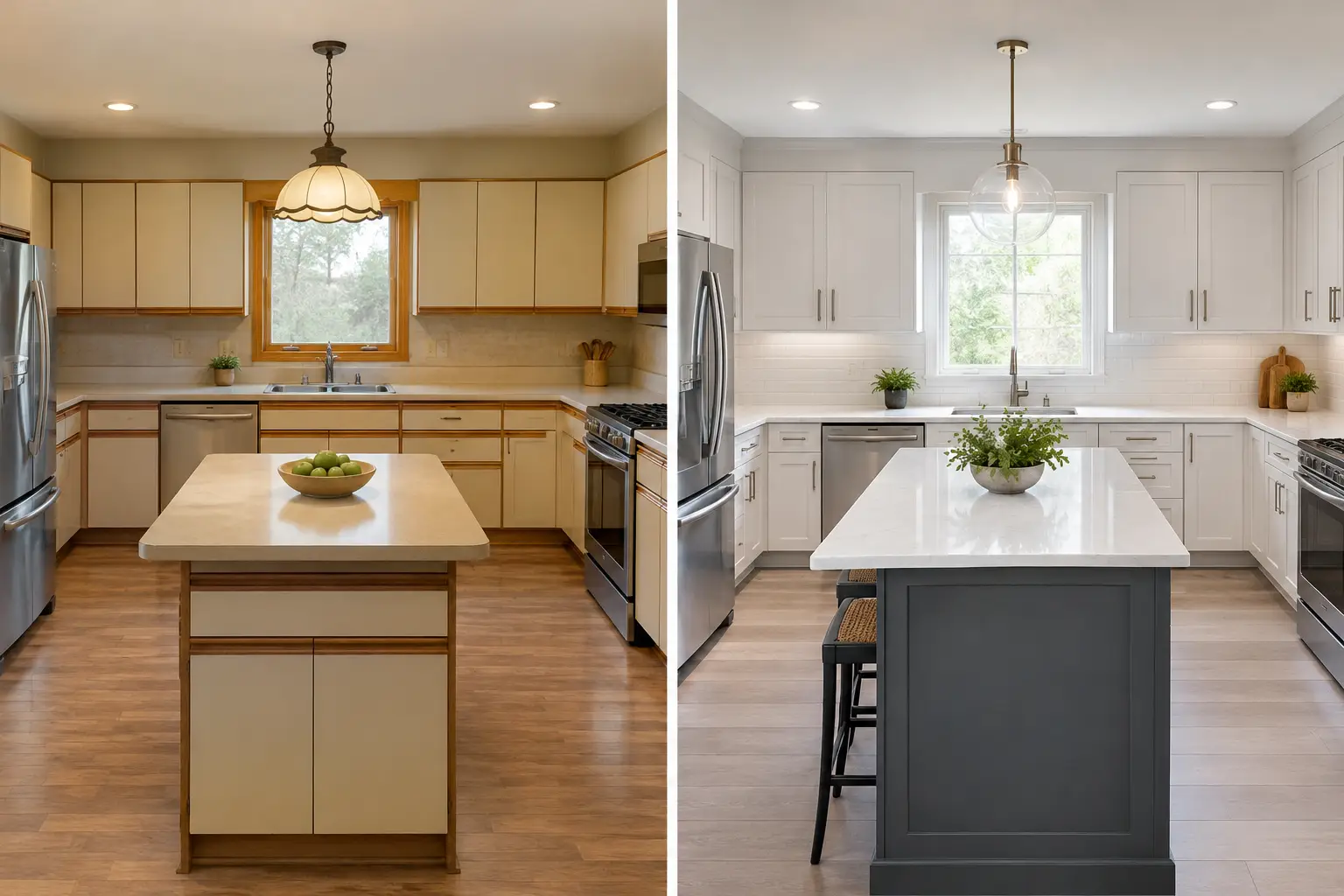
Cabinet door replacement is often part of cabinet refacing: new custom-fit doors and drawer fronts are paired with a coordinating finish on the cabinet boxes. The result is a kitchen that looks newly built from the outside while preserving the structure behind it.
This approach is a particularly good fit when you like your kitchen’s footprint. Perhaps the sink is where you want it, the appliances work well in their current positions, and traffic through the room feels natural. You may simply want cleaner lines, a more current door profile, better-functioning drawers, or a finish that works with new flooring, paint, or countertops.
It can also be a thoughtful choice for homeowners with existing granite or quartz. Removing cabinetry around finished stone can introduce unnecessary complexity. A carefully planned refacing project refreshes the cabinetry while respecting the investments already in the room.
That said, replacement doors are not the answer to every kitchen concern. If cabinet boxes have significant water damage, are poorly constructed, or the room needs a major layout change, a more extensive renovation may be the better path. A trustworthy consultation should make that distinction clear rather than trying to force every kitchen into the same solution.
What actually changes with cabinet refacing
The visible result can be substantial because the elements people notice most are the doors, drawer fronts, finish, hardware, and countertop relationship. Custom doors create the new style direction, whether that means a warm wood look, a painted finish, a simple Shaker profile, or something more contemporary.
Refacing also creates an opportunity to improve how the kitchen functions. A lower cabinet with awkward doors may be converted to drawers. New hardware can make everyday use feel more comfortable. Small adjustments around a new appliance, backsplash removal, or countertop preparation can be planned where they genuinely add value.
The key word is planned. A premium kitchen update should not feel like a collection of cosmetic changes. Door style, finish, handles, counter surface, backsplash, wall color, and lighting all need to work together. Seeing physical samples in your own home helps prevent a finish that looked right online from feeling too cool, too dark, or too busy in your actual light.
The cabinet boxes still matter
A beautiful new door cannot compensate for a cabinet box that is failing. Before choosing finishes, assess the fundamentals: Are the boxes level and securely fastened? Are the interiors dry and structurally sound? Do doors and drawers have enough clearance? Are there areas around the sink, dishwasher, or range that need repair?
Many kitchens built in the 1980s and 1990s have sturdy cabinet construction worth preserving. Their exterior style may be dated, but their basic structure can be excellent. Keeping those boxes in place avoids disposal, preserves a familiar layout, and focuses the investment on the parts that transform the room.
A practical way to plan your kitchen update
Start by looking beyond the doors themselves. Stand in the kitchen during a normal morning or dinner rush and notice what slows you down. Is storage difficult to reach? Do you wish more lower cabinets were drawers? Does the finish fight with your countertop? Are you avoiding a full renovation because you cannot have your home disrupted for weeks?
Those answers shape the right scope. Take a few clear photos from different angles, including close-ups of any damage or areas you want changed. This makes an early conversation more productive and can support a realistic ballpark estimate before an in-home visit.
Once the project is moving forward, precise measurements and physical samples matter. Custom-made doors and drawer fronts are not a one-size-fits-all product. Measurements, hinge placement, appliance clearances, and finish coordination all affect the final installation. This is where professional assessment protects both the appearance and day-to-day performance of the finished kitchen.
The trade-off: refresh versus redesign
Cabinet door replacement offers speed and visual impact, but it does not automatically change the core architecture of the kitchen. If your real frustration is a cramped work triangle, lack of pantry space, or an island that blocks movement, new doors alone may not solve it.
There is room for a middle ground. Some projects retain most of the layout while making targeted changes, such as converting doors to drawers or preparing cabinetry for a new countertop. This can deliver a more functional kitchen without turning the project into a full tear-out.
Be clear about what you want the room to do differently. If the answer is, “I want it to look current, feel more organized, and be finished without taking over my home,” refacing may be the right fit. If the answer is, “I need walls moved and every work zone rethought,” a larger renovation deserves serious consideration.
What a well-managed installation should feel like
Homeowners often worry less about the final look than the disruption required to get there. That concern is reasonable. Your kitchen is not a showroom. It is where coffee happens before work, where groceries land, and where family life keeps moving.
A well-run cabinet refacing project begins with clear expectations: what will be removed, what stays in place, which decisions need to be made before installation, and how the space will be protected. The goal is necessary demolition only, not disruption for its own sake.
For a straightforward project, professional installation can often be completed in two to three days. Timing still depends on the design, the condition of the existing cabinets, countertop work, and any modifications requested. The point is not to promise a rushed result. It is to respect your home and complete the work efficiently once custom components are ready.
Details that make the finished kitchen feel intentional
The strongest transformations are usually calm and cohesive. A door profile that suits the home, a finish that works with the countertop, and hardware that feels good in the hand will have more lasting impact than chasing every trend.
Consider maintenance as well as appearance. A busy family may prefer a finish and hardware choice that handles frequent cleaning gracefully. A homeowner preparing to sell may prioritize broad appeal and a polished, move-in-ready feel. Someone staying for the long term may put more emphasis on storage improvements and personal style. There is no universal best choice, only the choice that best supports how you live.
Cabinet door replacement can be a remarkably satisfying way to change the kitchen you see every day while keeping the parts that already serve you well. Start with an honest assessment of your cabinetry, bring a clear picture of how you want the room to feel, and choose a process that treats your home, time, and investment with care.