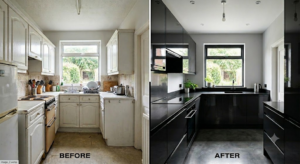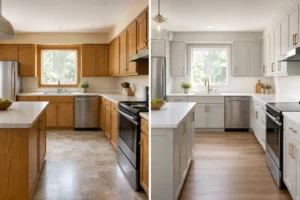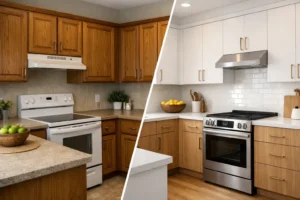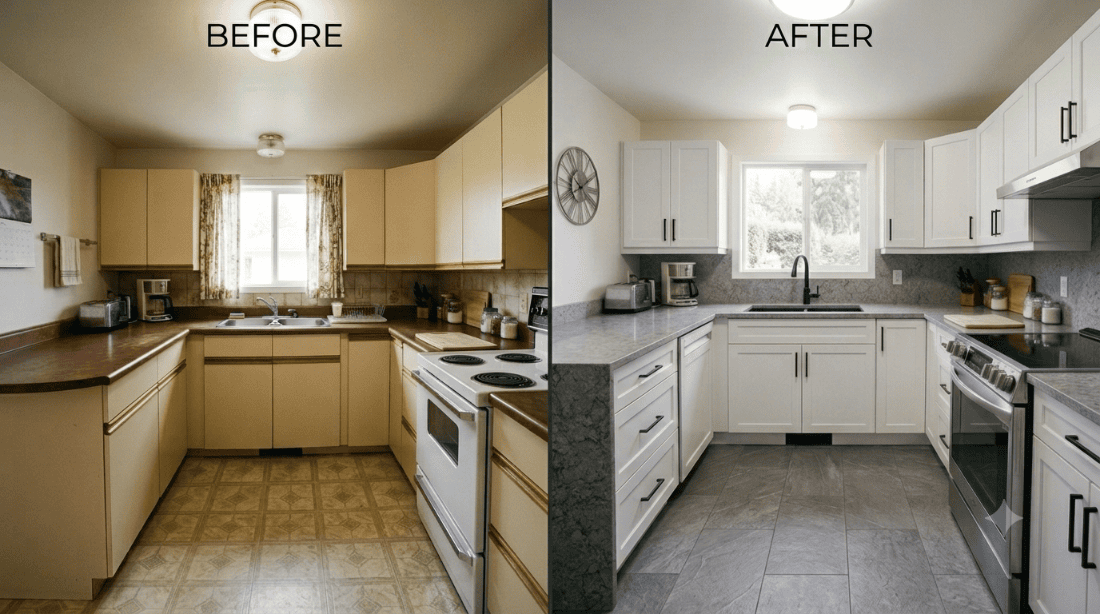
A kitchen can look dated long before its cabinet boxes stop doing their job. If the layout works, the cabinets are structurally sound, and you are ready for a more current look, choosing the best cabinet refacing materials becomes the decision that shapes the finished result.
The right material is not simply about colour or door style. It affects how the kitchen feels every morning, how well it handles fingerprints and busy family life, and whether the new finish still looks beautiful years from now. A thoughtful refacing project pairs durable, custom-fit components with the existing cabinetry worth keeping – giving you a polished transformation without turning your home upside down.
Kitchen Facelift is your planning expert if you live in the Greater Hamilton Area.
Click to see the map for the area (Oakville to Kitchener/Cambridge and north to Milton).
What Makes a Cabinet Refacing Material Worth Choosing?
Cabinet refacing typically involves applying a new finish to the visible cabinet frames and installing new doors, drawer fronts, hardware, and often moldings or panels. The cabinet boxes stay in place, so long as they are level, sound, and suitable for the changes you have planned.
That means materials need to perform in two different ways. Doors and drawer fronts need to look refined, stay straight, and stand up to daily use. The material applied to cabinet frames needs to create a consistent, carefully matched finish around them. When those elements are selected and installed well, the result reads as a newly built kitchen, not a collection of updates.
For most homeowners, the right choice depends on three practical questions: How much texture or grain do you want to see? How hard will the kitchen be used? And what level of detail suits the rest of your home?
The Best Cabinet Refacing Materials for Different Looks
Thermofoil for a clean, tailored finish
Thermofoil doors are made by wrapping a durable vinyl surface around an engineered wood core using heat and pressure. They are especially popular for smooth, contemporary doors in white, warm neutrals, charcoal, and other solid colours. Because the surface is continuous across the face and edges, thermofoil offers a clean, tailored look that is easy to wipe down.
It is a strong option for homeowners who want a fresh, modern kitchen without a heavily grained wood appearance. It also works beautifully in simple Shaker styles, slab doors, and many transitional designs.
The trade-off is heat exposure. Any cabinet material can be affected by excessive heat, but thermofoil deserves careful planning around ovens, ranges, and high-heat appliances. A professional assessment considers those areas and uses the appropriate protective details so the finish is positioned for long-term performance.
High-pressure laminate for durability and design range
High-pressure laminate, often called HPL, is a hardworking surface made from layers of resin-treated paper fused under substantial heat and pressure. It is available in solid colours, wood looks, textured finishes, and more architectural styles. Modern laminate is far removed from the flat, dated finishes many homeowners remember.
This material is an excellent choice when durability is high on your list. It resists everyday scratches, moisture, and household wear well, making it practical for active kitchens. It can also deliver a convincing woodgrain look while offering greater consistency than natural wood.
Laminate doors are especially worth considering for families who want a sophisticated finish that does not require delicate handling. Edge details matter, however. Quality manufacturing and precise installation are what give laminate cabinetry its finished, furniture-like appearance.
Wood veneer for natural character
Wood veneer offers the warmth and visual depth of real wood while using a stable engineered core beneath a thin layer of genuine hardwood. Oak, maple, walnut, and other species can introduce grain, variation, and a sense of craftsmanship that painted or smooth finishes cannot fully replicate.
Veneer is often the right answer for homeowners who want their kitchen to feel warmer, richer, or more connected to wood flooring and furniture elsewhere in the home. It can suit mid-century, modern, transitional, and classic designs depending on the species, stain, and door profile.
Natural variation is part of veneer’s appeal, but it is also the point to understand before choosing it. Grain patterns and tones will not be identical from door to door. For many homeowners, that is exactly what makes the kitchen feel distinctive. If you prefer perfectly uniform colour, a solid-colour material may be a better fit.
Painted MDF for detailed door styles
Medium-density fibreboard, or MDF, is an engineered material with a dense, smooth surface. When professionally painted, it is one of the most effective choices for crisp painted doors, especially profiles with routed details. Think classic Shaker doors, refined raised panels, or clean contemporary designs with a painted finish.
MDF does not have a wood grain, so paint lays down smoothly and evenly. That makes it well suited to whites, soft greys, deep blues, greens, and the warm neutral tones that continue to feel at home in established Ontario kitchens.
As with any painted surface, care matters. Painted MDF is best treated with gentle cleaning methods and protected from repeated hard impacts along edges. In the right kitchen, it provides an elevated, custom look with a wide range of colour options.
Cabinet Frame Finishes Matter Just as Much
New doors get most of the attention, but the visible cabinet frames are what connect the whole kitchen. If the frame finish is poorly matched, even beautiful doors can look like an add-on.
Professional refacing often uses durable matching veneers or laminates for the cabinet face frames, end panels, and exposed areas. These materials are selected to coordinate closely with the new door and drawer-front finish. The goal is visual continuity – consistent colour, texture, sheen, and edge treatment from one part of the kitchen to the next.
This is also why samples are so useful. A colour can look very different beside existing flooring, quartz, backsplash tile, and natural daylight. Seeing real materials in your home helps you make a confident decision before production begins.
How to Choose Between the Best Cabinet Refacing Materials
Start with how you want the finished kitchen to feel. A bright, quiet, contemporary kitchen may call for smooth thermofoil or painted MDF. A busy household may appreciate the resilience of high-pressure laminate. If the room needs warmth and character, wood veneer can be a beautiful choice.
Then look at the elements you are keeping. Homeowners with existing granite or quartz countertops often choose refacing because it refreshes the cabinetry around an investment they already love. In that situation, bring countertop samples or photos into the material discussion. The undertone of a white door, the direction of a wood grain, and the sheen of a finish can all change how the stone reads.
Finally, consider the cabinet boxes themselves. Refacing is a smart option for many solid 1980s and 1990s kitchens, but only after the existing cabinetry has been assessed properly. Boxes that are structurally sound can support an impressive transformation, including practical updates such as converting doors to drawers or making adjustments for new appliances.
Material Quality Is Only Half the Result
A premium material cannot compensate for poor measurements, mismatched components, or rushed installation. Cabinet refacing is a precision project. Doors must align correctly, drawer fronts must sit evenly, and every exposed surface needs to look intentional.
That is where a custom approach makes a meaningful difference. At Kitchen Facelift, materials are paired with precise measurements, Canadian-made doors and components, and professional installation designed to respect your home. Most kitchen transformations are completed in two to three days, with only the demolition needed for your specific plan.
The best choice is rarely the material with the longest feature list. It is the one that suits your style, your household, and the cabinetry you already have. With the right samples in hand and an experienced eye on the details, you can create a kitchen that feels fully renewed while preserving what was worth keeping.