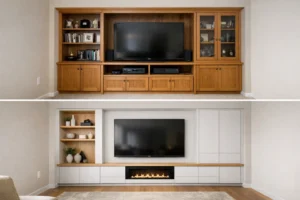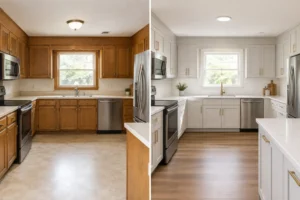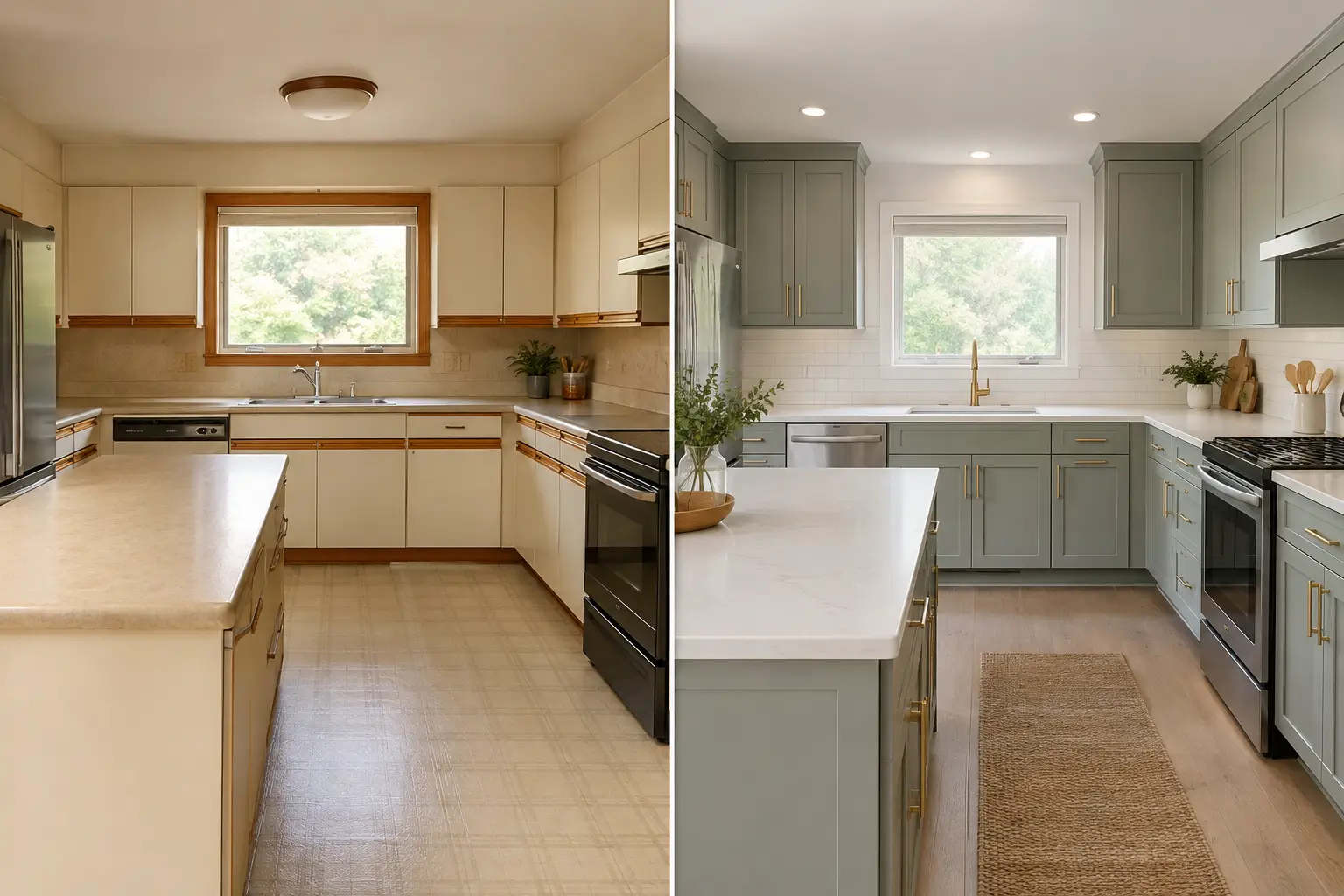
A kitchen can feel dated long before it stops working. That is why minimal demolition renovation trends are gaining ground with homeowners who want a meaningful change without turning their home into a construction zone. The idea is simple: preserve the parts of the kitchen that are still doing their job well, then invest in the visible and functional updates that make the room feel current again.
For many homes built in the 1980s and 1990s, the cabinet boxes are solid, the layout is familiar, and the room already supports daily life. What homeowners are ready to leave behind is the door style, finish, hardware, backsplash, or countertop. A thoughtful renovation does not need to begin by sending every cabinet to a landfill.
Kitchen Facelift is your planning expert if you live in the Greater Hamilton Area.
Click to see the map for the area (Oakville to Hamilton to Niagara and north to Milton).
What Minimal Demolition Really Means
Minimal demolition is not about settling for a partial result. It is about being selective. Rather than removing everything by default, the work begins with an honest assessment of what should stay, what should change, and what needs to be adjusted to support the new design.
In a kitchen, that might mean retaining sturdy cabinet boxes while replacing the doors, drawer fronts, hinges, and finishes. It can include removing an old backsplash, modifying cabinetry for a new appliance, converting a lower cabinet door section into practical drawers, or preparing the space for a new quartz countertop.
The difference is intention. Every removal has a purpose. Every retained element earns its place.
This approach works especially well when the footprint is already right. If you like where the sink, range, and refrigerator are located, there is often little value in tearing out functional cabinetry just to rebuild the same arrangement. Keeping the layout can protect your routine, reduce disruption, and focus your investment where you will see and use it every day.
Why Homeowners Are Choosing Less Tear-Out
A full kitchen renovation can be the right answer when there are water issues, unsafe construction, major layout problems, or a need to move plumbing and electrical systems. But it is not the only path to a high-end result.
Homeowners are increasingly looking for renovations that respect their homes and their time. They want a kitchen that feels custom and current, but they also want to avoid weeks of dust, trades moving through the house, and the uncertainty that can come with a larger project.
Minimal demolition offers a more measured experience. There is less material being removed, fewer moving parts, and a clearer focus on the transformation itself. For busy families, professionals working from home, and homeowners preparing to sell, timing matters just as much as appearance.
When cabinet refacing is the right fit, a dramatic update can often be completed in two to three days. That does not make the work less considered. It means the planning happens before installation, with precise measurements, custom-fit components, and a process designed to keep your home functioning.
Minimal Demolition Renovation Trends to Watch
The strongest trends are not about chasing a look for one season. They are about creating kitchens that feel polished, personal, and easy to live with.
Refacing solid cabinet boxes
Cabinet refacing is at the center of this movement for a reason. It allows homeowners to retain well-built cabinet structures while changing nearly everything they see: doors, drawer fronts, finishes, moldings, and hardware.
A traditional raised-panel kitchen can become clean and contemporary with shaker-style doors. A dark finish can be replaced with a lighter, warmer tone. A tired kitchen can gain a more tailored look without forcing a complete rebuild of the room.
The quality of the existing boxes matters. Cabinets need to be structurally sound, securely installed, and appropriate for the desired changes. A professional assessment should be candid about that. Refacing is a smart choice when the foundation is worth preserving, not a shortcut applied to cabinetry that has reached the end of its useful life.
Warm, grounded finishes
Bright white kitchens remain popular, but many homeowners are moving toward softer, warmer palettes. Natural-looking wood tones, muted greens, rich taupes, and warm neutrals can make a kitchen feel settled rather than overly styled.
These finishes pair well with stone countertops and can bring balance to open-concept homes where the kitchen is visible from the main living area. The best choice depends on the light in your home, your flooring, and how the kitchen connects to adjacent rooms. A finish sample viewed in your own space will tell you more than a photo ever can.
More drawers, fewer awkward cabinets
Function is becoming a visible part of good design. Deep drawers for pots and pans, organized bases for dishes, and easier access to everyday items can improve how a kitchen works without moving walls.
Converting selected lower doors into drawers is one of the most practical upgrades available through a minimal-demolition approach. It is particularly valuable in established homes where the kitchen has plenty of storage, but that storage is not organized for the way a family lives now.
Not every cabinet can or should be converted. The existing construction, surrounding cabinetry, and available space all matter. Still, targeted changes can solve daily frustrations without requiring a full layout redesign.
Statement surfaces with a calmer cabinet design
Quartz countertops and updated backsplashes continue to shape kitchen design, but the trend is toward restraint. Instead of competing finishes everywhere, homeowners are choosing a few strong materials and allowing them room to stand out.
For example, simple cabinet doors can support a countertop with soft veining, while a backsplash may add texture or a subtle handmade look. The goal is not to make every surface a focal point. It is to create a kitchen that feels cohesive when you walk in and still feels comfortable after years of use.
If you already have granite or quartz you love, refacing can be especially appealing. Preserving that investment while refreshing the cabinetry around it is often far more sensible than replacing materials that are still beautiful and performing well.
Hardware that changes the whole room
Hardware is a small detail with an outsized effect. Longer pulls, classic knobs, mixed metals, and warmer finishes can shift the character of cabinetry quickly. The right hardware should feel good in the hand and suit the door style, not simply follow a passing trend.
This is where samples and proportion matter. A pull that looks right online can feel too heavy on a narrow drawer or disappear against a dark finish. Seeing the components together before installation helps the final kitchen feel intentional.
Sustainability Without the Lecture
Less demolition naturally means less material sent away from the home. That matters, but homeowners do not need a lecture to appreciate the value of preserving something well made.
Keeping usable cabinet boxes out of the waste stream is a practical decision. It also respects the materials already in your home. Many older kitchens were built with durable cabinet structures that can support a completely new look for years to come.
The more meaningful question is not whether every renovation must preserve existing materials. It is whether removal is necessary. When it is, it should be handled thoughtfully. When it is not, there is no reason to create extra mess simply because that is how renovations have traditionally been done.
How to Know Whether This Approach Fits Your Kitchen
Start with the layout. If you enjoy the workflow and do not need to relocate major appliances, plumbing, or walls, minimal demolition may be an excellent match. Next, look at the cabinet boxes themselves. Are they solid, level, functional, and in good overall condition?
Then consider your priorities. If your goal is a new visual style, better storage access, updated countertops, or a kitchen that feels more aligned with your home, you may not need a full tear-out to get there. If you need major structural repairs or a fundamentally different footprint, a more extensive renovation may be appropriate.
The right answer should feel clear, not pressured. At Kitchen Facelift, that starts with a practical conversation, ballpark pricing, and an assessment of what your kitchen actually needs. Photos can often begin the process, followed by an in-home visit with samples and precise measurements.
A well-planned kitchen refresh is not defined by how much is removed. It is defined by how much better your home feels when the work is done. Keep what serves you, change what no longer does, and let every decision earn its place.