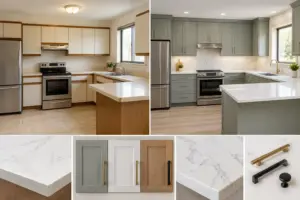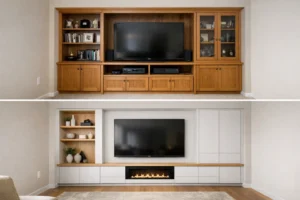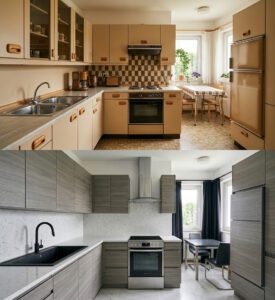
A kitchen can have a perfectly workable layout and still feel stuck in another decade because of its cabinet finish. Today’s cabinet finish trends favor warmth, texture, and choices that feel personal rather than overly styled.
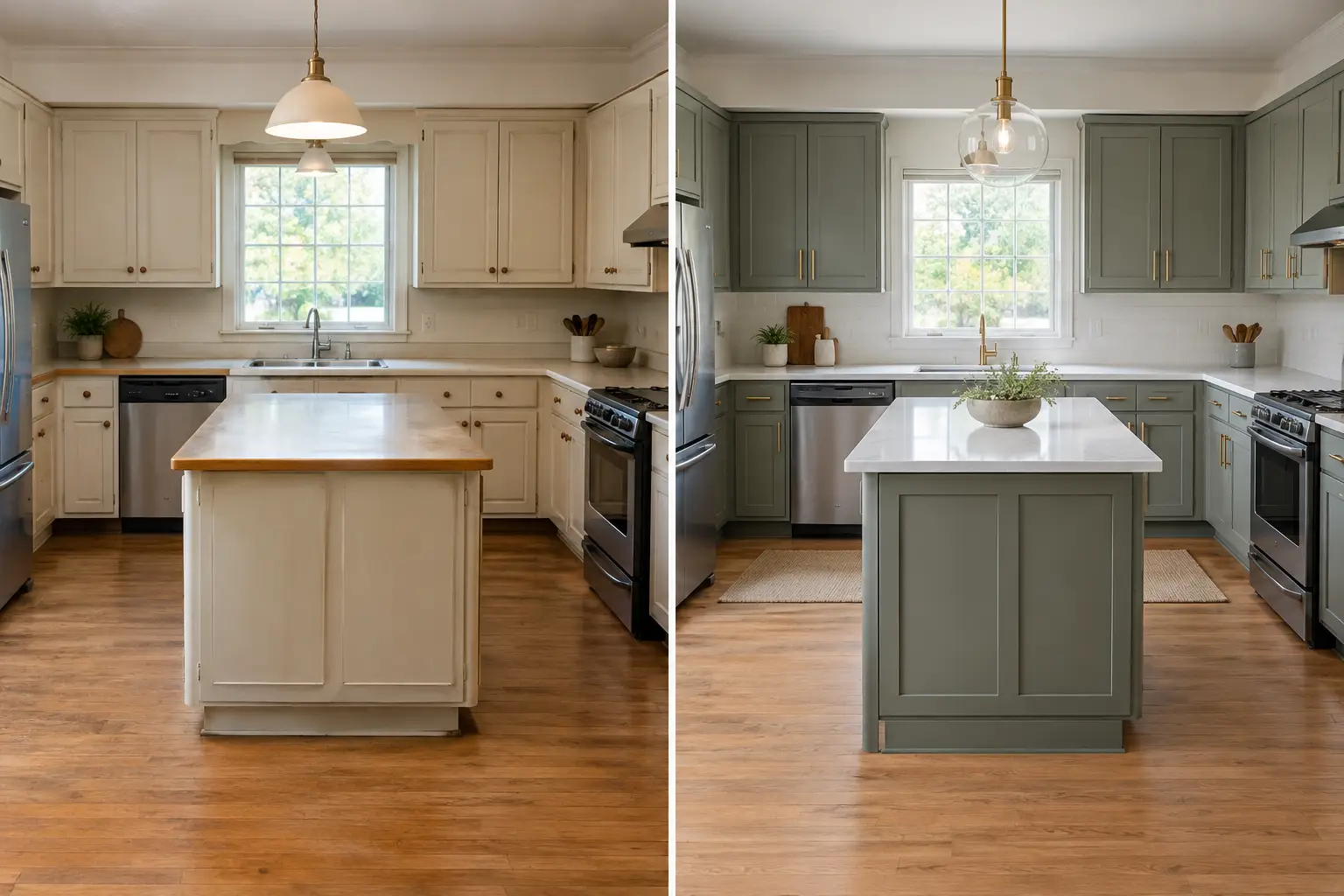
For many homeowners, that is welcome news. You do not need to replace sound cabinetry just to bring your kitchen forward. New custom-fit doors, drawer fronts, and finishes can completely change the mood of the room while preserving the parts of your kitchen that already work well.
Kitchen Facelift is your planning expert if you live in the Greater Hamilton Area.
Click to see the map for the area (Oakville to Hamilton to Niagara and north to Milton).
Cabinet Finish Trends Are Getting Warmer
Cool gray kitchens had a long run, and they can still look crisp in the right home. But the finishes homeowners are choosing now tend to have more warmth and depth. Think soft whites with creamy undertones, muted greige, mushroom, sand, taupe, and gentle earthy greens.
The appeal is simple: these colors make a kitchen feel settled. They work especially well in established homes, where flooring, trim, stone, and natural light may already bring their own character to the space. Instead of fighting those elements, a warmer cabinet finish helps the room feel connected.
This does not mean every kitchen needs to become beige. A clean white kitchen remains a classic choice, particularly for homes with limited natural light. The difference is in the undertone. Stark, icy white can feel severe beside warm wood floors or creamy quartz. A softer white often gives you the brightness you want with a more comfortable, lasting result.
Wood Grain Is Back, With a Cleaner Look
Natural-looking wood finishes are one of the strongest directions in kitchen design. The current look is not the heavy, glossy oak of decades past. It is quieter and more tailored: light oak, natural maple, walnut-inspired tones, and medium brown grains with a matte or low-sheen finish.
Wood grain brings visual warmth that paint alone cannot always provide. It also pairs beautifully with quartz, especially slabs with subtle veining or a soft stone appearance. For homeowners who want a kitchen with presence but not a lot of contrast, wood-look cabinet doors can create a calm, grounded backdrop.
The right tone depends on the rest of your home. Pale wood can keep a smaller kitchen open and airy, while deeper grain can make a larger room feel more substantial. If your existing floors have a strong orange or red undertone, samples matter. A finish that looks right under showroom lighting may read very differently in your kitchen.
Painted Cabinets Still Lead, But the Finish Matters
Painted cabinetry is not going away. What is changing is the preference for a softer, more tactile appearance. Matte and satin finishes are increasingly popular because they reduce glare and make a kitchen feel less formal than a high-gloss surface.
Satin is often the practical middle ground. It has a gentle sheen that reflects some light while remaining forgiving in a busy household. Matte can look sophisticated and contemporary, but it deserves an honest conversation about care. Dark matte finishes may show fingerprints, cooking residue, or marks more readily than a lighter satin door.
For families, the best finish is rarely the one that looks dramatic in a single photograph. It is the one that still feels good after breakfast, homework, weeknight dinners, and years of regular use. A thoughtful consultation should include physical samples, so you can see color, texture, and sheen in the actual light of your home.
Soft Green, Blue, and Charcoal Have Staying Power
Color is showing up in more kitchens, though usually with restraint. Sage and olive-inspired greens are popular because they feel natural without becoming loud. Dusty blue can bring calm to a bright kitchen. Charcoal and deep blue create a stronger contrast, especially on an island or lower cabinets.
If you are drawn to a deeper shade, consider where it belongs. A dark island can anchor an otherwise light kitchen and give the room a custom look. Using the same color on every cabinet may be beautiful in a large, well-lit space, but it can make a compact kitchen feel heavier.
There is also a practical consideration. A cabinet finish should suit the home, not just the moment. If you plan to stay for years, choose the color that makes you happy every time you walk in. If resale may be part of your near future, softer neutrals with a carefully chosen accent often give you broad appeal without feeling generic.
Two-Tone Kitchens Feel More Intentional
Two-tone cabinetry has matured beyond the simple formula of white uppers and dark lowers. Homeowners are now pairing painted finishes with wood grain, choosing a deeper island against neutral perimeter cabinets, or using slightly different tones from the same color family.
The most successful combinations have a clear reason behind them. Wood lower cabinets can add weight and warmth while light upper cabinets keep the room open. A dark island can define a gathering place in an open-concept home. A painted pantry wall can make a large run of cabinetry feel more architectural.
What matters is balance. Too many competing finishes can make a kitchen feel fragmented, particularly when countertops, flooring, and backsplash already have strong patterns. In most spaces, two cabinet finishes are enough. Let the materials complement one another rather than compete for attention.
Texture Is Replacing Perfectly Flat Surfaces
Flat-panel doors remain a favorite for clean, contemporary kitchens, but texture is becoming more visible. Wood grain, subtle linear texture, and modern shaker profiles all offer dimension without making the room feel busy.
A shaker door is still one of the most versatile choices for a cabinet refresh. Its simple frame works in traditional, transitional, and modern homes depending on the finish and hardware. A slimmer shaker profile can feel especially current, offering definition without the heavier look of a wide rail.
For a more contemporary direction, flat doors in a soft matte finish create a streamlined look. They work well with integrated pulls, warm metal hardware, or a simple edge pull. The trade-off is that a very minimal door style asks more from the rest of the room. Countertops, backsplash, lighting, and hardware need to be considered together so the kitchen does not feel unfinished.
How to Choose a Finish You Will Still Love
Trends are useful when they help you narrow choices, not when they pressure you into a decision. Before choosing cabinet finishes, look closely at what is staying. Your countertop, floor, backsplash, wall color, and adjacent living spaces all influence what will feel right.
If you already have granite or quartz you love, use it as the starting point. Pull one of its quieter colors into the cabinet finish rather than trying to match its most dramatic vein. If a countertop replacement is part of the plan, choose cabinet samples first, then evaluate stone options beside them. Cabinets cover more visual area, so they should lead the conversation.
It also helps to think about your daily life. A light finish may make a small kitchen feel more open. A mid-tone wood grain may be more forgiving in a high-traffic family kitchen. Dark cabinetry can be striking, but it usually benefits from generous light and thoughtful contrast elsewhere.
Refacing gives you the freedom to make those decisions without treating a functional kitchen as disposable. When the cabinet boxes are solid and the layout serves your household, new doors, drawer fronts, and finishes can deliver a meaningful transformation with only the demolition your project truly needs. Many kitchen refreshes can be completed in two to three days, which makes the process far easier to plan around.
The Best Trend Is One That Fits Your Home
A beautiful kitchen should not feel like it belongs to someone else. The most enduring cabinet finish trends are not about chasing a particular shade or door style. They are about choosing warmth, proportion, and materials that make your home feel more like yours.
Grab a cup of your favorite beverage, look at your kitchen in its real daylight, and notice what you would like to keep. That is often the clearest starting point for deciding what deserves to change.