The cabinet door beside the dishwasher, the drawer below the coffee maker, and the cupboard nearest the sink tell the real story of cabinet finish durability. These are the surfaces that meet steam, fingerprints, splashes, cooking oils, and the ordinary pace of family life. A beautiful finish matters, but a finish that still looks beautiful after years of daily use matters more.
For homeowners refreshing an established kitchen, the goal is not simply to choose a color you love today. It is to choose doors and drawer fronts with materials, construction, and finishes that suit the way your household actually lives. The good news is that lasting performance does not require turning your kitchen into a showroom you are afraid to use. It requires making a few informed choices before installation day.
Kitchen Facelift is your planning expert if you live in the Greater Hamilton Area.
Click to see the map for the area (Oakville to Hamilton to Niagara and north to Milton).
What Cabinet Finish Durability Really Means
When people describe a cabinet finish as durable, they often mean it resists scratches. Scratch resistance is part of the picture, but it is not the whole picture. A lasting finish should also stand up to moisture, heat, household cleaners, grease, fading, and the repeated opening and closing that happens in a busy kitchen.
Just as important, it should be repairable or forgiving enough for real life. A high-gloss dark door may look striking, for example, but it can make smudges and fine surface marks more visible than a soft matte or textured finish. That does not make it a poor choice. It simply means the right finish depends on your priorities.
Cabinet finish durability also starts below the surface. A well-made door with stable core materials, cleanly finished edges, and quality hardware is better positioned to perform over time. The finish is the layer you see and touch, but it relies on sound construction underneath.
The Finish Options and Their Everyday Trade-Offs
There is no single best cabinet finish for every home. A household with young children, a dedicated home cook, and a couple who entertain occasionally may all make different, equally sensible choices.
Laminate and textured surfaces
Modern laminate finishes have come a long way from the flat, dated surfaces many homeowners remember. Quality options can offer convincing woodgrain texture, rich solid colors, and strong resistance to everyday wear. Textured finishes are particularly practical because they tend to disguise fingerprints and minor marks better than perfectly smooth, high-sheen surfaces.
For active kitchens, laminate can be an excellent choice when it is professionally fabricated and properly edged. The edge treatment matters. Doors face moisture and impact most often at their edges, so a clean, secure edge is every bit as important as the face of the door.
Painted cabinet finishes
Painted cabinetry offers a tailored, timeless look and a wide range of color choices. It is especially appealing for homeowners who want a soft white, warm neutral, deep green, or custom-inspired look that fits the rest of their home.
The trade-off is that painted finishes can show chips or wear more readily at high-contact points than some textured manufactured surfaces. This is most noticeable around handles, corners, and doors that meet frequently used appliances. A quality painted finish can still perform beautifully, but it benefits from thoughtful care and realistic expectations. If your kitchen sees constant activity, choosing a softer sheen and using handles or pulls can help preserve the finish.
Wood and wood-look finishes
Natural wood and wood-look cabinet doors bring warmth that works well in both contemporary and traditional homes. Woodgrain also has a practical advantage: its variation can make small signs of use less obvious than they would be on a flat, solid-color door.
Real wood responds to humidity and temperature changes because it is a natural material. That movement is normal, particularly in Ontario homes through changing seasons. A well-designed, properly finished wood door accounts for this, but homeowners should not expect natural wood to behave exactly like a uniform manufactured surface. Wood-look finishes can offer a similar visual effect with more consistency from door to door.
High-gloss and ultra-matte finishes
These finishes make a strong design statement. High gloss reflects light, which can help a smaller kitchen feel brighter and more open. Ultra-matte finishes create a calm, modern look with very little reflection.
Both deserve an honest conversation about maintenance. High gloss can reveal fingerprints and fine scratches, especially in darker colors. Some matte surfaces are excellent at hiding prints, while others may show oils or be more particular about cleaning products. Ask to see full-size samples, touch them, and picture them near your sink, range, and most-used drawers. A finish should work in your kitchen, not just under showroom lighting.
Construction Matters as Much as the Surface
A finish cannot make up for a door that is poorly suited to the job. During a cabinet refacing project, the quality of the new doors, drawer fronts, hinges, and installation all influence how the finished kitchen ages.
Door edges should feel smooth and consistent. The door should hang squarely, open without rubbing, and close properly. Drawer fronts should align cleanly. These details prevent unnecessary friction and impact that can wear a finish prematurely.
Hardware deserves attention, too. Soft-close hinges and drawer systems reduce the repeated force of slamming. Handles and pulls keep hands from constantly touching the painted or laminated face of a door. Neither choice makes a finish invincible, but both reduce the daily stress placed on it.
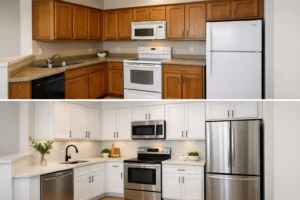
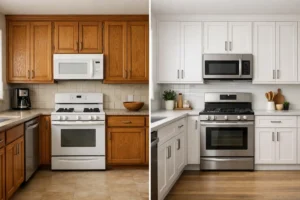
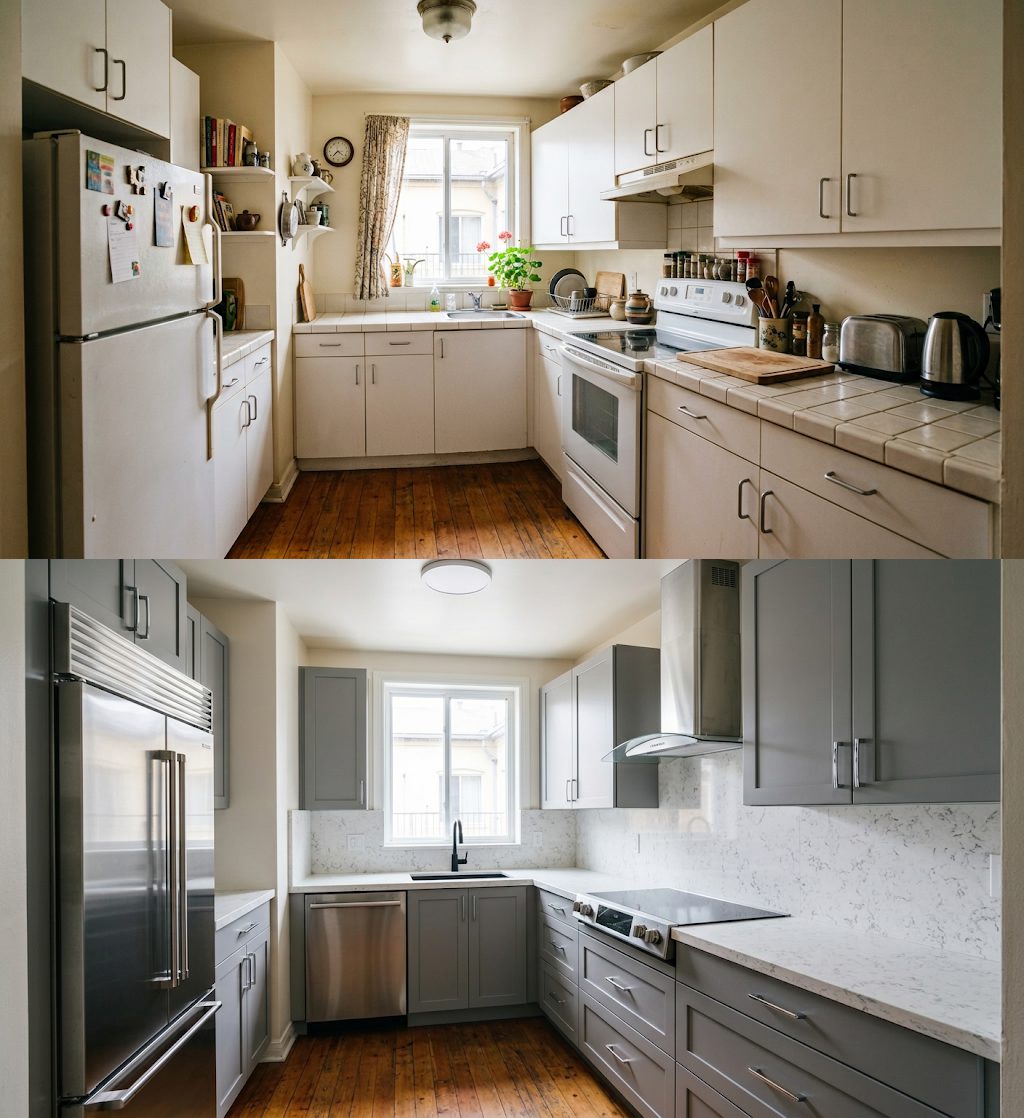
For refacing, the existing cabinet boxes must also be assessed honestly. Solid, well-built cabinetry from the 1980s and 1990s is often an excellent foundation for a new kitchen appearance. When the boxes are structurally sound, replacing the visible doors, drawer fronts, and exterior finishes can provide a substantial transformation without removing what is already working well.
The Areas That Need Extra Thought
Not every cabinet in a kitchen faces the same conditions. The sink cabinet, dishwasher-adjacent panels, waste and recycling pullouts, and cabinet doors near the range work harder than an upper cabinet storing serving dishes.
Around the sink and dishwasher, moisture management is essential. Wipe up standing water promptly, and have any plumbing leaks addressed before they become cabinet damage. Near the range, regular removal of cooking grease helps prevent buildup that can dull a finish over time.
If you are planning new quartz countertops, a backsplash update, or an appliance change as part of your refresh, sequence matters. Precise measurements and careful installation help protect both your new surfaces and the cabinet finish around them. This is one reason a custom-assessed project is so valuable: the details at the edges are where a kitchen either feels finished or starts to show compromise.
How to Keep Cabinet Finishes Looking Their Best
Most cabinet finishes do not need elaborate maintenance. They need consistency and a gentle approach. Use a soft microfiber cloth with warm water and a mild dish soap when needed, then wipe dry with a clean cloth. This simple routine handles most fingerprints, food splatters, and everyday residue.
Avoid abrasive pads, powdered cleansers, harsh solvents, and products designed to strip grease from ovens or grills. They may solve a short-term cleaning problem while leaving behind dullness, scratches, or finish damage. It is also wise to spray cleaner onto the cloth rather than directly onto cabinet faces, especially near seams and edges.
A few small habits go a long way. Use the hood fan when cooking, do not hang damp dishcloths over cabinet doors, and address drips around handles before they have time to build up. If a chip, loose edge, or water-related issue appears, deal with it early rather than waiting for it to spread.
Choosing a Finish With Confidence
The strongest choice is usually the one that balances your design preferences with your household routines. If you want a low-maintenance family kitchen, a textured wood-look or forgiving matte surface may feel like the natural fit. If you love the tailored look of painted cabinetry, it can be a wonderful choice when you are comfortable giving high-contact areas a little more care. If light and reflection are priorities, high gloss may be worth the extra attention it asks for.
During an in-home consultation, physical samples are far more useful than a photo on a screen. Look at them beside your flooring, countertop, and wall color. Hold them near a window. Notice how they feel. Ask which surfaces are best suited to the areas of your kitchen that work hardest.
At Kitchen Facelift, that practical conversation is part of creating a kitchen that feels right long after the installation is complete. The best finish is not the one with the boldest promise. It is the one that fits your home, respects your routine, and still makes you happy when you walk in for your first coffee years from now.