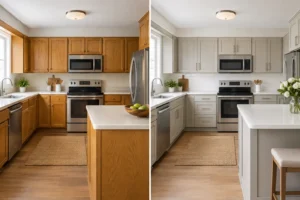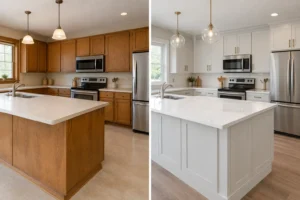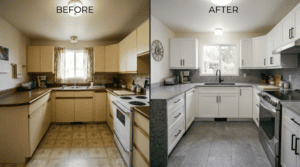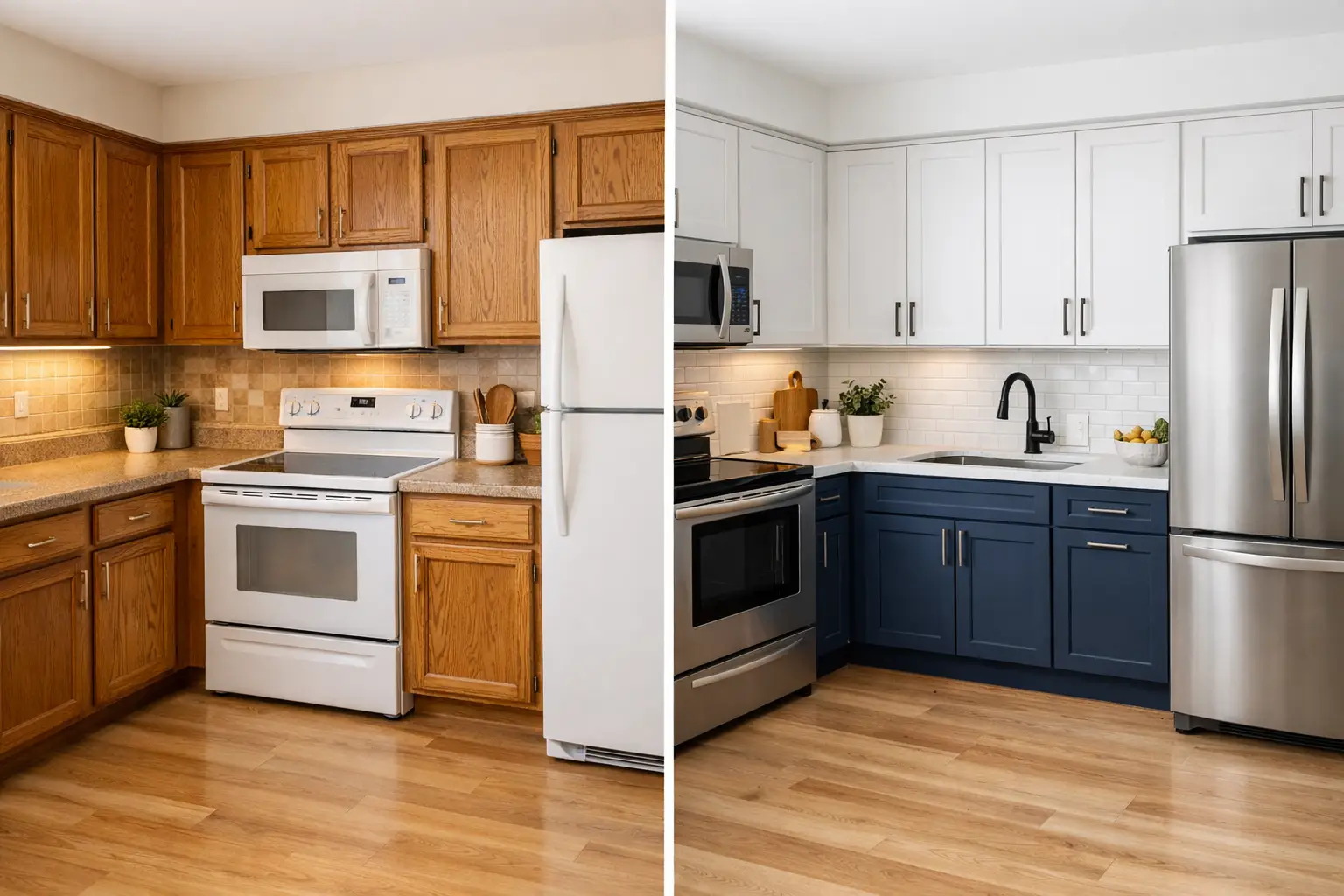
A kitchen makeover does not have to begin with ripping out cabinets that still do their job. If your kitchen layout works, the boxes are solid, and you simply no longer love what you see, cabinet refacing can give the room a dramatic new identity without turning your home upside down for weeks.
For many homeowners, the frustration is familiar: honey oak doors, dated profiles, worn finishes, and a backsplash that belongs to another decade. Yet behind those doors may be well-built cabinetry with years of life left. The smarter question is not always, “Should we replace everything?” It is, “What needs to change for this kitchen to feel like ours again?”
Kitchen Facelift is your planning expert if you live in the Greater Hamilton Area.
Click to see the map for the area (Oakville to Hamilton to Niagara and north to Milton).
Start With What Your Kitchen Already Does Well
The most successful kitchen transformations begin with an honest assessment. A full renovation makes sense when the layout is truly failing your household, water damage has compromised the cabinetry, or major structural work is required. But those circumstances are not the whole story.
If you like where the sink, range, and refrigerator sit, and your cabinets are structurally sound, preserving the cabinet boxes can be a thoughtful decision. Refacing replaces the visible components – doors, drawer fronts, and exterior finishes – while keeping the functional foundation in place. The result can be a kitchen that looks completely rebuilt while avoiding demolition that adds little value to your everyday life.
This approach is especially appealing in established homes, where kitchens from the 1980s and 1990s often have sturdy construction but a look that has simply aged out. A fresh door style, updated hardware, and a carefully chosen finish can change the entire feel of the room.
What a Kitchen Makeover Can Change
Refacing is not a cosmetic shortcut. Done properly, it is a custom-fitted transformation based on your actual cabinets, your priorities, and the way your family uses the space. New doors and drawer fronts are made to fit precisely, so the finished kitchen feels intentional rather than patched together.
The biggest visual shift usually comes from the cabinet style and finish. A simple shaker door in a soft white can make a traditional kitchen feel brighter and cleaner. Natural wood tones can bring warmth to a space that has felt cold or overly formal. Deep greens, rich blue-grays, and layered two-tone combinations can add personality without making the kitchen feel temporary.
Hardware matters, too. Long pulls can give wide drawers a more tailored appearance, while smaller knobs or mixed hardware can suit a softer, more classic design. These are details, but they are the details you touch every day.
A makeover can also address practical frustrations. It may be possible to convert a door cabinet into drawers, adjust cabinetry for a new appliance, remove an old backsplash, or prepare the space for quartz countertops. The scope should be driven by what improves your kitchen, not by an assumption that every surface must be removed.
Choose a Look That Will Still Feel Right Later
Trends can be useful for inspiration, but your kitchen should not feel like a time capsule two years from now. The best design choices balance what you enjoy now with what will continue to feel comfortable over time.
Start with the fixed elements you intend to keep. If you already have granite or quartz countertops that you love, let them guide the cabinet finish rather than treating them as an obstacle. A cabinet color that looks beautiful in a showroom can clash with the undertones in existing stone. Samples viewed in your own kitchen, in your natural light, make a meaningful difference.
Consider how much contrast you want. White cabinets can make a compact kitchen feel open, but a warmer off-white may be more forgiving in a busy family home. Dark lower cabinets paired with lighter uppers can create definition while keeping the room bright. Woodgrain finishes add depth and are often a natural fit for homeowners who want warmth without returning to a dated look.
There is no single right answer. The right finish is the one that works with your countertops, flooring, wall color, and day-to-day life.
Do Not Forget the Parts You Use Most
A beautiful kitchen should work better, not merely photograph better. Before finalizing a design, think through your daily routines. Are drawer fronts easier for the cookware you reach for constantly? Would a pullout waste solution make food preparation less frustrating? Is there a cabinet that could be better used for storage than for an appliance you rarely use?
Small functional changes often have an outsized effect. They can make the refreshed kitchen feel genuinely more convenient from the first week, rather than simply new.
A Clear Process Makes the Project Easier
Renovation stress often comes from uncertainty: unclear pricing, endless product decisions, crews arriving without a defined plan, and a kitchen left unusable far longer than expected. A well-managed refacing project should feel much more straightforward.
The process can begin with photos and a ballpark estimate, giving you an early sense of whether the project fits your plans. An in-home consultation then allows for precise measurements, a close look at cabinet condition, and time with physical door and finish samples. This is where practical questions deserve direct answers: Can the existing cabinets support the changes you want? Will a new countertop require preparation? What will installation involve in your home?
Once the design is confirmed, custom components are made for your kitchen. Installation is focused and purposeful. Rather than removing every cabinet and rebuilding the room from the ground up, the work concentrates on the elements that need to change. Many cabinet refacing transformations can be completed in two to three days, depending on the scope.
That timeline is valuable for busy households. It means less time working around trades, fewer meals planned around a construction zone, and a quicker return to normal life. It also means the project can be easier to schedule around work, family visits, or a future move.
Know When Refacing Is the Better Fit
Cabinet refacing is a strong choice when you want a premium new look, your current layout makes sense, and the cabinet boxes are in good condition. It is also a thoughtful option for homeowners who have already invested in countertops they want to protect and complement.
A full renovation may be the better route if you need to move plumbing, remove walls, substantially enlarge the kitchen, or solve serious cabinet damage. There is value in choosing the scope that actually matches the problem. More demolition is not automatically more improvement.
This is why a professional assessment matters. It should give you clarity, not pressure. You deserve to know whether your existing kitchen is a candidate for transformation and what trade-offs come with each path.
Plan for a Finished Room, Not Just New Cabinet Doors
Cabinet doors are the visual centerpiece, but the surrounding details make the makeover feel complete. Backsplash, lighting, wall paint, counter stools, and window coverings should be considered as part of one room. You do not need to replace everything at once, but you do need a plan for how the pieces will relate.
For example, a bright cabinet finish may call for warmer lighting to prevent the room from feeling stark. A more dramatic cabinet color may benefit from a quieter backsplash. If your floor has strong variation or a warm undertone, bring samples home before choosing a finish that could fight with it.
Kitchen Facelift approaches these decisions with the same principle that guides the installation itself: preserve what is working, improve what matters, and make every change feel considered. Canadian-made custom doors, careful measurements, and professional installation are not extras. They are what allow a refaced kitchen to look finished from every angle.
Your kitchen should support the life happening around it – weekday breakfasts, family dinners, quick coffee before work, and conversations that continue long after the dishes are done. If the structure is sound, you may be much closer to the kitchen you want than you think.