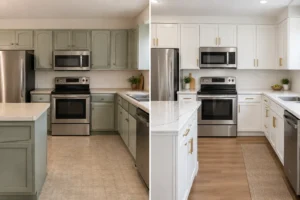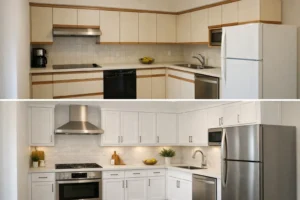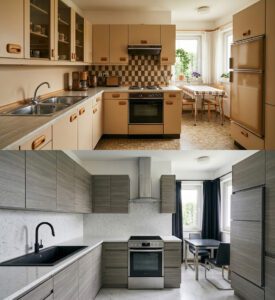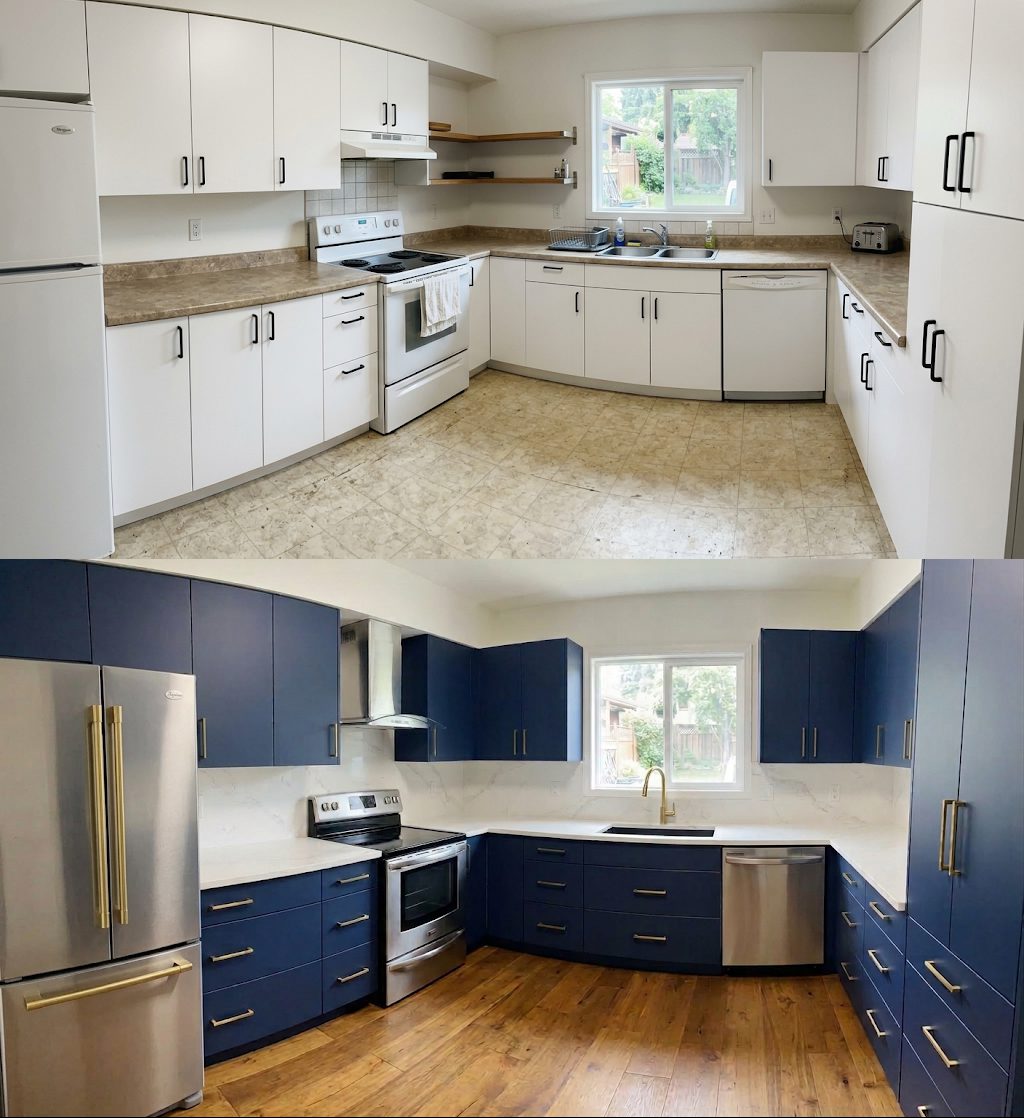
If you are weighing drawer conversion versus new cabinets, the real question is not simply which option looks newer. It is whether your existing kitchen has a solid foundation worth improving. For many homeowners, especially those with well-built cabinetry from the 1980s or 1990s, converting lower doors to drawers can make the kitchen work better without turning the entire room into a construction zone.
A new cabinet installation has its place. But if you like your kitchen’s layout, your cabinet boxes are structurally sound, and you want a more functional, current-looking space, a drawer conversion paired with cabinet refacing can be the more thoughtful path.
Kitchen Facelift is your planning expert if you live in the Greater Hamilton Area.
Click to see the map for the area (Oakville to Hamilton to Niagara and north to Milton).
What a Drawer Conversion Actually Changes
Traditional base cabinets often hide deep shelves behind two doors. They can hold plenty, but reaching the pots, small appliances, and containers at the back usually means crouching, sorting, and moving everything in front first.
A drawer conversion replaces that door-and-shelf arrangement with purpose-built pullout drawers. Instead of reaching into a dark cabinet, you bring the contents out to you. Pots, pans, serving dishes, pantry items, and everyday cooking tools become easier to see and easier to access.
This is more than a cosmetic improvement. Drawers can make a familiar kitchen feel noticeably more comfortable to use, particularly for busy households and homeowners planning to enjoy their home for years to come. The conversion can also be part of a larger refacing project, with new custom-fit doors, drawer fronts, hardware, and finishes creating a fully updated appearance.
The cabinet boxes remain in place when they are sound and properly installed. The visible surfaces change, the storage function improves, and the kitchen gets a fresh look without removing every cabinet from the room.
Drawer Conversion Versus New Cabinets: The Main Difference
The biggest distinction is simple: a drawer conversion improves and reworks cabinetry that is still worth keeping. New cabinets replace the existing boxes, whether or not those boxes have reached the end of their useful life.
That difference affects the scope of work. New cabinets often mean removing existing cabinetry, managing flooring and wall repairs, disconnecting or repositioning services, and coordinating countertop removal and replacement. The project may also invite bigger decisions about layout, plumbing, electrical work, and appliances.
A drawer conversion and refacing project is more focused. It respects the parts of the kitchen that already work while updating the parts you see and use every day. There is still skilled work involved, especially when modifying base cabinets or preparing for new countertops, but the disruption is typically far more contained.
For homeowners who have already invested in granite or quartz, this can be especially appealing. Preserving a workable cabinet footprint may allow you to refresh the kitchen without automatically putting a sound stone countertop at risk of removal or replacement.
When a Drawer Conversion Is the Better Fit
A drawer conversion is often the right choice when the kitchen layout already makes sense. Perhaps the sink, range, refrigerator, and main prep areas are where you want them. Maybe the room has good storage overall, but the lower cabinets feel dated and inconvenient.
It is also a strong option when cabinet boxes are solid. Older cabinetry can be exceptionally well built, with sturdy materials and frames that deserve a second life. If the boxes are level, structurally sound, and free from significant moisture damage, replacing them may not add meaningful value to your daily experience.
Choose this route when you want to improve access, not reinvent the room. Converting a lower cabinet near the range into pot drawers, for example, can solve an everyday frustration immediately. Adding drawers where you store dishes or food containers can make cleanup and meal preparation feel less cumbersome.
Homeowners who value a shorter project timeline tend to appreciate this approach as well. A professionally planned refacing transformation, including selected drawer conversions, can often be completed in two to three days. That matters when the kitchen is the center of family life and being without it for weeks would create real stress.
When New Cabinets Make More Sense
There are situations where new cabinets are the wiser investment. If the cabinet boxes are swollen from water damage, poorly constructed, badly out of level, or no longer secure, a new installation may be necessary. Refacing and drawer conversions should improve a sound kitchen, not disguise a deeper structural issue.
New cabinets also make sense when the layout itself is the problem. If you need to move walls, relocate plumbing, create a larger island, add a pantry, or change the position of major appliances, you are moving beyond a refresh. At that point, starting with new cabinetry can give the project the flexibility it needs.
The same is true when your storage needs have changed dramatically. A family that now needs more cabinetry than the room can reasonably hold may benefit from a redesigned plan rather than trying to make an undersized layout carry more than it can.
This is not a failure of refacing. It is simply a matter of choosing the work that matches the condition of the kitchen and the goals you have for it.
Consider the Cost Beyond the Cabinets
Comparing quotes can be difficult if you only look at the cabinet line item. New cabinetry can bring related work that is easy to overlook at the beginning: demolition, disposal, drywall repair, flooring adjustments, backsplash work, countertop coordination, and potential electrical or plumbing changes.
A drawer conversion within a refacing project is generally more predictable because it works with the existing footprint. The scope is narrower, and there are fewer surprises created by opening walls or removing cabinetry that has been in place for decades.
That does not mean every conversion is identical. Cabinet construction, drawer size, appliance clearances, countertop plans, and the condition of the existing boxes all matter. A professional assessment should confirm what can be modified safely and what will deliver the most useful result.
The goal is not to spend less for the sake of it. It is to put your investment where it improves your kitchen most – in durable materials, thoughtful storage, precise fitting, and an installation process that respects your home.
Think About the Way You Use Your Kitchen
Before deciding, stand in your kitchen during an ordinary weekday. Notice where you hesitate, bend, reach, or shuffle items around to find what you need. Those small moments usually reveal whether a drawer conversion will solve the problem.
If the issue is access to pots, pantry staples, or everyday dishes, drawers may make a remarkable difference. If the issue is that there is nowhere to prep food, the refrigerator blocks circulation, or the room lacks the storage your household needs, a full redesign may be more appropriate.
It can help to think in priorities rather than features. Are you trying to preserve a layout you already enjoy? Protect an existing quartz countertop? Create a more current look before selling? Make cooking easier without putting family life on hold? Clear priorities make the right path easier to see.
What to Expect From a Professional Assessment
A good consultation should feel practical, not pressured. The first step is understanding the cabinet boxes, the layout, your storage frustrations, and the finishes you want to bring into the room. Photos can often provide an initial sense of scope, followed by an in-home visit to review samples, take precise measurements, and confirm what is possible.
At Kitchen Facelift, each project is custom assessed because no two kitchens – or homeowner priorities – are exactly alike. Some kitchens benefit from several lower drawer conversions. Others need only one strategic change, paired with new doors, drawer fronts, and a finish that makes the entire room feel renewed.
You should also expect clear discussion about any necessary demolition. If a backsplash needs removal, a new appliance requires an adjustment, or cabinetry needs preparation for quartz, those details should be planned upfront. The best renovation experience is the one with no unnecessary surprises.
A Better Kitchen Does Not Always Require Starting Over
New cabinets are the right answer when your kitchen needs a new structure or a new layout. But when the bones are good, replacing everything can mean giving up solid cabinetry, added disruption, and more work than your home truly requires.
A well-planned drawer conversion can change how your kitchen feels every day: less reaching, less searching, more room for the things you use. Pair it with premium cabinet refacing, and the result can look as considered as a full renovation while preserving the parts of your home that are already serving you well.
Before you commit to a major teardown, take a closer look at what is already there. The most satisfying kitchen transformation is often the one that keeps what works and thoughtfully improves everything that does not.