A television can quickly become the visual centre of a living room, whether you planned for it or not. Cords collect beneath it, consoles feel undersized, and the wall around it starts to look unfinished. Well-designed media walls solve that problem by giving the room a purpose-built focal point: one that holds the technology, adds useful storage, and looks like it has always belonged there.
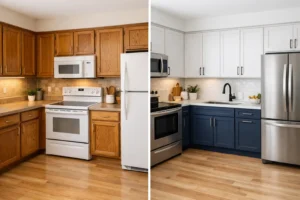
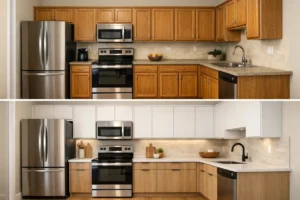
For homeowners who have already made thoughtful updates elsewhere in the home, a custom media wall is often the missing piece. It brings the same sense of order and finish to the living room that tailored cabinetry brings to a kitchen, without asking you to turn your home upside down.
Kitchen Facelift is your planning expert if you live in the Greater Hamilton Area.
Click to see the map for the area (Oakville to Hamilton to Niagara and north to Milton).
What Is a Media Wall?
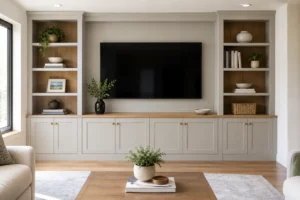
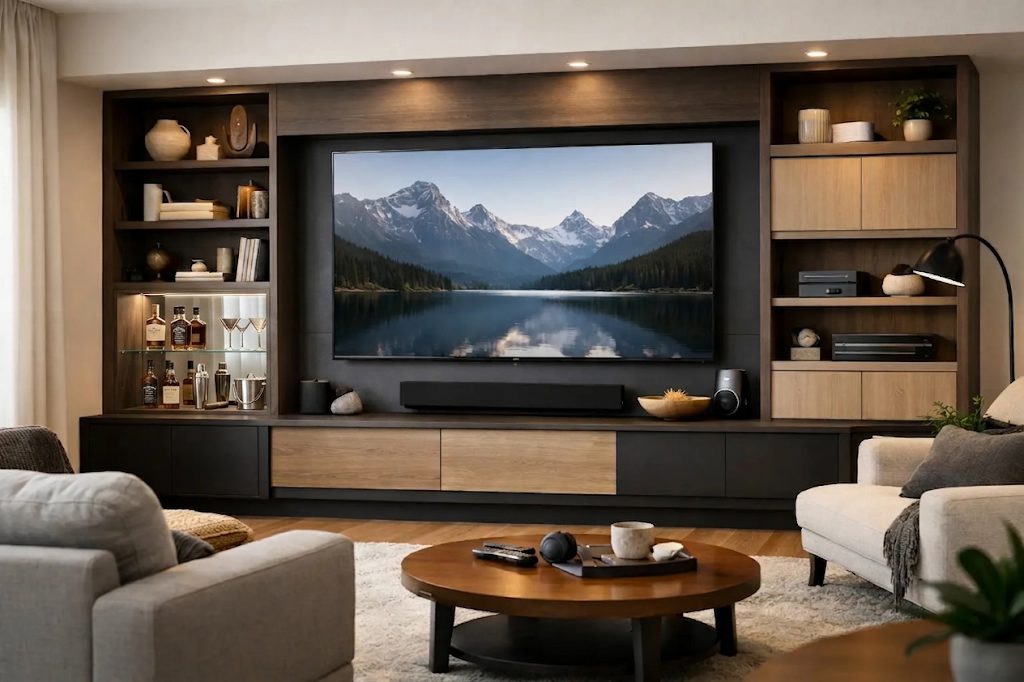
A media wall is a custom-built wall unit designed around your television, entertainment equipment, storage needs, and style. It may include a mounted TV, lower cabinets, open shelving, integrated lighting, display space, or a fireplace feature. Some designs span the entire wall. Others create a more compact entertainment centre that fits naturally into an existing living room layout.
The real benefit is not simply having a place to mount a screen. A thoughtfully planned unit makes the technology feel intentional rather than temporary. Speakers, game consoles, remotes, routers, and cables have a home. Books, family photos, and meaningful objects can be displayed without creating visual clutter.
For many households, the best design is less about adding more furniture and more about replacing several mismatched pieces with one tailored solution.
Why Full-Wall Media Walls Feel More Finished
A standard TV console can be perfectly functional, but it rarely uses the wall around it well. A full-wall media unit creates proportion. It gives a large television an architectural setting and makes even a simple room feel considered.
This matters especially in open-concept homes, where the living room is visible from the kitchen, dining area, or front entry. When one wall is carrying much of the visual weight, a custom entertainment centre can help the whole main floor feel more cohesive.
There is also a practical advantage. Full-wall designs create storage where freestanding furniture often falls short. Closed cabinets can hold board games, electronics, throws, and items you want nearby but not on display. Open shelves can add personality, provided they are styled with restraint. The goal is not to fill every shelf. It is to give the room breathing room.
A media wall can also be designed to echo cabinetry or finishes used elsewhere in the home. Warm wood tones, clean painted doors, soft neutral colours, or a mix of open and closed storage can help the living space feel connected to the rest of your renovation decisions.
Start With How Your Room Is Actually Used
The most successful media walls are designed for real life, not just a photo. Before choosing finishes or shelf arrangements, think through how your household uses the room.
If it is the family movie room, you may need generous concealed storage for gaming systems, sound equipment, blankets, and toys. If it is a formal sitting room, a slimmer design with refined display shelving may be a better fit. If you watch TV every evening but dislike seeing it dominate the room, cabinetry and balanced vertical elements can soften its presence.
Viewing height deserves attention, too. Mounting a TV too high is one of the most common design mistakes, particularly when a fireplace is involved. A fireplace can create a beautiful focal point, but it is not automatically the right location for every television. Heat clearances, viewing comfort, wall depth, and seating distance all need to be assessed together.
It depends on the room. In some homes, placing the television above a fireplace makes sense. In others, a side-by-side arrangement or a dedicated media wall provides a more comfortable view and a better overall composition.
Storage Should Be Specific, Not Generic
Custom cabinetry earns its value when it is planned around what you own. A cabinet sized for a soundbar, receiver, or gaming console needs ventilation and easy access. A drawer for chargers and remotes should be convenient, not an afterthought. Tall side cabinets may be useful for books and seasonal decor, but they can feel heavy if the room is already narrow.
This is where a professional consultation makes a noticeable difference. Rather than choosing a unit based on a showroom image, you can decide what needs to disappear behind doors, what deserves to be seen, and what would only add clutter.
The Design Decisions That Matter Most
A media wall does not need to be elaborate to feel premium. Often, the strongest designs rely on clean lines, careful scale, and finishes that suit the home. The right balance comes down to a few practical choices.
First, consider whether you want the unit to blend into the wall or stand out as a feature. Matching the cabinetry colour to the wall creates a quieter, more built-in look. A contrasting wood grain or deeper painted finish gives the wall more presence.
Next, look at symmetry. Symmetrical shelving on either side of a television can feel calm and formal. Asymmetrical layouts can be equally attractive, particularly when the room has windows, doors, or an off-centre fireplace to work around. There is no single right answer. The best approach respects the architecture already in the room.
Lighting can add warmth, but it should support the space rather than compete with it. Integrated shelf lighting works beautifully for a few display pieces. It is less effective when every surface is lit and the room starts to feel overly staged. Dimmable lighting gives you flexibility for movie nights, entertaining, and quieter evenings at home.
Finally, plan for the cords before installation begins. Hidden wire management is one of the details people appreciate long after the project is complete. A beautiful wall loses impact quickly when cables are visible below the TV or equipment cannot be accessed easily.
A Better Fit Than Off-the-Shelf Furniture
Ready-made entertainment units have their place, especially for temporary spaces or simple storage needs. But they are built for a broad range of rooms, not yours. Their widths, depths, finishes, and internal layouts are fixed. The result can be a piece that is almost right but still leaves awkward gaps, lacks storage, or feels out of scale.
A custom media wall is measured for the room, the television, and the way you live. It can accommodate an uneven wall, work around a vent or outlet, and create a deliberate fit from one side to the other. That precision is particularly valuable in established homes, where walls are not always perfectly square and every inch of usable storage matters.
The trade-off is that custom work requires thoughtful planning. You will want to make key decisions about your electronics, finish preferences, and storage before fabrication starts. That early clarity helps ensure the final installation feels effortless because the details were considered in advance.
What to Expect From the Process
A well-run custom project should feel organized from the first conversation. Start by sharing photos and basic wall dimensions, along with details about your TV size, fireplace plans if applicable, and what you need to store. This allows for an initial conversation about design direction, feasibility, and a realistic investment range.
An in-home visit is where the plan becomes more precise. Measurements are taken, samples can be reviewed in your own lighting, and the installer can assess the wall, outlets, vents, and surrounding features. This is also the time to discuss details that are easy to miss, such as access to equipment, cabinet door swing, or how the unit will meet existing baseboards.
At Kitchen Facelift, that same careful, Canadian-made approach used for custom kitchen transformations carries into full-wall media and entertainment centres. The goal is a clean installation, a tailored fit, and a finished space that works better for your household.
Give the Room One Less Thing to Solve
Your living room should not require you to work around cords, clutter, and furniture that never quite fits. A media wall gives the room a clear centre, protects the calm you want at home, and creates storage that is genuinely useful.
If you are considering one, begin with a simple question: what would make this room easier to live in every day? The answer usually leads to a design that is not only beautiful, but distinctly yours.