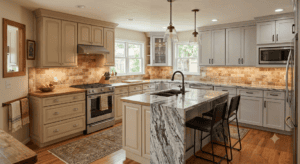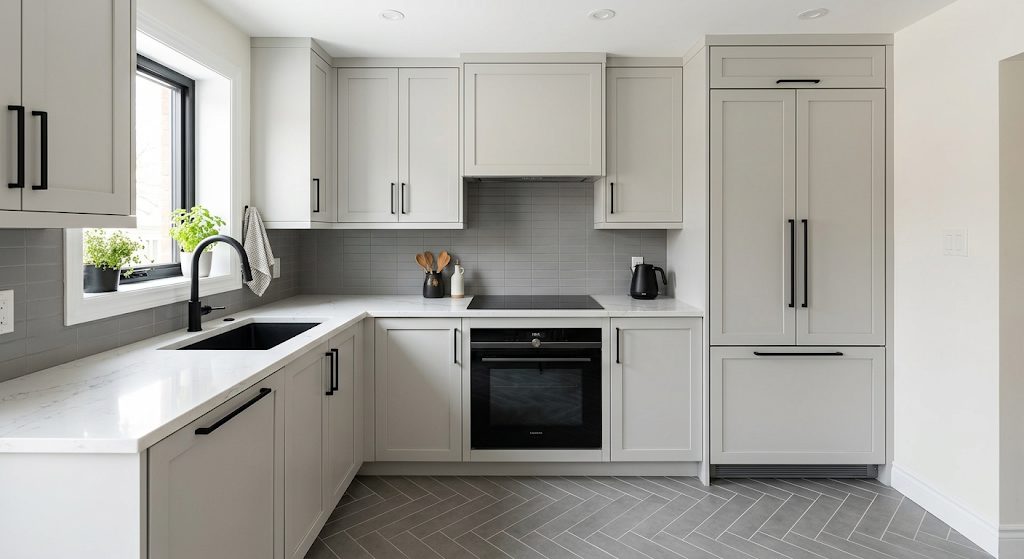
Your kitchen may not need to be torn apart to feel completely new. For many homeowners, cabinet door replacement is the practical turning point: the cabinet boxes are still solid, the layout still works, but the doors, drawer fronts, and finishes belong to another era.
That is where cabinet refacing earns its place. Rather than replacing cabinetry that is doing its job, refacing preserves the sound structure and transforms the visible surfaces with custom-fit doors, drawer fronts, and matching finishes. The result can feel like a brand-new kitchen without turning your home into a construction zone for weeks.
Kitchen Facelift is your planning expert if you live in the Greater Hamilton Area.
Click to see the map for the area (Oakville to Hamilton to Niagara and north to Milton).
When Cabinet Door Replacement Is the Right Choice
Cabinet door replacement is not a shortcut. It is a smart solution when the foundation of your kitchen is worth keeping.
Many homes have well-built kitchens from the 1980s, 1990s, and early 2000s. Their cabinets often have sturdy frames, dependable hardware locations, and a layout designed around family life. If you are happy with where your sink, appliances, and storage are located, removing all of that cabinetry may add disruption without adding meaningful value.
Refacing is especially well suited to homeowners who have already invested in a quality granite or quartz countertop. Replacing cabinet doors and drawer fronts lets you update the room around that countertop while avoiding the risk and extra work involved in removing it. It also makes sense when you love your kitchen footprint but want a cleaner, brighter, more current style.
There are cases where a full renovation may be the better path. Significant water damage, sagging cabinet boxes, structural problems, or a layout that no longer serves your household should be addressed honestly. A professional assessment should clarify whether your existing cabinetry is a good candidate, rather than forcing a one-size-fits-all answer.
What Cabinet Door Replacement Can Change
New doors create the first impression, but a well-planned refacing project changes much more than colour. It can bring visual consistency to the entire room, replace dated profiles with a timeless shaker or contemporary slab style, and give drawer fronts the same tailored appearance as the doors.
The cabinet boxes are refinished to coordinate with the new components, so the finished kitchen reads as one complete design. This attention to matching matters. Simply hanging new doors on visibly worn cabinet frames rarely produces the polished result homeowners expect.
Function can improve, too. A cabinet door can sometimes be converted into drawers where the existing structure allows it, creating easier access to pots, dishes, or pantry items. New hardware can update the feel of the kitchen in an instant, while thoughtful adjustments for appliances, backsplashes, or new countertops can help the finished space look intentional rather than pieced together.
The best choices depend on how you use the room. A busy family may prioritize durable finishes and easy-to-clean door styles. A homeowner preparing to sell may want a broadly appealing, refined look. Someone who has waited years to update a beloved kitchen may choose a more personal finish that fits the rest of the home.
The Difference Between Replacing Doors and Refacing Cabinets
These terms are often used interchangeably, but they are not quite the same. Door replacement refers to changing the cabinet doors and drawer fronts. Cabinet refacing is the more complete process of installing those custom components while also refinishing the cabinet boxes and coordinating the details around them.
That distinction affects the final appearance. Doors alone can make a difference, but refacing is designed to make the cabinetry look cohesive from every angle. It is the better fit when you want the kitchen to feel finished, not merely updated.
Custom sizing is equally important. Cabinet openings are not always as standardized as they appear, particularly in established homes where previous updates may have changed appliance clearances, trim, or countertop details. Custom-fit Canadian-made doors and drawer fronts help ensure consistent reveals, proper alignment, and a tailored look that stock components cannot always provide.
What the Process Should Feel Like
A kitchen update should begin with clarity, not pressure. Before choosing a door style, you should understand whether refacing suits your cabinets, what the scope includes, and the expected investment.
A streamlined process often starts with photos and a ballpark estimate. This gives you useful direction before anyone spends time measuring. If the project looks like a good fit, an in-home consultation brings the details into focus: physical samples, exact measurements, finish options, door profiles, hardware, and any practical changes you are considering.
Once the design is confirmed, the work is planned around the home. Because the existing cabinet structure remains in place, demolition is limited to what is actually necessary. That might include removing a backsplash, making room for a new appliance, preparing for a countertop change, or modifying a section for drawers. It does not mean dismantling a functional kitchen just for the sake of starting over.
For the right project, installation can typically be completed in two to three days. Your kitchen will still be an active work area during that time, and there may be temporary inconvenience, but it is a very different experience from living through a full gut renovation. The goal is to respect your home, contain the mess, and leave you with a result that feels worth the interruption.
Choosing a Style That Will Still Feel Right Later
The most successful cabinet updates are not necessarily the trendiest ones. They are the ones that suit the home, support daily life, and continue to feel considered years from now.
Shaker doors remain a strong choice because they work across traditional, transitional, and modern spaces. Flat-panel doors offer a quieter, more contemporary look. Warm wood tones can add depth where a kitchen feels stark, while soft neutrals can brighten a room without making it feel clinical. Hardware deserves the same consideration. It is a smaller detail, but the right pull or knob changes how the cabinetry feels every day.
Samples are essential because colours behave differently in real homes than they do on a screen. Natural light, floor colour, wall paint, countertops, and surrounding rooms all influence the final effect. Seeing a physical sample in your kitchen is one of the simplest ways to make a confident decision.
There is also value in restraint. If your countertop has prominent movement or your flooring has a strong pattern, a calmer cabinet finish may create the balance the room needs. If the rest of the home is understated, a richer tone or distinctive hardware may be exactly what gives the kitchen character.
Questions Worth Asking Before You Begin
Before committing to cabinet door replacement, ask whether the cabinet boxes are structurally sound, whether the current layout still serves you, and whether you want any functional changes while the project is underway. Consider how the new finish will work with your countertop, backsplash, floors, and appliances.
It is also fair to ask about manufacturing, installation, and timing. Quality materials and skilled installation make a visible difference in alignment, durability, and finish consistency. A clear discussion of scope protects against surprises, particularly if you are coordinating other work such as quartz countertops or appliance changes.
For homeowners across Oakville and the Golden Horseshoe, Kitchen Facelift approaches these decisions with the belief that a renovation should solve a problem, not create a bigger one. If the bones of your kitchen are good, preserving them can be the more thoughtful choice.
A fresh kitchen does not always begin with demolition. Sometimes it begins with looking closely at what is already working, keeping it in place, and giving it the finish and function it deserves.