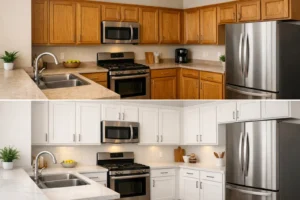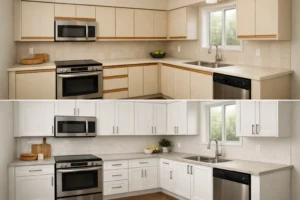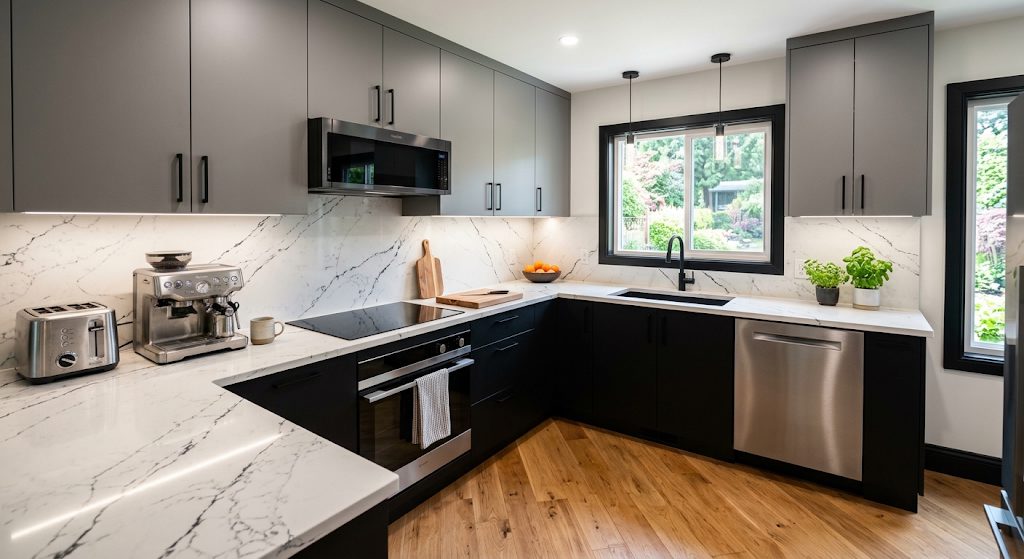
A kitchen can look dated long before it stops working. If your doors are worn, the finish feels heavy, or the style belongs to another decade, a full tear-out may seem like the only answer. But this guide to cabinet box assessment starts with a more useful question: are the cabinet boxes themselves still doing their job?
For many homeowners, especially those with well-built kitchens from the 1980s and 1990s, the answer is yes. Strong cabinet boxes can provide an excellent foundation for a complete visual transformation through custom doors, drawer fronts, finishes, and thoughtful upgrades. The key is assessing what is behind the doors before deciding what comes next.
Why Cabinet Box Assessment Comes First
Cabinet refacing is built on a simple principle: preserve what is structurally sound, then transform what you see and use every day. It is an intelligent choice when you like your kitchen’s footprint, your cabinets are well made, and you want a fresh result without turning your home upside down.
That decision depends on the condition of the boxes – the cabinet frames, sides, bottoms, backs, and internal supports that remain in place after old doors and drawer fronts are removed. A beautiful new exterior needs a stable, properly aligned base behind it.
This is why an assessment should never be reduced to a quick glance at the door style. A professional looks at strength, moisture exposure, level, function, and the details that affect installation. It is a practical process, but it gives homeowners real clarity. You can move forward knowing whether a refacing project makes sense for your kitchen or whether more substantial work is warranted.
What a Good Cabinet Box Looks Like
A suitable cabinet box does not have to look new. Surface wear inside a cabinet, an old shelf liner, or a dated interior finish usually does not affect whether it can be refaced. What matters is whether the box is stable, securely attached, and capable of accepting new components.
The boxes are solid and securely fastened
Start with the basic feel of the cabinetry. Open a door, place a hand on the cabinet side, and gently press or pull. A sound box should not shift noticeably against the wall, floor, or neighboring cabinets. Base cabinets should feel firmly anchored, while wall cabinets should sit securely without sagging or separating at seams.
Minor cosmetic marks are normal in a lived-in kitchen. Deep cracking, broken joints, loose cabinet sides, or visible separation where cabinets meet deserve a closer look. These issues do not automatically rule out a project, but they may need repair before new doors and hardware are installed.
There is no active water damage
Water is the most common reason an otherwise good cabinet box needs more than a cosmetic update. Check beneath the sink, around the dishwasher, near the refrigerator water line, and at the base cabinets closest to exterior doors or windows.
Look for swollen particleboard, peeling laminate, soft areas, dark staining, persistent musty odors, or cabinet bottoms that have begun to sag. A past leak that was repaired quickly may leave only a stain. An ongoing leak or weakened material must be addressed first. New finishes should never be used to cover a moisture problem that is still developing.
The cabinets are reasonably level and aligned
Cabinets do not need to be perfectly untouched by time to be refaced. Homes settle, floors vary, and older kitchens can have small inconsistencies. What matters is whether the cabinet run is generally straight and stable enough to support a clean, intentional finished appearance.
A quick visual check can reveal obvious concerns. Look along the top edge of base cabinets, the bottom line of wall cabinets, and the gaps between doors. Doors that hang unevenly may only need hinge adjustment. However, a long cabinet run that slopes, twists, or separates can point to a larger structural or installation issue.
Professional measurements are especially valuable when you are considering new quartz countertops, adding panels, or changing a bank of doors into drawers. These upgrades can be very achievable, but they require precision from the start.
Shelves, bottoms, and mounting areas can carry their load
Cabinets quietly carry a great deal: dishes, small appliances, pantry items, and sometimes heavy cookware. Check shelves for severe bowing and inspect the cabinet bottom under the sink or near pull-out storage for signs of strain.
Also consider the door and drawer mounting points. New hardware is only as reliable as the material holding it. Solid wood face frames and well-maintained engineered boxes often provide an excellent base. If screw holes are stripped or a hinge area is damaged, repairs may be possible. The assessment identifies those needs before installation day, not after.
A Homeowner’s Cabinet Box Assessment Checklist
You do not need to dismantle your kitchen to get an early sense of its condition. Grab a flashlight, open every cabinet, and take your time with the areas that receive the most water and daily use. Pay attention to four things:
- Movement: Cabinets should feel firmly attached and not wobble when gently pressed.
- Moisture: Check for swelling, softness, staining, or damage under sinks and beside appliances.
- Alignment: Notice major gaps, sagging, or long runs that appear visibly uneven.
- Function: Open doors and drawers fully. Note sticking, dragging, loose hardware, or damaged tracks.
This initial review is not a substitute for an in-home measurement and professional assessment. It is simply a helpful way to organize what you are seeing and ask better questions during your consultation.
Photos can be particularly useful when requesting an early estimate. Clear images of the overall kitchen, cabinet interiors, sink base, corners, and any areas of concern help a specialist understand the scope before visiting your home.
What Can Be Improved Without Replacing Every Cabinet
One of the advantages of a custom refacing project is that the cabinet boxes do not have to remain exactly as they are. If the structure is sound, the kitchen can often be adapted around the way you live now.
For example, a lower cabinet with doors can sometimes be converted to deep drawers for easier access. A dated valance can be removed for a cleaner line. Panels can be added to create a more finished furniture-style look. Appliance openings may be adjusted, and selective demolition can prepare the space for a new backsplash or countertop without disturbing cabinetry that is still serving your home well.
There are limits, and honesty matters here. If you want to move plumbing across the room, change the kitchen footprint, remove load-bearing walls, or relocate major appliances, a broader renovation may be the better path. Refacing is most compelling when the layout works and the boxes provide a solid foundation for the change you want.
Why a Professional Assessment Protects Your Result
The best kitchen transformations look effortless because the planning is careful. An experienced installer sees the small details homeowners may reasonably miss: a cabinet that is slightly out of square, a wall that bows, a countertop overhang that affects door clearance, or a sink base that needs reinforcement.
At Kitchen Facelift, the assessment is designed to make the process feel clear rather than complicated. You can begin with photos and ballpark pricing, then review physical samples and precise measurements in your home. That sequence helps ensure the design, scope, and installation plan fit the kitchen you actually have.
It also respects your time. When the existing cabinet boxes are confirmed to be suitable, much of the disruption of a full renovation can be avoided. Most transformations are completed in two to three days, with custom-fit, Canadian-made components installed around the foundation that was worth keeping.
When Replacement May Be the Smarter Choice
A good assessment should also give you permission not to force refacing into a kitchen that needs more. Extensive water damage, persistent mold concerns, severe structural instability, or cabinetry that cannot support your desired layout changes may call for replacement or repair beyond the scope of refacing.
That is not a failure of the kitchen or of the process. It is simply the value of getting an honest answer early. The right renovation decision is the one that protects your home and gives you a result you will feel good about long after the new doors are installed.
If your kitchen layout still makes sense and the cabinet boxes feel solid, you may be much closer to a dramatic change than you think. A thoughtful assessment turns that possibility into a plan – one that respects the good bones already in your home and makes room for the kitchen you are ready to enjoy.