If your kitchen feels tired every time you walk into it, the cabinets are usually the reason. They take up the most visual space, so when homeowners ask how to update kitchen cabinets, what they are really asking is how to make the whole room feel newer, brighter, and more like home again – without turning life upside down for weeks.
That question deserves a practical answer, because not every cabinet update makes sense for every kitchen. Sometimes a weekend cosmetic refresh is enough. Sometimes the smartest move is a professionally planned reface that keeps the cabinet boxes you already have and transforms everything you see. The right choice depends on what you have now, what shape it is in, and how long you want the result to last.
How to update kitchen cabinets without overdoing it
A lot of homeowners assume the options are binary: either live with dated cabinets or rip everything out and start over. In reality, there is a middle ground, and for many established homes, it is the best one.
If your cabinet boxes are solid, your layout still works, and you do not want the mess of a full gut renovation, updating the cabinets you already have can be a very intelligent decision. That is especially true in kitchens from the 1980s and 1990s, where the bones are often strong even if the doors, finishes, and style no longer feel current.
The first step is to look at your kitchen honestly. Open the doors. Check the hinges. Look for water damage around the sink. Notice whether drawers glide properly and whether the cabinet interiors still function for your household. A good update builds on what is worth keeping and improves what is getting in your way.
Start by deciding what kind of update you actually need
There are three common levels of cabinet updating, and each comes with trade-offs.
Cosmetic updates
This includes new hardware, under-cabinet lighting, soft-close hinge upgrades, and sometimes crown moulding or trim details. These changes can make dated cabinets feel cleaner and more current, especially if the existing doors are still in good shape.
The benefit is simplicity. The limitation is that cosmetic updates do not change the door style, wood grain, colour inconsistency, or worn finish. If the cabinets look heavily dated, new handles alone will not solve the problem.
Painting or refinishing
Painting can work when the cabinet surfaces are suitable for prep and the door style is worth preserving. A fresh painted finish can brighten a dark kitchen and shift the overall look from heavy and traditional to lighter and more current.
That said, paint is not magic. It depends heavily on preparation, product quality, and the condition of the existing surfaces. Thermofoil, laminate, and previously damaged finishes can be poor candidates. Even with good workmanship, painted cabinets tend to show wear differently than factory-finished replacement doors.
Cabinet refacing
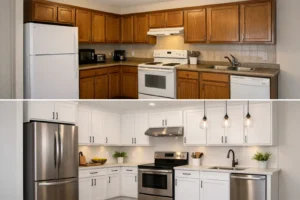
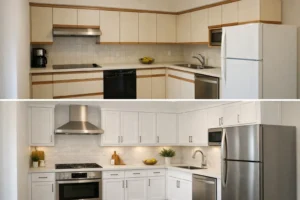
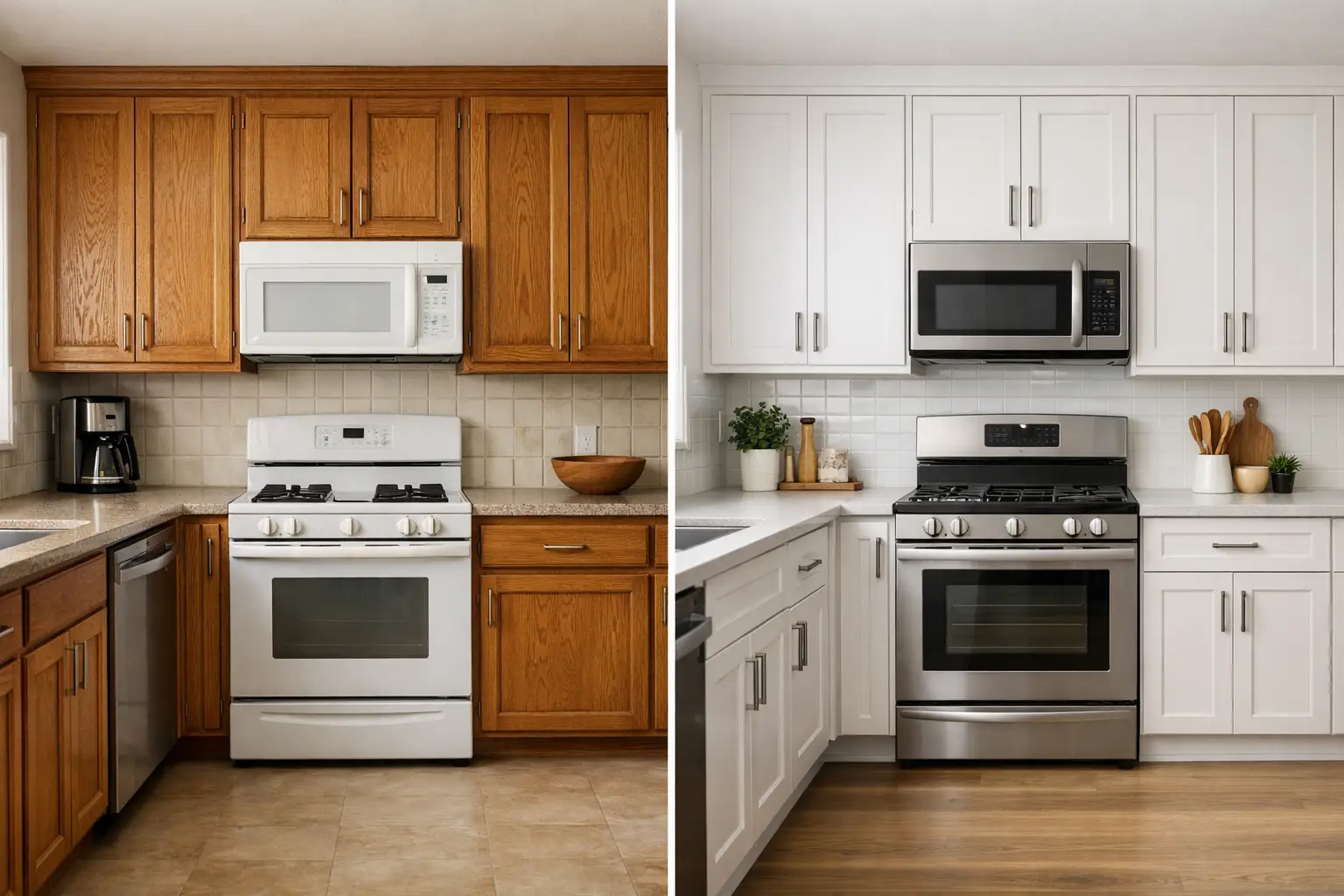
Refacing is often the strongest option when the cabinet boxes are solid but the visible parts are dated. Instead of removing the full kitchen, the doors and drawer fronts are replaced, exposed cabinet surfaces are refinished or matched, and the style is updated in a much more complete way.
This is where homeowners often get the biggest visual change with far less disruption than a full renovation. It also opens the door to practical improvements, like converting some doors to drawers, updating panels, or preparing the kitchen for a new backsplash or quartz countertop.
What to look at before you choose a direction
The most successful cabinet updates start with a few honest questions.
If you like your kitchen layout, that matters. If the sink, stove, and storage locations already work well, there may be no reason to tear everything out. Keeping a functional footprint usually saves time, reduces disruption, and avoids replacing parts of the kitchen that were never the problem.
If you already have granite or quartz counters you want to keep, that matters too. Full demolition can put those surfaces at risk or force a chain reaction of extra work. Updating cabinets in place can be a much more sensible way to modernize the room while protecting what you have already invested in.
And if your household simply cannot handle a long renovation, be realistic about that. Busy families, work-from-home schedules, and homes being prepared for sale all change the equation. A beautiful result only feels worth it if the process fits your life.
The updates that make the biggest visual difference
When homeowners picture a transformed kitchen, they are usually responding to a handful of visible changes working together.
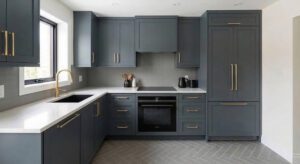
Door style is one of the biggest. Raised arch doors can make a kitchen feel rooted in another decade, while a simple shaker or slim-profile door immediately reads cleaner and more current. Colour is just as influential. Warm whites, soft greys, natural wood looks, and balanced two-tone combinations can all work well, but they should suit the rest of the home rather than chase a passing trend.
Hardware matters more than people expect. New pulls and knobs act like jewellery in the room, but they need to fit the scale and style of the cabinets. Oversized modern bar pulls on ornate traditional doors often feel mismatched. The details should work together.
Then there is contrast. If your floors, counters, and backsplash are all staying, the cabinet update should connect with them. This is where many piecemeal updates fall short. A kitchen rarely looks truly refreshed when one element changes in isolation and everything else is left fighting it.
When DIY works and when it does not
There is nothing wrong with wanting to handle part of the project yourself. Replacing hardware, adding organizational inserts, and updating lighting are realistic DIY improvements for many homeowners.
Painting cabinets is where confidence can outrun results. The prep is meticulous, the finish quality is easy to underestimate, and kitchens are high-touch spaces. Brush marks, adhesion issues, chipped edges, and inconsistent sheen tend to show up quickly in daily use.
A more structural update, like refacing, is usually best handled professionally. Precision matters. So does material quality, fit, and installation. The difference between a cabinet update that looks acceptable for a year and one that still feels polished years later often comes down to craftsmanship.
Why refacing is often the smartest answer
If you are researching how to update kitchen cabinets because you want a major change without unnecessary upheaval, refacing deserves serious attention.
It keeps what is still working, which is often the cabinet box structure and the overall layout. It changes what people actually see and touch every day – doors, drawer fronts, exposed ends, mouldings, hardware, and finish details. In the right kitchen, that delivers the visual impact homeowners want without the waste and disruption of removing everything.
It also gives you room to improve function. Many homeowners are not just chasing a prettier kitchen. They want deeper drawers instead of awkward lower cabinets, cleaner lines around the range, better use of pantry space, or a more intentional fit with updated countertops. A well-planned reface can accomplish more than people expect.
For homeowners in established Ontario communities, this can be especially appealing. Many homes have solid original cabinetry that is worth preserving beneath the surface. At Kitchen Facelift, this is exactly the kind of kitchen transformation we see every day – strong bones, dated appearance, and a clear opportunity to make the space feel current and custom without weeks of renovation mess.
A smart update should feel good during the process too
The final look matters, of course. But so does the experience of getting there.
A cabinet project should come with clarity about what is changing, what is staying, how long it will take, and how your home will be treated along the way. Homeowners tend to feel most confident when they understand the plan early, can review material samples in person, and are not being pushed toward more demolition than the kitchen actually needs.
That is one reason so many people find cabinet updating more appealing than a full renovation. It respects the parts of your kitchen that are still serving you well. It can be completed on a much more manageable timeline. And it often delivers the kind of dramatic before-and-after result people assumed would require a complete tear-out.
If your kitchen cabinets are structurally sound but visually stuck in the past, you may not need a new kitchen. You may just need a better version of the one you already have – thoughtfully updated, beautifully finished, and much easier to live through than you expected.