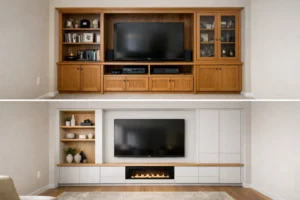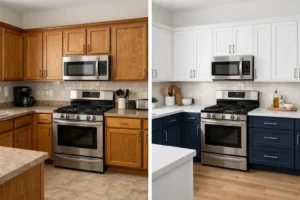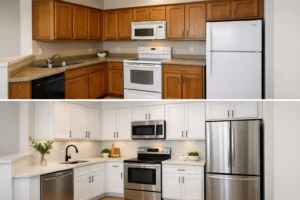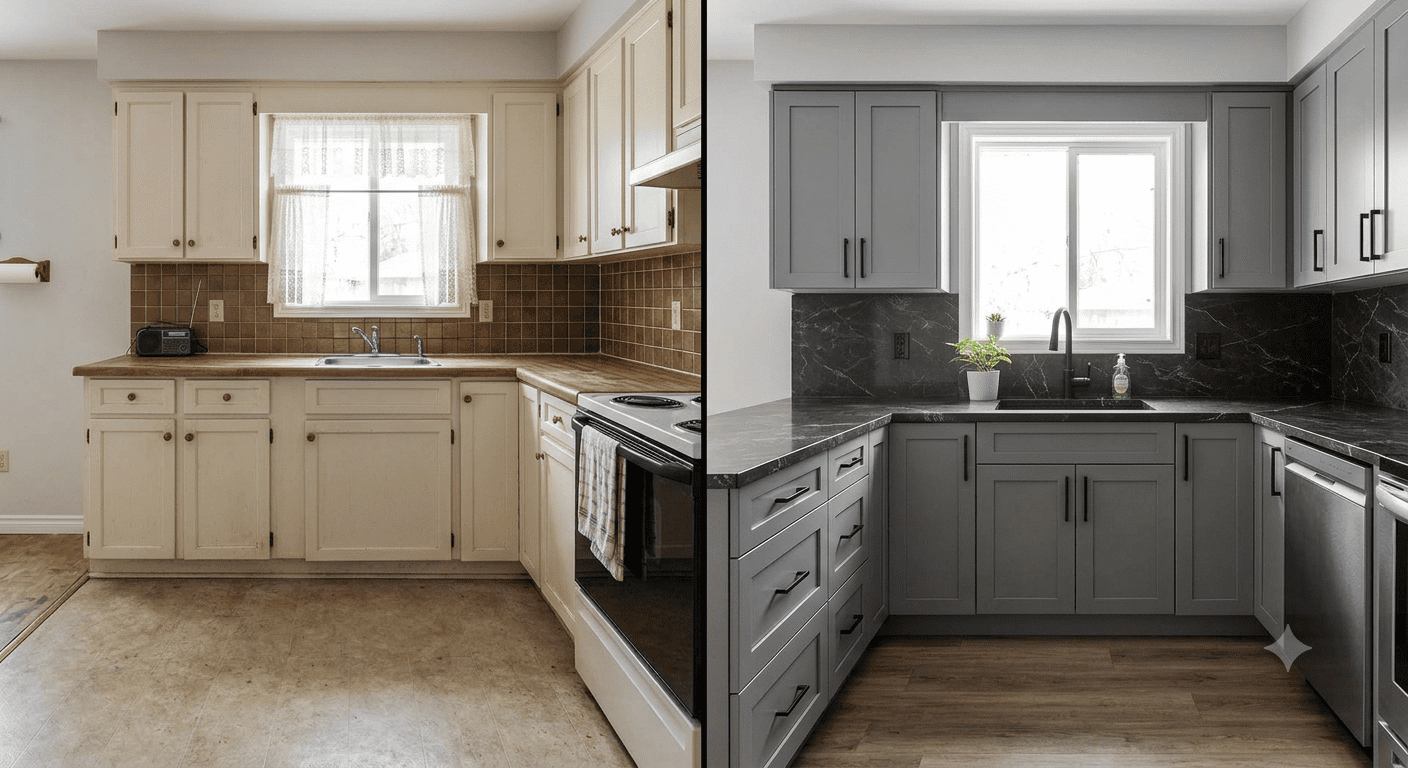
A dated kitchen usually does not need to be torn apart to feel completely new. If the layout works, the cabinet boxes are solid, and you still have the storage you need, learning how to modernize dated kitchens starts with a more thoughtful question: what should be preserved, and what is actually holding the room back?
For many homes built in the 1980s and 1990s, the answer is visible rather than structural. Honey oak doors, ornate profiles, worn laminate, aging hardware, and a tired backsplash can make a well-built kitchen feel decades behind. Updating those elements with a clear plan can create a dramatic change without turning your home into a construction zone for weeks.
Kitchen Facelift is your planning expert if you live in the Greater Hamilton Area.
Click to see the map for the area (Oakville to Kitchener/Cambridge and north to Milton).
How to Modernize Dated Kitchens Without Starting Over
A full renovation makes sense when a kitchen has water damage, failing cabinetry, unsafe conditions, or a layout that truly does not support the way your household lives. But it is not the only path to a premium result.
When cabinet boxes are in good condition and the footprint is functional, cabinet refacing can be the intelligent alternative. The existing cabinet boxes remain in place while the doors, drawer fronts, finished panels, and exterior surfaces are renewed. The result is a kitchen that looks custom-designed for today while preserving the parts of the room that are still doing their job well.
This approach is especially practical for homeowners who have already invested in granite or quartz countertops. Removing sound cabinetry can put those surfaces at risk and introduce work that may not improve the final outcome. A carefully planned refresh lets the new finishes complement what you already love.
The biggest advantage is not simply fewer materials removed. It is the experience. With the right scope and professional installation, a kitchen transformation can often be completed in two to three days rather than taking over your household for an extended renovation.
Start With What Works, Not What Bothers You
Before choosing colors or handles, assess the kitchen honestly. Open the cabinets. Look beneath the sink. Check whether doors close properly, drawers glide smoothly, and cabinet boxes feel firm and square. Consider the flow between the refrigerator, sink, cooktop, and prep areas.
A kitchen can look dated while still being exceptionally well built. Many older homes have sturdy cabinet construction that is worth keeping. If the layout serves your routine, preserving it can give you more room in the budget to focus on finishes, storage improvements, and details that make the kitchen feel tailored to your home.
On the other hand, a refresh should not ignore real problems. Moisture damage, major structural issues, or a layout that causes daily frustration deserve a different conversation. Good renovation advice is never one-size-fits-all. The right approach depends on the condition of your kitchen and the improvements that will make the biggest difference for you.
Choose Cabinet Doors That Change the Whole Room
Cabinet doors cover most of the visual space in a kitchen, so they set the tone immediately. Replacing dated raised-panel or heavily detailed doors with a clean shaker profile can make a room feel current without feeling trendy. For a more contemporary look, flat slab doors offer a quieter, more architectural finish.
Color should respond to the light, flooring, counters, and adjoining rooms. Warm white can brighten a kitchen with limited natural light, while soft greige, mushroom, or taupe can add warmth without returning to the heavy look of older wood finishes. Deep blue, charcoal, or forest green can be striking on an island or lower cabinets when balanced with lighter elements elsewhere.
There is a trade-off to consider. Very bright whites and ultra-dark matte finishes can show fingerprints, spills, and everyday wear more readily than mid-tone finishes. That does not mean avoiding them. It means choosing with your household in mind, especially in a busy family kitchen.
Custom-fit doors and drawer fronts matter here. Proportions, reveals, and finish consistency are what make a refaced kitchen look intentional rather than updated in pieces. Canadian-made components also allow for a precise fit that respects the original cabinetry.
Convert a Few Doors to Drawers
Modernizing a dated kitchen is also about making daily tasks easier. Lower cabinets with doors often become hard-to-reach storage zones where cookware and pantry items disappear into the back.
Converting selected lower cabinets to deep drawers can be one of the most satisfying upgrades in the entire project. Pots, pans, dishes, and small appliances become easier to see and access. You do not need to rework every cabinet for this to make a meaningful difference. Focus on the areas that create the most friction in your routine.
Update the Surfaces Around the Cabinets
New cabinet fronts deserve surrounding finishes that support the change. A backsplash is often the fastest way to remove the visual cues of a bygone era. Small, busy tile patterns or decorative border strips can be replaced with a cleaner ceramic tile, a simple stacked pattern, or a subtle stone-look surface.
The best backsplash is not always the most dramatic one. If your counters have bold movement or strong veining, a quieter backsplash may keep the kitchen balanced. If your countertops are simple and neutral, the backsplash can carry more personality through texture, shape, or a gentle variation in tone.
Countertops require more planning. If your existing granite or quartz is in good shape, build your cabinet and backsplash choices around it. If you are replacing the countertop, coordinate that decision early. Cabinet adjustments, a new sink, and backsplash removal may all need to happen in the right order to keep the project efficient and protect your home.
Replace Hardware, Lighting, and the Small Details
Hardware is the jewelry of the kitchen, but it should feel useful as well as attractive. Long pulls can emphasize clean, horizontal lines on wide drawers. Knobs and shorter pulls can suit more traditional cabinetry. Brushed nickel remains versatile, while matte black and warm brass can add contrast when used thoughtfully.
Avoid choosing hardware in isolation. Bring home samples and view them next to the cabinet finish, faucet, and lighting. A finish that looks elegant under showroom lighting may read very differently in your kitchen at night.
Lighting deserves the same attention. Under-cabinet lighting can make prep areas more functional and give a refreshed kitchen a finished appearance after dark. Replacing a dated ceiling fixture or pendant lights can help tie the room to adjacent living spaces, particularly in open-concept homes.
Do not overlook practical details such as outlet covers, a new faucet, or trim repairs. These are small decisions, but they influence whether the finished kitchen feels polished from every angle.
Make the Process Easier on Your Household
The disruption of a renovation is often what homeowners worry about most. That concern is reasonable. A kitchen is not just another room. It is where mornings begin, lunches are packed, and everyone seems to gather at once.
A well-managed cabinet refacing project limits demolition to what is necessary. That may include removing an old backsplash, preparing for new quartz countertops, adjusting cabinetry for an appliance, or making targeted storage conversions. It does not mean removing functional cabinets simply because they are old.
At Kitchen Facelift, every project begins by understanding the existing kitchen, the desired outcome, and what needs to change to get there. Ballpark pricing, photo-based virtual estimates, physical samples, and precise in-home measurements help homeowners make decisions with more confidence before installation begins.
For homeowners in Oakville, Burlington, Hamilton, Ancaster, Cambridge, Waterloo, Stoney Creek, and surrounding Golden Horseshoe communities, this can be a calmer way to achieve a major visual transformation. The goal is not to make your kitchen look temporarily new. It is to create a finish and function that will still feel right after the novelty has worn off.
Give Your Kitchen a Clear Direction
The strongest kitchen updates do not chase every trend at once. They make a few well-coordinated choices: cabinet doors that suit the home, finishes that work with the light, storage that solves everyday annoyances, and surfaces that feel cohesive.
If your cabinetry is solid and your layout already supports your life, you may be much closer to the kitchen you want than you think. Preserve what works, improve what you touch and see every day, and let a carefully planned transformation bring the room forward with far less disruption.