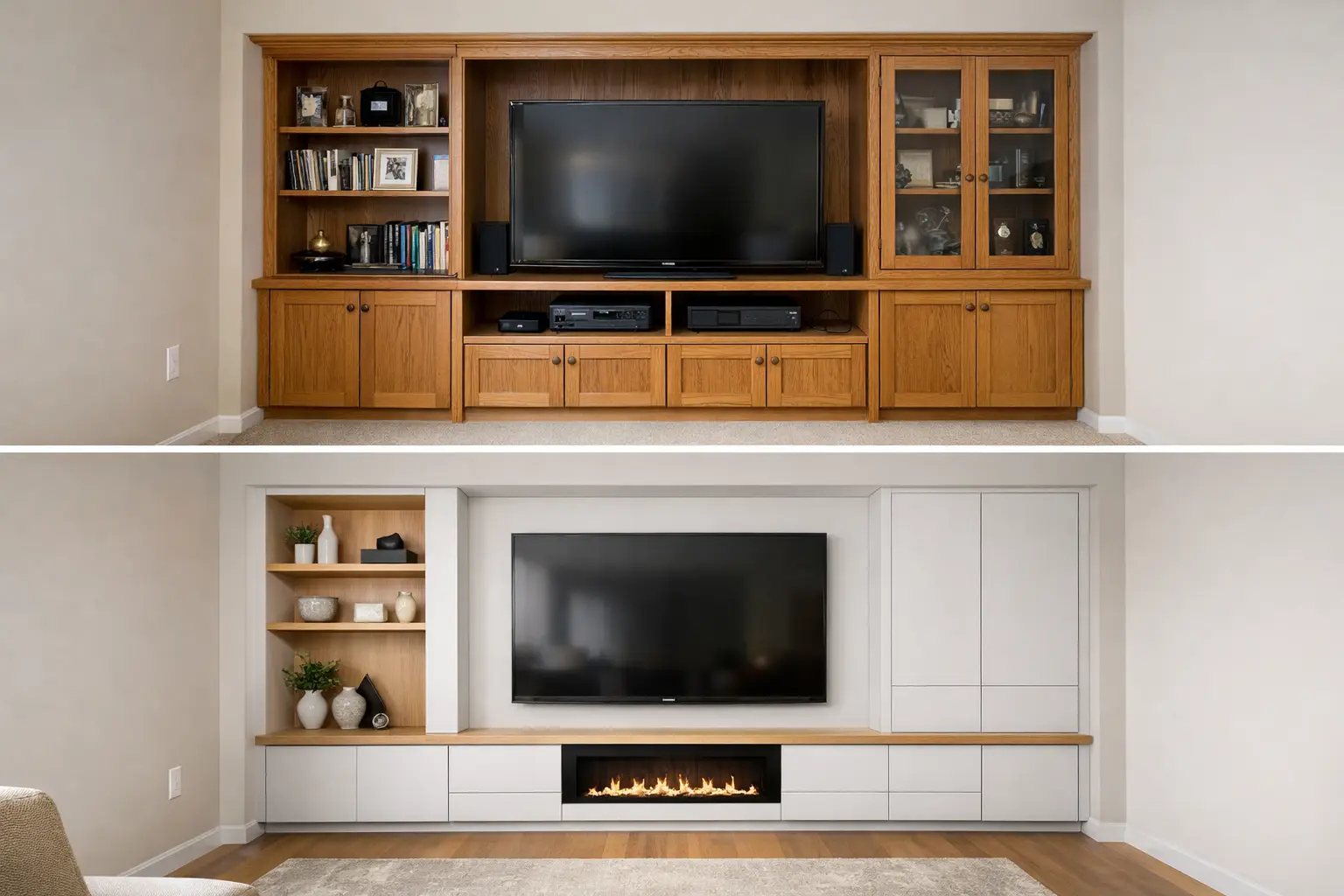
A good media wall installation example is not a wall filled with cabinetry for its own sake. It is a room where the television finally feels intentional, the cords disappear, everyday clutter has a home, and the entire space feels more settled when you walk in.
For many homeowners, the living room has become the hardest-working room in the house. It is where children play, guests gather, movies happen, and devices accumulate. A custom media wall can bring order to all of it without making the room feel heavy or overly built-in.
Here is what a thoughtful installation can look like, what makes it work, and the decisions worth making before the first measurement is taken.
Kitchen Facelift is your planning expert if you live in the Greater Hamilton Area.
Click to see the map for the area (Oakville to Kitchener/Cambridge and north to Milton).
Media wall installation example: a family room made calmer
Picture a typical established Ontario home with a generous family room, a large blank wall, and a television sitting on a low console. The TV is the right size for the room, but the console is too small for the soundbar, gaming equipment, routers, remotes, and the collection of everyday items that somehow ends up in the living room.
The homeowner wants more storage, but does not want the room to feel like a row of kitchen cabinets. They also want a design that looks finished from every angle, with no visible wiring and no awkward gaps along the baseboard or ceiling.
A well-planned media wall in this setting might include a centered TV niche, lower cabinets with soft-close doors, and two tall storage sections that frame the television. Open shelves above or beside the TV create room for books, pottery, and a few personal pieces, while concealed LED lighting gives the display areas warmth in the evening.
The result is not simply more storage. The television becomes part of the architecture of the room rather than an object placed against the wall. Everything that needs to be accessed regularly is close at hand, while the less attractive parts of modern family life stay behind closed doors.
Start with how the room is actually used
The best custom entertainment centers are shaped by routines, not just inspiration photos. Before choosing door styles or finishes, consider what the wall needs to hold and who uses it.
A household with young children may want generous closed storage for toys, board games, and blankets. A movie-focused family may need ventilation and easy access for components, speakers, and a soundbar. Someone who prefers a quieter, more minimal room may choose mostly closed cabinetry with one or two carefully styled open sections.
This is also where a common trade-off appears. Open shelving can make a wall feel lighter and gives you space for display, but it asks you to keep the contents edited. Closed cabinetry delivers a cleaner look and more forgiving storage. Many homeowners are happiest with a mix of both: practical storage below, with open shelving used sparingly where it adds personality.
TV placement should feel comfortable, not forced
A media wall should be designed around the viewing experience as much as the cabinetry. That starts with the height of the television.
Mounting a TV too high is one of the most frequent problems in living rooms, particularly when homeowners try to place it above a fireplace. The ideal height depends on seating distance, screen size, and the height of your sofa, but the general goal is straightforward: you should be able to watch comfortably without tilting your head upward for an entire movie.
A wall without a fireplace often gives you more freedom. The TV can sit at a natural viewing height, with cabinetry proportioned around it. If a fireplace is part of the plan, careful coordination matters. Heat management, clearances, mantel depth, and the location of electrical components all need to be considered before cabinetry is built.
The surrounding millwork should support the screen, not compete with it. A very dark feature wall can look dramatic, for example, but it may feel dominant in a smaller or lower-light room. A lighter wood tone, painted finish, or subtle textured panel can provide definition while keeping the space inviting.
Plan the hidden details early
The polished look of a media wall comes from details you should not have to see. Wires, outlets, ventilation, access panels, and uneven walls are all handled during planning, not after the cabinetry arrives.
Electrical outlets should be positioned behind the TV and inside the appropriate cabinet areas, with enough capacity for the equipment you intend to use. Internet connections, gaming consoles, cable boxes, and sound systems each have their own requirements. A professional installation coordinates these details so that cords do not end up hanging beneath the screen or routed through a cabinet door.
Ventilation deserves equal attention. Electronics generate heat, and enclosed spaces need a way for that heat to dissipate. Depending on the equipment, this may mean vented cabinet sections, open backs, or a planned airflow path that does not compromise the clean exterior of the design.
Access is another practical consideration. You may rarely need to reach the back of a TV, but when you do, it should not require dismantling the wall. Thoughtful access points and removable panels can make future adjustments much easier.
Choose proportions that suit the wall
A full-wall media installation can make a modest room feel more tailored, but only when it respects the scale of the space. Taller ceilings can support cabinetry that reaches upward and creates a strong architectural presence. In a smaller room, a lower, wider installation with fewer upper cabinets may feel more balanced.
The same principle applies to depth. Deep lower cabinets offer excellent storage, but they can take valuable floor space from a narrow family room. Slimmer cabinetry may be the better choice when the goal is to keep pathways open. There is no single ideal depth or configuration. It depends on the room, the furniture layout, and what the wall needs to store.
A custom fit matters here because real homes are not perfectly square. Walls can bow, ceilings can slope, and baseboards may need to be accommodated or removed for a true built-in appearance. Precision measuring allows the final installation to look intentional rather than adapted around a series of compromises.
Finish choices that age well
The media wall is usually one of the largest visual elements in a living space, so a finish that feels exciting for one season should still feel right years later. Warm whites, natural wood grains, muted greiges, and soft charcoal tones often provide enough character without making the room difficult to update.
Door style has a quiet but meaningful impact. Flat panels can suit a clean, contemporary home. A subtle shaker profile may connect the living room to a more traditional kitchen or trim style. Fluted details, integrated handles, and open display sections can add interest, though restraint is usually what keeps a feature wall feeling premium.
Lighting should be considered part of the finish, too. Warm LED strips inside open shelves can highlight texture and create a comfortable evening atmosphere. They work best when the light source itself is concealed and the brightness is controlled. The goal is a soft glow, not a showroom effect.
What the installation experience should feel like
A custom media wall should improve your home without turning it upside down. The process begins with understanding the wall, your storage needs, your existing furniture, and the equipment that must fit inside the design.
From there, accurate measurements and material samples help turn the idea into a plan you can picture. Canadian-made components and professional installation allow the cabinetry to be built for the room rather than assembled from standard pieces that leave unused gaps or awkward filler panels.
Kitchen Facelift brings the same measured approach used in kitchen transformations to custom full-wall media and entertainment centers. The focus is on a precise fit, a clean installation, and a finished result that feels like it has always belonged in your home.
A media wall does not need to be elaborate to make a meaningful difference. When it is designed around the way your family relaxes, stores, watches, and gathers, it can make the whole room feel easier to live in.