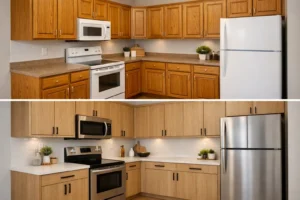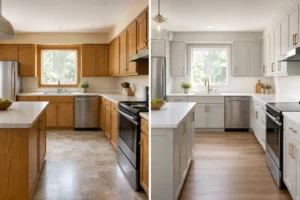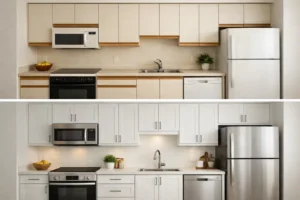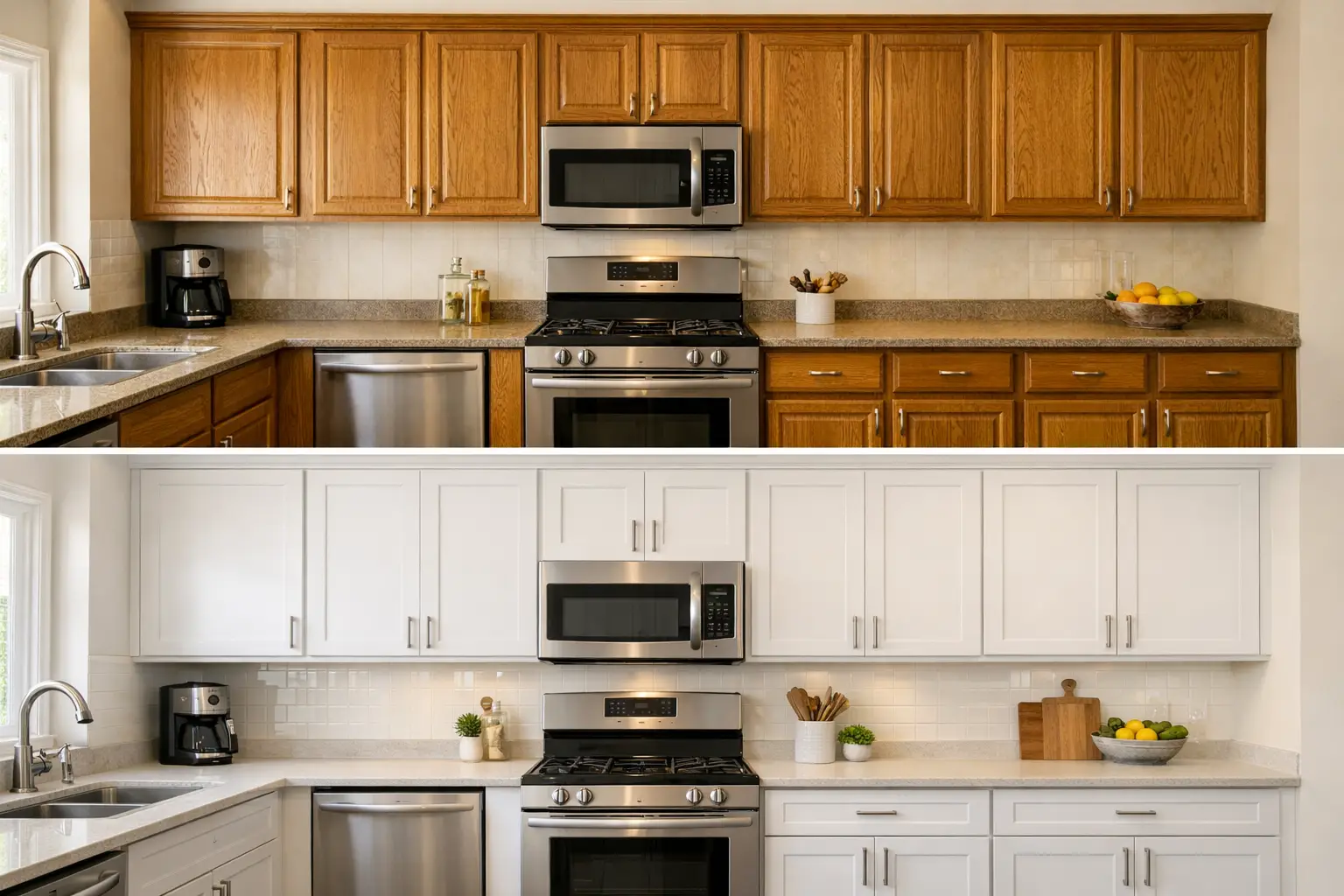
Your kitchen may not need to be torn apart to feel entirely new. If the cabinet boxes are solid, the layout works for your family, and you are simply tired of dated doors, finishes, or hardware, refacing can be the smarter path forward. Knowing how to plan kitchen refacing starts with separating what truly needs to change from what is still serving your home well.
A well-planned refacing project preserves the strong foundation you already have while making the visible parts of the kitchen feel current, personal, and beautifully finished. The goal is not to make a long list of upgrades. It is to make the right decisions in the right order, so installation day is calm and the result feels intentional.
Kitchen Facelift is your planning expert if you live in the Greater Hamilton Area.
Click to see the map for the area (Oakville to Kitchener/Cambridge and north to Milton).
Start With an Honest Look at Your Existing Cabinets
Cabinet refacing is an excellent fit when the cabinet boxes are structurally sound and your existing kitchen layout makes sense. Open a few doors, inspect the interiors, and look underneath the sink. You are looking for solid construction, secure cabinet boxes, and no serious water damage, warping, or mold issues.
Many homes built in the 1980s and 1990s have particularly well-built cabinetry behind doors that have simply dated over time. If that is your kitchen, replacing the doors and drawer fronts, refinishing the cabinet exteriors, and updating the details can create a dramatic change without removing cabinets that still have years of life in them.
The layout matters just as much as condition. Ask yourself whether you have enough storage, whether the main work areas are convenient, and whether traffic flows comfortably through the room. If you love where the sink, stove, and refrigerator are located, refacing lets you focus your investment on the transformation you will see and use every day.
If the layout is fundamentally frustrating, cabinets are damaged beyond repair, or you need to move plumbing and walls, a more extensive renovation may make better sense. A good consultation should tell you that clearly. The right solution is the one that fits your home, not the one that creates the biggest project.
How to Plan Kitchen Refacing Around Your Priorities
Before choosing a door style or finish, decide what you want your refreshed kitchen to solve. For some homeowners, it is about replacing dark, heavy-looking cabinetry with a brighter and more open feel. For others, it is about creating better drawer access, adding a pantry solution, or preparing the kitchen for new quartz countertops.
Start by identifying your top two or three priorities. They may include a more modern appearance, easier organization, improved resale appeal, or a faster project with minimal disruption to family life. Those priorities will help you make decisions when there are several beautiful options in front of you.
This is also the time to think about small functional changes that can have an outsized impact. A door cabinet can sometimes be converted to drawers. An appliance opening may need adjustment for a new refrigerator or range. You may want to remove an existing backsplash before installing a new surface. These changes are far easier to coordinate before measurements are finalized than after new doors are already being made.
Refacing is not an all-or-nothing choice. It can be tailored to the condition of the kitchen and the way you live in it.
Choose the Look From the Big Decisions Down
The best kitchen designs begin with the broad visual direction, not with hardware. Consider the overall mood you want to create: warm and classic, clean and contemporary, softly transitional, or something more distinctive.
Door style comes first because it sets the character of the room. A slim shaker profile can feel timeless and versatile. A flat-panel door tends to suit a more modern home. More detailed profiles can bring traditional warmth, especially when paired with a carefully chosen finish.
Next, consider color and texture. Light finishes can make a smaller kitchen feel more open, while wood tones add depth and warmth. Dark cabinetry can be striking in a well-lit space, particularly when balanced with lighter counters or walls. The best choice depends on your natural light, flooring, wall color, and the fixed elements you plan to keep.
Bring those elements into the decision whenever possible. A countertop sample, flooring photo, and paint swatch can prevent a finish that looked perfect on its own from feeling disconnected in the room. During an in-home visit, physical samples are especially valuable because lighting changes from home to home.
Hardware should support the style rather than compete with it. Think of pulls and knobs as the finishing touch. Their scale, finish, and placement can make cabinetry feel polished, but they work best once the door style and color are settled.
Coordinate Countertops, Backsplashes, and Appliances Early
Kitchen refacing often happens alongside other updates, and the sequence matters. If you are replacing countertops, plan that work before the cabinet refacing installation is scheduled. New countertops may affect cabinet preparation, sink selection, and backsplash removal. A precise plan protects both the new surfaces and the cabinetry beneath them.
Granite and quartz countertop owners often choose refacing because they want a refreshed kitchen while preserving an investment they already love. In those cases, careful measurements and professional installation become even more important. The cabinet faces, doors, and drawer fronts need to be fitted cleanly around existing elements.
Appliances deserve early attention as well. Measure the models you intend to keep, and confirm the dimensions of anything you plan to replace. A new refrigerator can be taller or deeper than the previous one. A range, dishwasher, or built-in microwave may require a minor adjustment to surrounding cabinetry. None of these details need to create a complicated renovation, but they should not be surprises.
Lighting and wall paint are worth considering at this stage, too. Fresh cabinet finishes can make an old wall color look very different. If you are updating lighting, select fixtures early enough to coordinate the finish and placement with your new kitchen design.
Set a Clear Budget With Room for Smart Choices
A thoughtful budget is not just a single number. It is a plan for the core transformation and the few related items that matter most to you. Your cabinet doors, drawer fronts, finish, installation, and any cabinet modifications form the central scope. Countertops, backsplash work, hardware, lighting, and appliances may be separate decisions, depending on your project.
Ask for ballpark pricing early. It gives you a practical starting point before you invest time in selecting every detail. Photo-based estimates can be a useful first step, followed by an in-home assessment for physical samples, exact measurements, and a refined project scope.
Leave room for one or two upgrades that will improve daily life. That might be additional drawers, a more functional storage solution, or hardware that feels substantial in your hand. At the same time, avoid adding changes simply because they are available. The strongest refacing projects are focused. They respect the existing kitchen while improving the parts that genuinely affect how it looks and works.
Plan for a Smooth Installation Week
One of refacing’s greatest advantages is that the disruption is measured in days, not weeks. Many projects can be completed in two to three days, depending on the scope and any related work. A little preparation helps the installation move efficiently and lets you enjoy the finished room sooner.
Clear the countertops, remove items from the drawers and cabinets being worked on, and create a temporary spot for everyday essentials such as coffee supplies, medications, and pet items. If your kitchen is the center of a busy household, plan simple meals ahead and decide where the family will gather while work is underway.
You should also confirm the sequence of any separate trades. Countertop fabricators, backsplash installers, electricians, and painters may each need access at different times. A clear schedule prevents a beautiful new cabinet finish from being exposed to unnecessary work afterward.
At Kitchen Facelift, the approach is deliberately focused: only the demolition needed for the project, custom-fit components, and professional installation designed to respect your home. That means less mess, fewer moving parts, and a transformation that does not take over your life.
Make the Final Decisions With Confidence
Before production begins, review the full plan one more time. Confirm door style, finish, hardware, drawer conversions, appliance adjustments, and any areas that require special attention. This is not about second-guessing every choice. It is about making sure the finished kitchen reflects the priorities you established at the beginning.
The most satisfying kitchen refacing projects usually have one thing in common: the homeowners did not try to reinvent a kitchen that already worked. They recognized the value in solid cabinetry, chose updates that fit their home, and let craftsmanship do the rest.
Take a breath, grab a cup of your favorite beverage, and look at your kitchen for what it could become. A beautiful change does not always require starting from scratch.