If you are weighing new cabinet doors versus refinishing, the real question is not simply which option changes the color. It is which approach will give your kitchen the finish, function, and longevity you expect without disrupting more of your home than necessary. Kitchen Facelift is your planning expert if you live in the Greater Hamilton Area. Our service area runs from Oakville to Hamilton to Niagara and north to Milton.
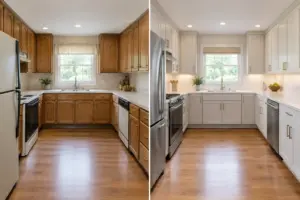
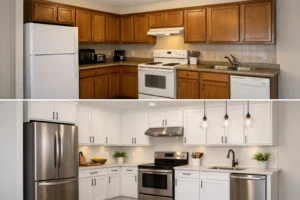
For many homeowners, the cabinet boxes are still solid, the layout works well, and the countertop is worth keeping. In that situation, replacing doors and drawer fronts can create a dramatic transformation while preserving the parts of the kitchen that are doing their job. Refinishing can also have a place, particularly when the existing doors are in excellent condition and the desired change is modest. The right choice depends on what you see now, what you want to change, and how you want the kitchen to feel when the work is complete.
Kitchen Facelift is your planning expert if you live in the Greater Hamilton Area.
Click to see the map for the area (Oakville to Hamilton to Niagara and north to Milton).
What Refinishing Can Do Well
Cabinet refinishing updates the surface of existing doors, drawer fronts, and often the cabinet frames. Depending on the material and condition, this may involve cleaning, sanding, repairing minor imperfections, staining, painting, or applying a new coating.
It can be a sensible path when your current doors have a style you genuinely like, are structurally sound, and have smooth surfaces that can accept a new finish properly. A well-executed refinishing project can freshen faded wood, shift a dated stain toward a more current look, or bring consistency to cabinets that have worn unevenly over time.
The limitation is that refinishing works with what is already there. Door profiles remain the same. Decorative details remain the same. If raised arches, routed panels, visible hinges, or worn edges are what make the kitchen feel dated, a new coat alone may not change the overall impression enough.
Refinishing also asks a lot of the existing surface. Thermofoil doors that are peeling, swollen particleboard edges, deep dents, or failing finishes may not provide a dependable foundation for a lasting result. Repairs can improve appearance, but they cannot always restore the crisp, factory-finished look homeowners expect from a major kitchen update.
Why New Cabinet Doors Change More Than the Finish
New cabinet doors and drawer fronts are the visible architecture of the kitchen. They determine the style, how light moves through the room, and whether the cabinetry feels current or tied to another era. When the cabinet boxes are solid and the layout still serves your family, replacing these components is often the more complete refresh.
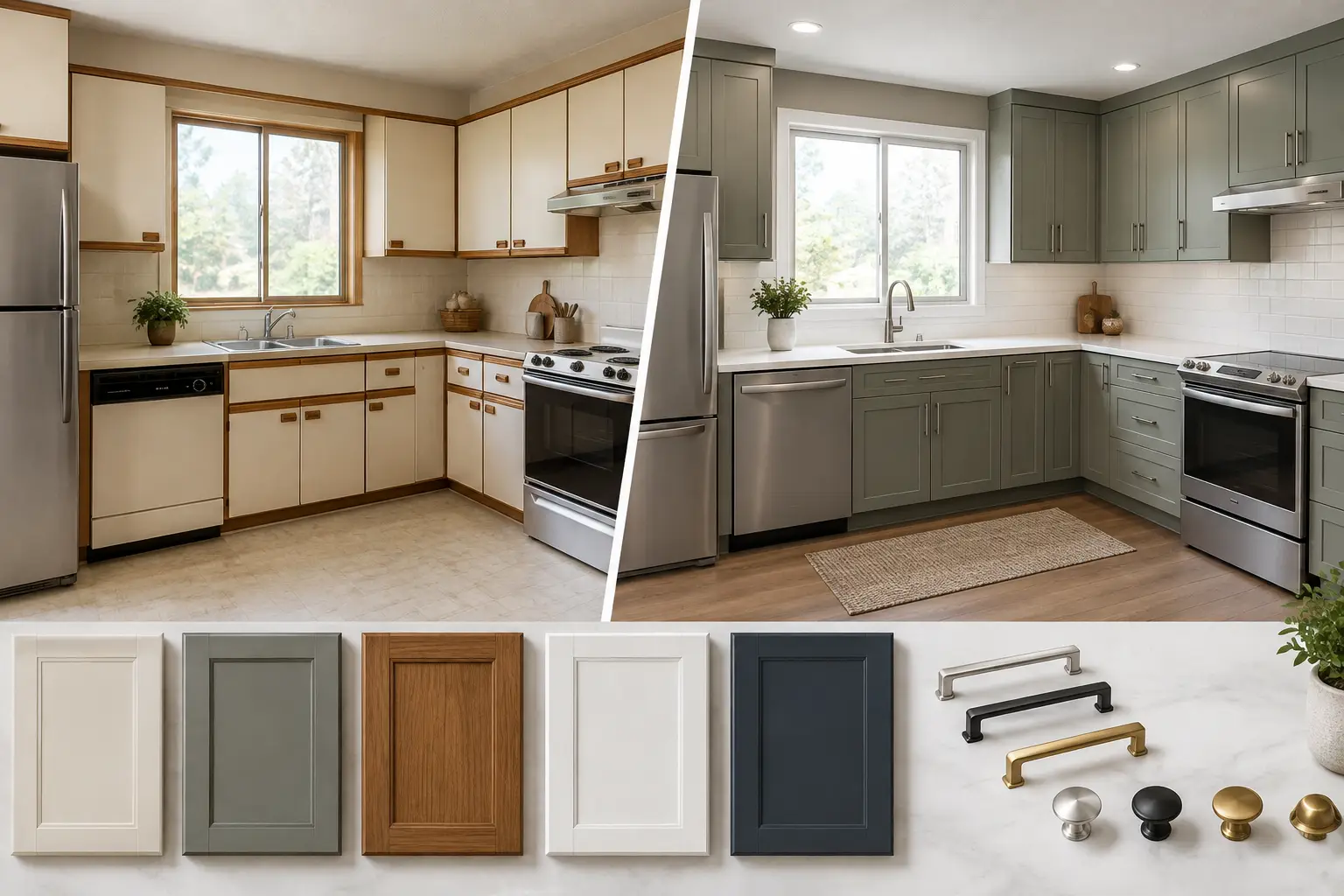
With custom-fit doors, you are not limited to the profile already on the cabinets. You can move from ornate raised-panel doors to a clean shaker style, choose a contemporary slab door, update the finish, and coordinate new hardware with the rest of the room. The cabinet frames are finished to match, so the kitchen reads as one considered design rather than old cabinetry with a new surface treatment.
This approach can also improve how the kitchen works. A door-and-drawer configuration can sometimes be adjusted, making room for more practical storage. New hinges and drawer hardware can bring a smoother, more refined daily experience. If you are updating appliances, backsplash, or countertops, these details can be planned together so the final kitchen feels intentional.
At Kitchen Facelift, custom doors, drawer fronts, and finishes are designed and manufactured in Canada, then professionally fitted to the cabinetry you already own. The aim is not to disguise an old kitchen. It is to preserve sound cabinetry and transform what you see and use every day.
New Cabinet Doors Versus Refinishing: The Deciding Factors
A few honest questions usually make the choice clearer.
Are the cabinet boxes and doors in good condition?
Solid cabinet boxes are a strong reason to avoid a full tear-out. Many kitchens built in the 1980s and 1990s have sturdy boxes that can serve a home for many more years. But solid boxes do not automatically mean the doors should be retained.
If doors are warped, chipped, peeling, difficult to clean, or visibly dated, new doors may be the better investment in the finished result. If they are in excellent shape and you love their shape and proportion, refinishing may be enough.
Do you want a new style or only a new color?
This is often the clearest dividing line. Refinishing changes color and sheen. New doors change color, sheen, profile, proportions, hardware placement, and the personality of the kitchen.
Consider a kitchen with dark oak cathedral doors. Painting them may brighten the room, but the arched profile will still define the style. Replacing them with tailored shaker doors creates a more substantial visual shift, especially when paired with updated drawer fronts and hardware.
How much disruption can your household accommodate?
A traditional renovation can put a kitchen out of commission for weeks. Both refinishing and refacing avoid the demolition associated with replacing every cabinet, but their work on site can feel quite different.
Professional cabinet refacing is designed around efficiency. Once materials are ready, many transformations can be completed in two to three days. There may be focused preparation for a backsplash, appliances, drawers, or a new quartz countertop, but only the demolition needed for the plan is done. For busy households, that distinction matters.
Refinishing may require extensive preparation, surface work, and curing considerations in the home. The exact timeline depends on the materials and condition of the cabinetry. Ask not only how long the work takes, but how long before the kitchen is fully comfortable to use again.
Are you protecting an existing countertop?
Granite and quartz countertops are significant investments, and many homeowners want a kitchen update that works around them rather than replaces them. If the cabinet layout stays the same, new doors and matching frame finishes can modernize the room while respecting the stone already in place.
Careful measuring and professional installation are essential here. The goal is a precise fit and a polished transition, not unnecessary disturbance around a countertop you plan to keep.
Think About the Finish Five Years From Now
The best decision is rarely the fastest visual fix. It is the one you will still feel good about after years of family dinners, school mornings, entertaining, and everyday cleanup.
Refinishing may be right when the doors themselves are worth preserving and the surface can be renewed successfully. New cabinet doors are often the stronger choice when you want the kitchen to feel genuinely redesigned, not simply refreshed. Quality custom components give you the freedom to choose a style that suits the home now, while retaining durable cabinetry that does not need to be sent to a landfill.
That is also where the value of a careful consultation comes in. Photos can establish ballpark pricing and possibilities quickly. An in-home visit with samples and precise measurements confirms what your cabinetry can support, what finish will suit the space, and whether any practical changes should be made before installation.
A Practical Way to Decide
Stand in your kitchen and look beyond the color. Notice the door shape, the drawer configuration, the edges, the hardware, and the areas that are hardest to keep looking good. Then consider your countertop, flooring, and appliances. If a new finish would make you happy while leaving every other element intact, refinishing deserves consideration.
If you find yourself wishing for cleaner lines, more useful drawers, updated hardware, and a cohesive style that complements the rest of your home, new cabinet doors may be the more satisfying route. It offers the visual impact many people associate with a full renovation, without automatically replacing sound cabinet boxes or turning the home upside down.
A kitchen should not require you to choose between living with what no longer suits you and taking on unnecessary disruption. Start with what is worth keeping, be clear about what you want to change, and let the condition of the cabinetry guide the plan. The right update is the one that makes your kitchen feel like it finally belongs to your home again.