A quartz countertop can make an older kitchen feel entirely new, but it also puts the spotlight on what sits beneath it. Can cabinets support quartz? In many homes, yes – especially well-built cabinetry from the 1980s and 1990s. The answer depends less on a cabinet’s age and more on its condition, construction, and how carefully it is prepared before the stone arrives.
Quartz is a substantial investment and a permanent finish. It deserves a solid, level foundation. The reassuring news is that homeowners who love their existing kitchen layout often do not need to remove sound cabinet boxes to enjoy beautiful new quartz. They need an honest assessment and the right preparation.
Kitchen Facelift is your planning expert if you live in the Greater Hamilton Area.
Click to see the map for the area (Oakville to Hamilton to Niagara and north to Milton).
Can Cabinets Support Quartz Countertops?
Most structurally sound base cabinets can support quartz countertops. Quartz is heavy, commonly weighing about 20 to 25 pounds per square foot once fabricated. A typical kitchen countertop can therefore place hundreds of pounds across the cabinet run.
That weight is not concentrated in one small area. It is distributed across the cabinet tops, side panels, rails, and the floor below. Quality cabinet boxes are designed to carry countertop loads, dishware, small appliances, and the daily use of a busy kitchen.
What matters is whether those boxes remain solid and properly supported today. A cabinet can look dated while still being exceptionally well made. Conversely, a newer cabinet with water damage, loose joints, or thin, failing material may need repair before it is ready for stone.
What Makes a Cabinet Base Ready for Quartz
A professional assessment begins with the cabinet structure, not the door style. The key question is whether the boxes are stable enough to remain still under the countertop’s weight and through seasonal movement in the home.
Solid cabinet boxes and secure joints
Look for cabinet sides, bottoms, and back panels that feel firm, with no swelling, crumbling material, or separation at corners and joints. Plywood and sturdy particleboard cabinet boxes can both perform well when they are dry, intact, and properly assembled.
Small cosmetic marks are rarely a concern. Soft areas around the sink cabinet, persistent moisture damage, loose bases, or cabinets pulling away from the wall deserve closer attention. Sink bases are especially important because years of minor plumbing leaks can quietly weaken material where it is hardest to see.
A level, continuous support surface
Quartz needs consistent support along the top of the base cabinets. If one cabinet sits higher or lower than the next, the countertop may be forced to bridge uneven points. That can introduce stress into a material that is durable in everyday use but not meant to flex.
Installers check the cabinet run, make precise adjustments, and shim where necessary to create a level plane. This is not a finishing detail. It is one of the most important steps in protecting a quartz countertop from unnecessary strain.
A stable floor and properly anchored cabinets
Cabinets can be structurally sound yet still need attention if the floor beneath them has settled or if the boxes are no longer securely fastened to the wall. Movement is the concern. Quartz performs best when the cabinets below it are stable, connected, and supported from end to end.
In some homes, adjustments are straightforward. In others, particularly where there has been a plumbing issue or significant floor variation, a more involved repair may be the wiser choice before templating begins.
Where Quartz Needs Extra Support
Not every part of a countertop is supported by cabinets in the same way. Overhangs, appliance openings, and long spans require planning beyond the standard cabinet run.
Islands and breakfast bar overhangs
An overhang provides comfortable seating, but a deep overhang may require hidden steel supports, brackets, or a properly designed support system. The exact requirement depends on the thickness of the quartz, the depth of the overhang, the slab design, and whether people will lean or sit beneath it.
This is one area where assumptions can lead to disappointment. A countertop professional should specify the support needed before fabrication, not after installation day has arrived.
Dishwasher and range openings
Cabinets on either side of a dishwasher support the countertop above the opening, while the appliance itself does not. The same principle applies around slide-in ranges and other gaps in the cabinet run. Proper rails, panels, and fastening details help maintain support where the cabinet boxes are interrupted.
Long unsupported spans and seams
A quartz fabricator plans seams based on slab size, access into the home, layout, and structural practicality. Seams are a normal part of many quartz installations, and their placement should work with the cabinet support below. A long stretch of stone without appropriate support needs careful review, especially near cutouts for sinks and cooktops.
Older Cabinets Often Make Excellent Candidates
Many established homes throughout the Golden Horseshoe have cabinetry that was built with stronger boxes than homeowners expect. The doors may be dated, the finish may have worn, and the layout may need a few thoughtful changes, but the underlying cabinets can still be a very good foundation for quartz.
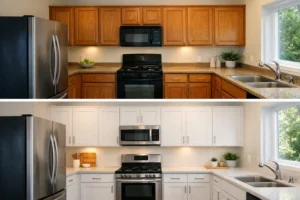
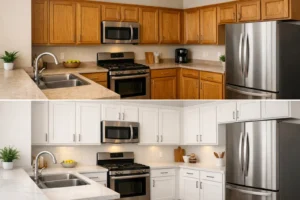
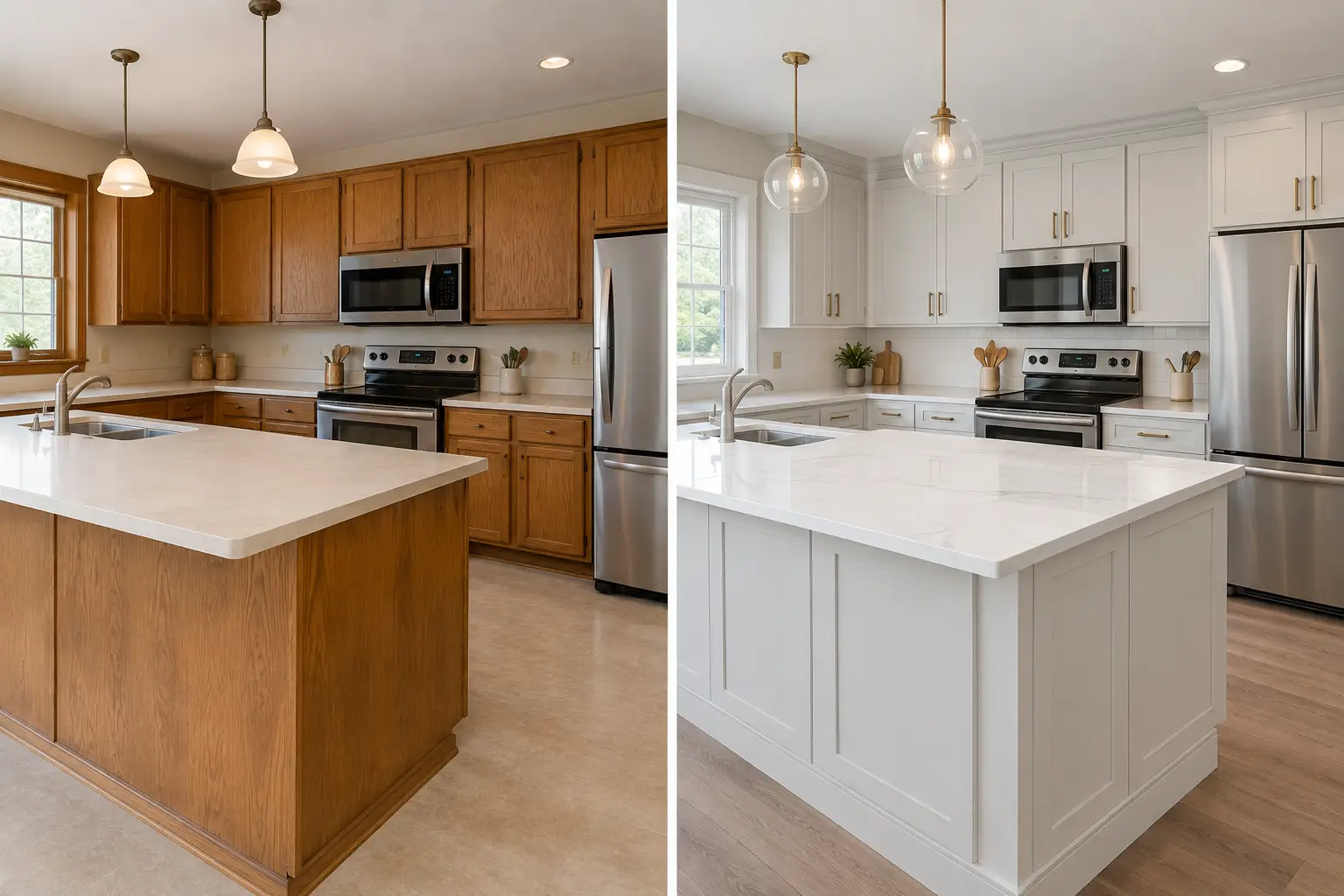
This is where cabinet refacing can be an intelligent path. When the boxes are sound, new custom-fit doors, drawer fronts, and finishes can transform the visible kitchen while preserving the cabinetry that is already doing its job. Preparing the cabinet run for quartz may include removing an old backsplash, correcting leveling issues, reinforcing select areas, or adjusting a cabinet for a new appliance.
Refacing is not a substitute for structural repair. It works best when the existing cabinet framework is worth keeping. A good contractor will be clear if a cabinet needs reinforcement, rebuilding, or replacement rather than trying to cover up a problem with a new finish.
What to Check Before Ordering Quartz
Before selecting a slab, have the existing cabinetry reviewed with the full plan in mind. The countertop choice affects more than color and edge profile. Sink size, faucet placement, backsplash removal, appliance changes, island seating, and cabinet modifications all influence the preparation required.
Pay special attention to the sink cabinet. Check for signs of old leaks, water staining, swollen panels, or sagging at the cabinet bottom. If a larger undermount sink is part of the plan, make sure the cabinet can accommodate it without compromising the box.
Also consider drawer and door clearances. A thicker countertop, changed edge profile, or new appliance can affect how nearby components open. Catching these details before templating keeps the project orderly and avoids last-minute compromises.
Why Professional Preparation Matters
Quartz installation is not the moment to discover that cabinets are uneven or an island needs hidden support. Once a slab is measured and fabricated, changes become more complicated. The best projects are the ones where the cabinet condition, layout decisions, and countertop requirements are coordinated early.
At Kitchen Facelift, that means looking at the kitchen as a complete system. We assess the cabinet boxes, discuss the changes you want, and identify the preparation needed for new quartz before work begins. Our goal is not unnecessary demolition. It is to preserve what is solid, address what needs attention, and make sure the finished kitchen feels intentional from every angle.
A sound cabinet base and professional leveling do more than support stone. They give you confidence that the kitchen you are improving will continue to serve your family beautifully long after the final installation is complete.