Kitchen Facelift is your planning expert if you live in the Greater Hamilton Area. If your lower cabinets make you crouch, reach, and search through dark shelves to find one pan, it may be time to convert doors into drawers. This is one of the most practical changes you can make during a cabinet refacing project: it keeps a kitchen layout you already like while making daily storage noticeably easier.
A drawer conversion is not simply a new drawer front placed over an old cabinet opening. Done properly, it is a custom cabinet modification with new interior boxes, durable hardware, accurate clearances, and a finished exterior that belongs with the rest of your refreshed kitchen. The result can feel like a completely different kitchen without the upheaval of removing cabinetry that is still sound.
Kitchen Facelift is your planning expert if you live in the Greater Hamilton Area.
Click to see the map for the area (Oakville to Hamilton to Niagara and north to Milton).
Why homeowners convert doors into drawers
Standard base cabinets with doors and fixed shelves were common in many kitchens built in the 1980s and 1990s. They offer plenty of cubic space, but much of it is difficult to use. Items migrate to the back, stacks become unstable, and finding what you need often means unloading half the cabinet first.
Drawers bring the contents toward you. A full-extension drawer lets you see cookware, food containers, linens, or small appliances at a glance. For busy households, that changes the rhythm of the kitchen. The pots are where they should be, the baking supplies are easy to sort, and putting groceries away no longer feels like a puzzle.
This upgrade is especially useful below the cooktop, near the dishwasher, or in the cabinet area where you store everyday dishes. Deep drawers can handle pots and pans, while shallower drawers are ideal for utensils, wrap, spices, or prep tools. The best arrangement depends on how your household cooks, not on a one-size-fits-all cabinet plan.
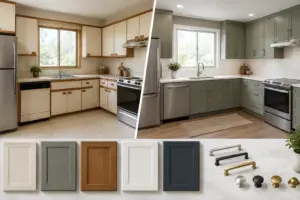
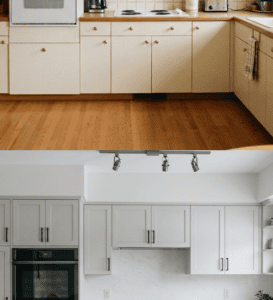
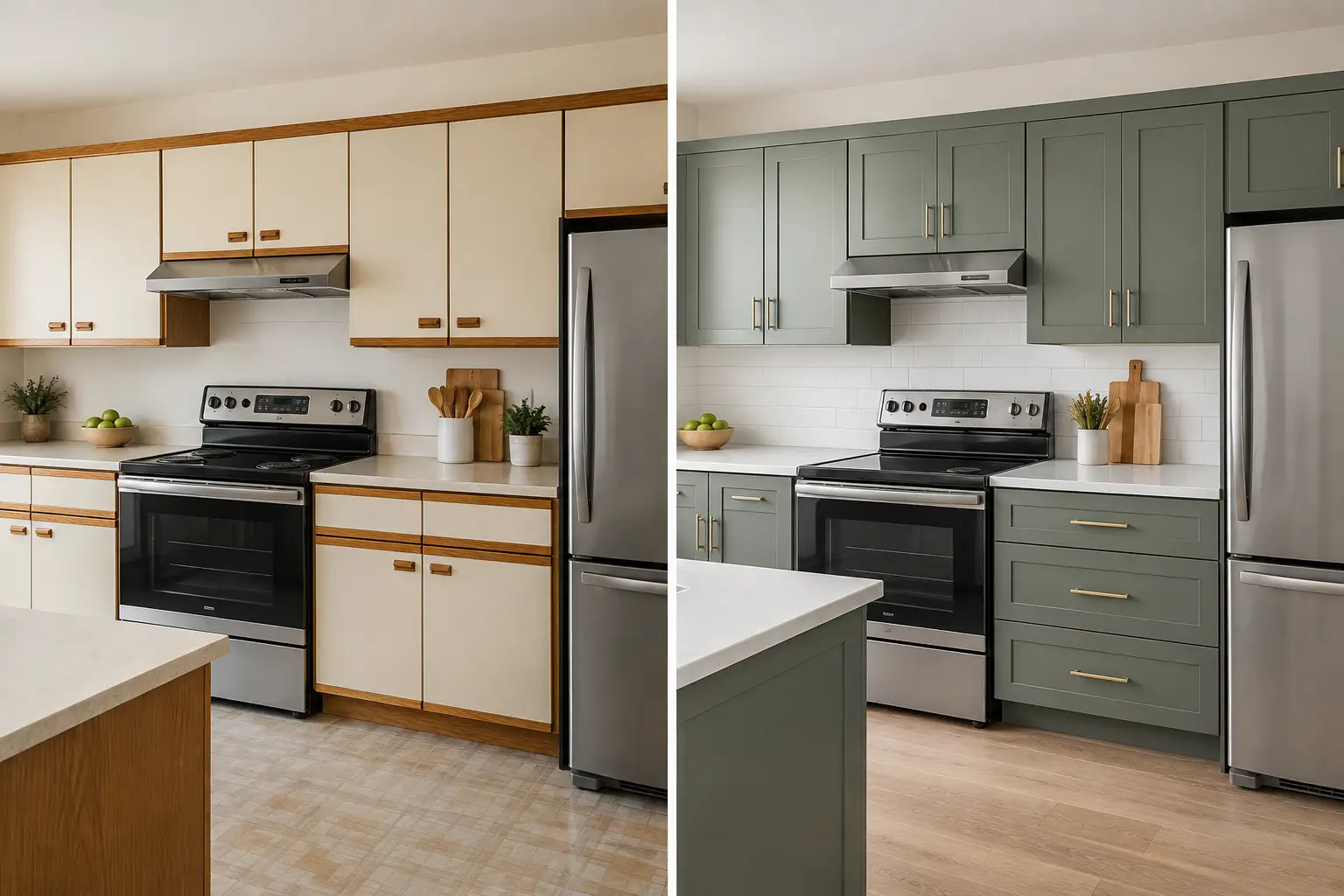
There is also a visual benefit. Rows of well-proportioned drawer fronts can give an older kitchen a cleaner, more current appearance. When paired with new doors, drawer fronts, handles, and a considered finish, they help the whole room feel intentionally designed rather than partially updated.
What a door-to-drawer conversion involves
The first question is whether the existing cabinet box is a good candidate. Solid, well-built boxes are often worth preserving, which is one reason cabinet refacing makes so much sense for established homes. A professional assessment looks at the cabinet’s condition, width, depth, structural supports, nearby plumbing, and the way the opening relates to appliances and countertops.
The existing doors, hinges, and shelving are removed. The cabinet opening may need to be adapted so the new drawer system fits squarely and operates properly. Custom drawer boxes and slides are installed inside the cabinet, then new drawer fronts are fitted and aligned with the rest of the cabinetry.
That alignment matters more than it may seem. Small gaps, uneven reveals, or drawer fronts that sit proud of neighboring doors can make even beautiful materials look unfinished. Custom measurement and professional installation are what give a converted cabinet the polished, built-in look homeowners expect.
Drawer hardware also matters. Quality full-extension slides allow the drawer to open fully and support the weight of everyday kitchen items. Soft-close operation adds a calm, refined feel and helps protect both the drawer and its contents from abrupt closing. These details are not merely decorative. They shape how the kitchen performs every day.
Where drawers make the biggest difference
Not every door cabinet needs to become a drawer cabinet. The smartest plan usually focuses on the areas that frustrate you most.
The cabinet below a cooktop is often a strong candidate, particularly if pots, pans, and lids are currently stacked behind doors. Wide, deep drawers keep heavy cookware organized and accessible. A shallow top drawer can hold utensils or cooking tools, with deeper drawers below for the pieces you use most.
A cabinet near the dishwasher is another practical place to consider drawers. Plates, bowls, and food storage containers can be sorted in a way that makes unloading easier. Near a prep area, drawers can create a natural home for knives, mixing tools, cutting boards, and baking equipment.
Some cabinets need a different solution. A sink base must accommodate plumbing, and a corner cabinet may require specialized hardware or may be better left as a door cabinet with an improved interior organizer. Cabinets that support a countertop overhang, house electrical components, or sit beside an appliance also need careful review. A good design does not force drawers everywhere. It uses them where they add real value.
Think about what you store before choosing drawer sizes
Before deciding on the number and depth of drawers, take a few minutes to notice what is inside the cabinet now. Heavy cast-iron cookware needs a different drawer than lunch containers. Serving platters may require a wider opening. Small gadgets can disappear inside a deep drawer unless they are grouped with dividers or trays.
This is where a personalized plan earns its keep. A kitchen should support the way you actually live, whether that means quick weekday meals, frequent entertaining, baking with grandchildren, or simply wanting less bending and reaching at the end of a long day.
How this fits into a cabinet refacing project
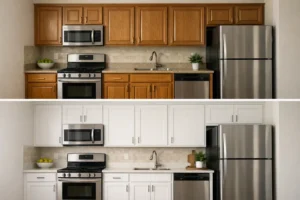
Converting doors into drawers is often most effective when it is part of a complete cabinet refresh. New custom-fit doors and drawer fronts allow the converted area to match the rest of the kitchen in style, finish, and proportion. You are not trying to blend a new component into dated cabinetry. You are creating a cohesive new face for the room.
For homeowners who like their existing layout, this approach can preserve what already works. There is no reason to move walls or replace functional cabinet boxes simply because the kitchen needs a better look and better storage. Targeted modifications can also be planned around other updates, such as a new backsplash, appliance change, or quartz countertop installation.
The timeline is another reason this option appeals to busy households. Because the cabinet framework remains in place, the work is more focused than a full tear-out. Most Kitchen Facelift transformations are completed in two to three days, with only the demolition required for the planned improvements. That means less disruption in your home and a clearer path from old kitchen to finished kitchen.
Questions to ask before you commit
Start with the cabinet boxes themselves. Are they structurally sound, level, and worth keeping? In many older Ontario homes, the answer is yes. Well-made cabinets can have years of useful life left, even if their doors, finishes, and interior function no longer suit the household.
Next, consider the countertop. If you already have granite or quartz you love, cabinet refacing and drawer conversions can be an especially thoughtful route because the existing countertop can remain in place when the project is planned correctly. If you are replacing the countertop, drawer conversions can be coordinated with that work for the cleanest result.
Finally, be honest about your priorities. If your kitchen footprint no longer works, you need more cabinets, or you want to relocate major plumbing and appliances, a broader renovation may be the better fit. But when the layout is right and the frustration is mostly appearance, access, and organization, converting selected doors to drawers can be a remarkably satisfying change.
A well-planned kitchen does not ask you to work around its limitations. It quietly makes the everyday tasks easier, from unloading the dishwasher to finding the pan you need. Start with the cabinet that annoys you most, and picture what a drawer could do in its place.