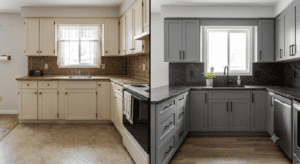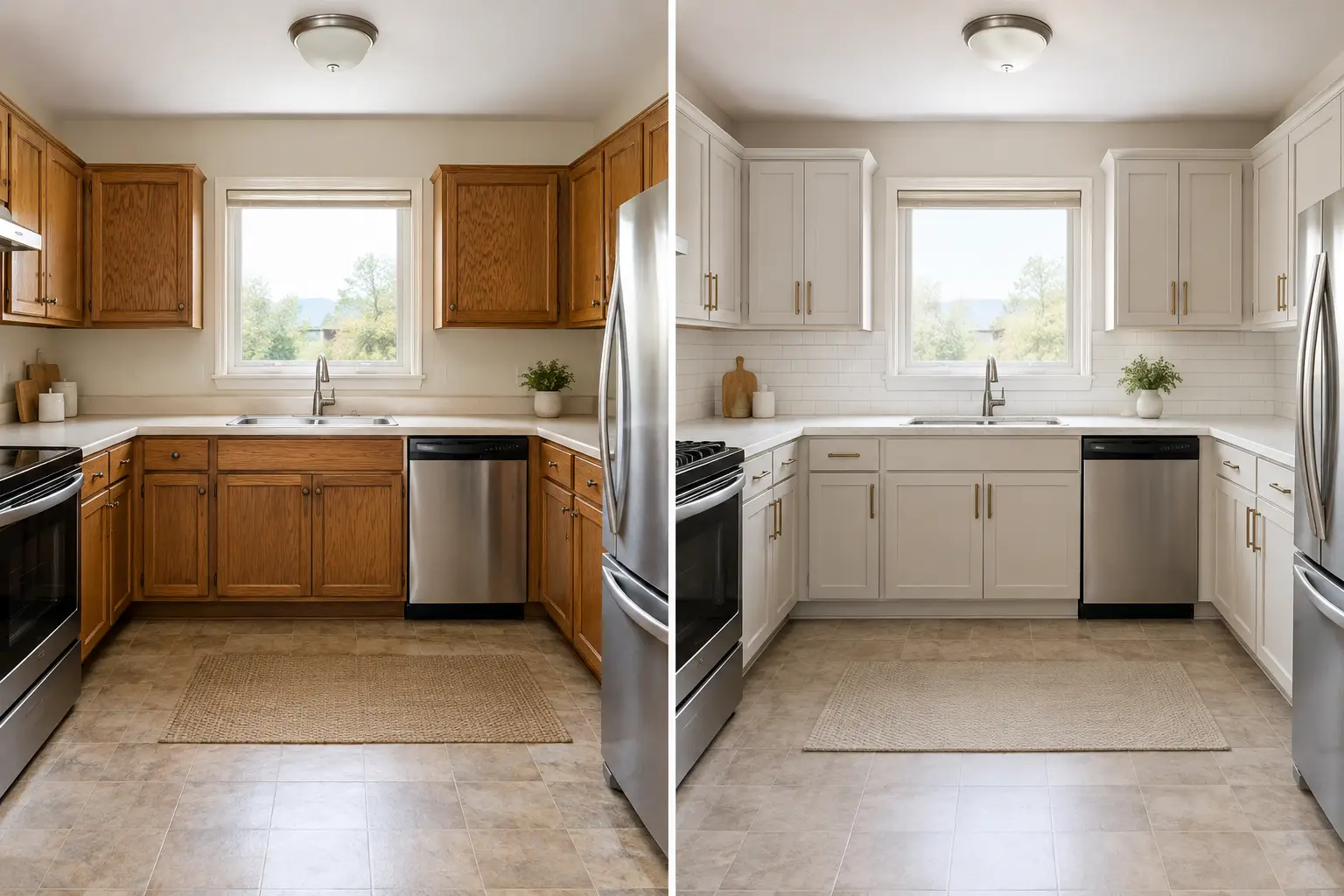
A kitchen can feel dated long before it stops working. In many Stoney Creek homes, the cabinet boxes are still solid, the layout still makes sense, and the real issue is what you see every day: worn doors, tired finishes, limited drawer access, and a style that no longer feels like home. A Stoney Creek kitchen transformation does not always require removing everything that is already serving you well.
Kitchen Facelift is your planning expert if you live in the Greater Hamilton Area.
Click to see the map for the area (Oakville to Hamilton to Niagara and north to Milton).
For homeowners who like their kitchen footprint but want a meaningful change, cabinet refacing offers a considered alternative to a full renovation. Custom-fit doors, drawer fronts, and finished exterior surfaces can completely change the room while preserving the cabinetry that is worth keeping. The result is not a patch-up. It is a deliberate redesign built around your home, your routines, and your timeline.
What a Stoney Creek Kitchen Transformation Can Change
A well-planned cabinet refacing project changes more than cabinet color. It can bring the kitchen into the present without turning your home into a construction zone for weeks.
Your existing cabinet boxes are carefully assessed first. When they are structurally sound, there is little sense in sending them to landfill simply because the doors are from another era. New doors and drawer fronts are made to fit, while visible cabinet surfaces are refinished to create a cohesive appearance. This is especially appealing in established homes with well-built cabinetry from the 1980s and 1990s.
The visual difference can be striking. A honey oak kitchen can become clean-lined and contemporary. Raised-panel doors can give way to a simpler Shaker profile. Dark finishes can be replaced with lighter tones that make the room feel more open. Hardware, lighting, a new backsplash, and updated countertops can add another layer of change when the project calls for it.
Just as important, refacing can improve how the kitchen works. Doors can be converted to drawers in selected lower cabinets, making everyday cookware easier to reach. Cabinet modifications can be made for a new appliance or to prepare for quartz countertops. The key is to make practical changes where they matter, rather than demolishing functional cabinetry by default.
Why Refacing Makes Sense When the Layout Works
A full renovation is the right answer when a kitchen has major water damage, failing cabinet boxes, or a layout that no longer supports the household. If you need to move walls, relocate plumbing, or create a fundamentally different room, a more extensive project may be necessary.
But many homeowners do not need that level of upheaval. They want their kitchen to look current, feel more organized, and reflect the quality of the rest of their home. They may already have countertops they love, or they may be ready to add new stone without disturbing the entire room.
Refacing is an intelligent choice in that middle ground. It preserves the useful structure, reduces unnecessary demolition, and focuses the investment on the parts of the kitchen that shape the daily experience. There is less dust, fewer moving parts, and far less time spent living around a renovation.
For busy households, the timeline is often the deciding factor. Most cabinet refacing transformations are completed in two to three days once materials are ready. That means less disruption to family meals, work-from-home schedules, and the ordinary rhythm of life. Premium results do not have to require weeks of inconvenience.
Start With an Honest Assessment
The best transformation begins with clarity, not guesswork. Before selecting door styles or finishes, look closely at the kitchen you already have.
Are the cabinet boxes level, sturdy, and in good condition? Does the current layout allow you to cook, unload groceries, and gather comfortably? Are the frustrations mostly visual, or are there a few targeted function issues that could be corrected with drawers, pullouts, or appliance adjustments?
These answers shape the right scope. A homeowner who loves the layout may focus on doors, drawer fronts, and hardware. Someone planning a quartz countertop may need modest preparation work so the cabinetry is ready to support it. A family that finds base cabinets difficult to use may prioritize drawer conversions in the areas they access most often.
A professional consultation should make these choices easier. Early ballpark pricing helps you understand the likely investment before you make a commitment. Photos can often support an initial virtual estimate, followed by an in-home visit for physical samples, precise measurements, and a closer look at the cabinetry. That sequence respects your time while ensuring the final plan is built on real information.
Choose Finishes for Daily Living, Not Just the Showroom
The right cabinet finish should suit the light in your home, the style of nearby rooms, and the way you want the kitchen to feel at 7 a.m. on a weekday. A sample that looks warm in a showroom can appear cooler under your own lighting, which is why seeing physical samples in the space matters.
Lighter finishes can brighten a kitchen with limited natural light and pair well with soft, modern hardware. Deeper finishes can bring contrast and definition to an open-concept main floor. Shaker doors remain a flexible choice because they can lean classic or contemporary depending on the finish, pulls, faucet, and backsplash.
There is also a practical side to every selection. Flat slab doors offer a crisp, minimal look and are easy to wipe down, while more detailed profiles bring texture and character. Matte finishes can feel understated and refined, whereas a subtle sheen may reflect more light. Neither is automatically better. The right choice depends on the home and the people using it.
Canadian-made, custom-fit components matter here. Cabinet doors and drawer fronts should not feel like an off-the-shelf approximation of your kitchen. They should fit cleanly, align properly, and hold up to the normal knocks, spills, and busy mornings that make a kitchen a lived-in space.
Plan for the Details That Make It Feel Finished
The small decisions often create the biggest sense of completion. Hardware can change the character of a room quickly, but it should also be comfortable in the hand. Drawer organization can reduce countertop clutter. A backsplash can frame the new cabinetry and pull together the colors in the room.
If you are keeping existing granite or quartz, bring that into the finish conversation early. The cabinet color should complement the stone rather than compete with it. If new countertops are part of the plan, think about the whole composition: cabinetry, backsplash, flooring, wall paint, and hardware. You do not need every element to match. You do want them to belong together.
It also helps to plan around your household calendar. A two- to three-day installation is efficient, but it still requires thoughtful preparation. Clear the cabinets, make a simple plan for meals, and confirm any appliance or countertop timing in advance. A well-managed project feels calm because the details have been considered before installation day arrives.
A Better Renovation Experience Starts With Less Disruption
The emotional weight of a renovation is real. Homeowners often delay a kitchen update because they picture dust everywhere, delayed trades, unanswered questions, and months of living with unfinished work. That concern is understandable.
A cabinet refacing project is designed to reduce that burden. Only the demolition that is necessary is handled, whether that means removing a backsplash, adapting cabinetry for an appliance, or making room for a countertop update. The focus stays on careful craftsmanship and respectful installation, not unnecessary disruption.
That approach is particularly valuable when the kitchen is central to family life. You should be able to improve one of the most important rooms in your home without putting the rest of your life on hold. When the existing cabinetry has good bones, preserving it is not settling. It is making a smart, lasting choice.
Before deciding what your kitchen needs, grab a cup of your favorite beverage and stand in the room for a few quiet minutes. Notice what still works, what frustrates you, and what you would be happy to see every morning. That is usually where the best transformation begins.