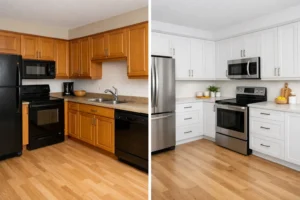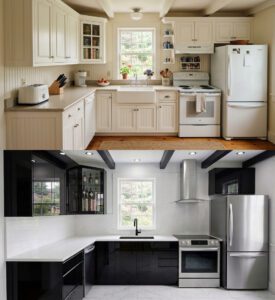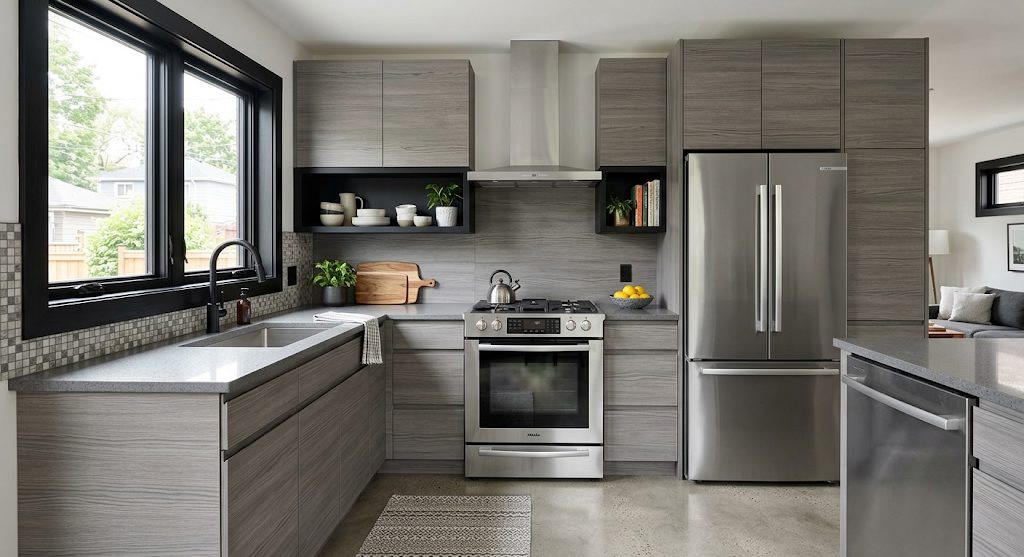
Your kitchen can feel dated long before it stops working. Perhaps the oak doors, raised panels, or worn finish remind you of the 1990s, but the cabinet boxes are still solid, the drawers function well, and the layout still suits the way your family lives. In that situation, a guide to refacing existing cabinets starts with one reassuring truth: you may not need to tear out a perfectly good kitchen to make it feel entirely new.
Cabinet refacing preserves the structure that works and transforms the surfaces you see and use every day. New custom-fit doors and drawer fronts, updated finishes, hardware, and thoughtful modifications can dramatically change the room without turning your home into a long construction site. For many established homes across the Golden Horseshoe, it is the practical, premium choice.
Kitchen Facelift is your planning expert if you live in the Greater Hamilton Area.
Click to see the map for the area (Oakville to Hamilton to Niagara and north to Milton).
A guide to refacing existing cabinets
Refacing is not simply painting old doors or applying a temporary covering. A professional refacing project begins with an honest assessment of your existing cabinetry. If the cabinet boxes are structurally sound, securely installed, and free from significant water damage, they can become the foundation for a renewed kitchen.
The visible exterior of the cabinet boxes is refreshed to coordinate with new doors and drawer fronts. Those components are custom made to fit your kitchen, rather than pulled from a standard shelf. The result can be a clean, cohesive finish that makes the room look redesigned, while retaining the layout, storage footprint, and functional cabinet structure you already have.
This approach is especially well suited to homeowners who like where their sink, appliances, and work zones are located. Keeping that footprint avoids the complicated ripple effects of moving plumbing, electrical connections, flooring, and walls. It also means less demolition and less disruption inside your home.
Refacing is not the right answer for every kitchen. Cabinet boxes with serious moisture damage, structural failure, or a layout that actively frustrates your daily routine may call for more extensive work. The value of a consultation is clarity. You should know whether your kitchen is a strong candidate before committing to a direction.
What can change when the boxes stay
Keeping cabinet boxes does not mean settling for a limited update. The doors and fronts set the visual tone of a kitchen, and changing them gives you wide latitude to move from traditional to transitional, contemporary, or warm modern style. A dated honey-oak kitchen can become crisp white, rich wood-toned, or a two-tone design with a darker island and lighter perimeter cabinetry.
Hardware has an outsized effect, too. New pulls or knobs can reinforce the style of the doors, whether you prefer a simple brushed finish, black accents, or a more classic profile. Soft-close hinges and drawer hardware can improve the daily feel of the kitchen, not just its appearance.
A well-planned refacing project can also include practical adjustments. An underused cabinet section may be converted from doors to drawers. A cabinet may be prepared for a new appliance. A backsplash can be removed where needed, and cabinetry can be adjusted to support a new quartz countertop plan. These changes require careful measuring and experienced installation, but they show why refacing can be much more than a cosmetic update.
The key is to distinguish between meaningful improvements and unnecessary construction. If a change makes your kitchen work better or completes the look you want, it deserves consideration. If it adds mess without improving your day-to-day experience, preserving what already works is often the smarter decision.
Start with the questions that shape the project
Before looking at door styles, spend a few minutes considering what you want to keep and what you genuinely want to change. Your answers will make the design conversation more productive and help determine whether refacing fits your goals.
First, consider the layout. Do you have enough counter space? Is the dishwasher where you want it? Can more drawers solve the storage problems you notice most often? If the layout is fundamentally right, refacing allows you to invest in the details that will make it feel better without paying for broad demolition.
Next, look closely at the cabinet condition. Check beneath the sink, around the dishwasher, and near any area that has experienced a leak. Normal wear on doors is one thing. Swollen particleboard, delaminating cabinet sides, or loose boxes need an honest professional assessment.
Finally, think about the whole room. Your flooring, backsplash, countertop, lighting, wall color, and appliance finish all influence the choices that will look at home in the new kitchen. You do not need every answer before a consultation, but bringing photos and a few inspiration images helps turn general preferences into a clear direction.
The professional refacing process
A well-run cabinet refacing project should feel organized from the beginning. The first step is often a simple conversation and a photo-based estimate that provides ballpark pricing before anyone asks you to make a major commitment. This gives you a useful sense of fit without turning the early stage into a drawn-out sales process.
If the project moves forward, an in-home visit allows for precise measurements, a careful look at the existing cabinet boxes, and physical samples you can see in your own light. This is where the details matter. A door color that looks one way on a phone screen may read differently next to your floors or countertop. Samples and professional guidance help prevent expensive second-guessing.
Once the design is confirmed, doors and drawer fronts are made to suit the measurements of your kitchen. On installation days, the focus is controlled, necessary work rather than a full tear-out. Existing doors and fronts are removed, cabinet exteriors are prepared and refreshed, and the new components are installed and aligned.
For the right project, most transformations are completed in two to three days. That timeline is one of refacing’s strongest advantages, but it depends on the scope. Adding countertop work, backsplash removal, appliance modifications, or more involved cabinet conversions can affect sequencing. A trustworthy installer will explain what is included, what happens when, and what preparation is helpful before the team arrives.
How to choose finishes with confidence
The most successful kitchens balance current style with the character of the home. If you plan to stay for years, choose a finish you will enjoy living with rather than chasing every short-term trend. If you are preparing to sell, aim for a fresh, widely appealing look that makes the kitchen feel clean, intentional, and well cared for.
Door style plays a major role. A simple shaker profile is versatile and works across many home styles. Flat-panel doors can create a more contemporary look. More detailed profiles may suit traditional homes, especially when paired with classic hardware and warm finishes. There is no universal best option. The right one is the option that feels consistent with the rest of your home and the level of maintenance you are comfortable with.
Color deserves the same thoughtful approach. Lighter cabinetry can brighten a kitchen with limited natural light, while deeper tones can add definition to a large or open-concept space. Two-tone combinations can be beautiful, but they need a clear visual plan. Often, using the darker finish on an island or lower cabinets provides contrast without making the room feel heavy.
Countertops should be part of the conversation early. If you already love your granite or quartz, new cabinet finishes can be chosen to complement it rather than replace it. If new stone is part of the plan, cabinet adjustments and countertop timing should be coordinated before installation begins.
The value is in what you avoid, too
A full renovation has its place, particularly when a kitchen’s structure or layout no longer serves the household. But when the cabinet boxes are sound and the footprint works, unnecessary demolition can add time, waste, and inconvenience without producing a better outcome.
Refacing lets you direct your investment toward the elements that change how your kitchen looks and feels: custom doors, drawer fronts, finish quality, hardware, thoughtful storage improvements, and professional installation. It protects the parts of the kitchen that are already doing their job.
That is why a careful assessment matters more than a one-size-fits-all answer. At Kitchen Facelift, the goal is not to make your kitchen into a construction project. It is to help you see the potential in what is already there, then transform it with Canadian-made craftsmanship and a process that respects your home.
If you still enjoy your kitchen’s layout but no longer enjoy looking at it, begin there. A few well-chosen changes, made with care, can give an established kitchen a fresh start without asking your household to put life on hold.