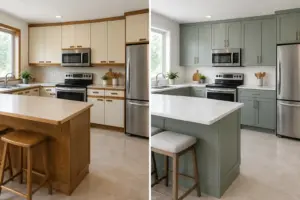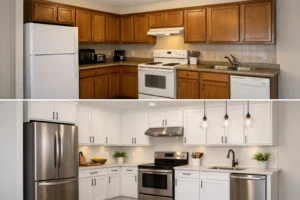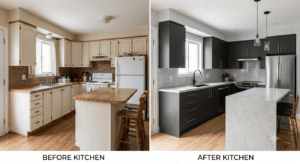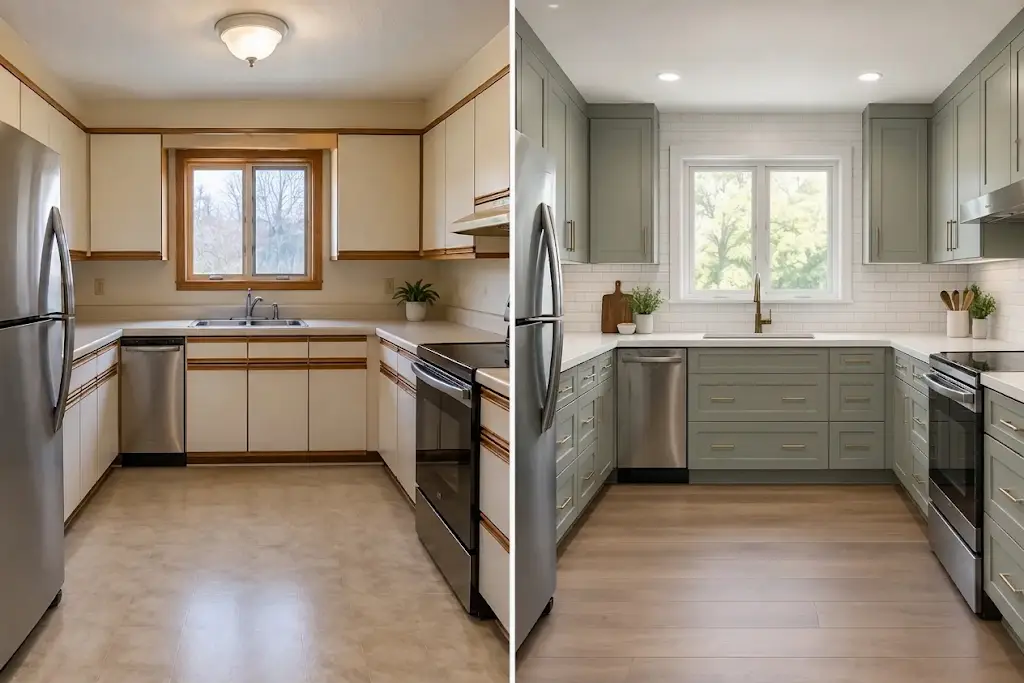
A kitchen can feel dated long before it stops working. If your cabinet boxes are solid, your layout still makes sense, and you are tired of looking at worn doors or an old finish, Burlington kitchen update services may offer a smarter path forward than starting from scratch.
Kitchen Facelift is your planning expert if you live in the Greater Hamilton Area.
Click to see the map for the area (Oakville to Hamilton to Niagara and north to Milton).
When a Kitchen Update Makes More Sense Than a Full Renovation
Many Burlington homes have kitchens built in the 1980s, 1990s, or early 2000s with sturdy cabinetry behind an appearance that no longer suits the home. The doors may be oak, the drawer fronts may be dated, or the finish may have seen decades of family life. None of that automatically means the cabinets need to be removed.
Cabinet refacing preserves the existing cabinet boxes and replaces what you see and touch every day: doors, drawer fronts, hardware, and exterior finishes. The result can be a dramatic visual transformation without tearing apart a kitchen that already functions well.
That distinction matters. A full renovation is often the right call when a layout is cramped, the cabinetry has water damage, or the structure has failed. But if you like where your sink, appliances, and storage are located, removing sound cabinetry can add disruption without adding meaningful value to your daily routine.
A thoughtful update lets you invest in the parts of the kitchen that change the experience most: the style, the color, the functionality of key cabinets, and the finishing details that make the room feel considered.
What Burlington Kitchen Update Services Can Change
A cabinet update is not limited to putting new doors on old boxes. Done properly, it is a custom project shaped around how your kitchen works now and how you want it to work next.
For some homeowners, the goal is a clean, contemporary look with flat-panel doors, warm wood tones, or a soft painted finish. Others want a more classic profile that brings the room in line with the rest of an established home. The best choice is not about chasing a trend. It is about selecting a finish and door style you will enjoy living with for years.
Function can change too. A door cabinet can often be converted to drawers, creating easier access to pots, pans, and everyday dishes. New hardware can improve the feel of every cabinet opening. If you are replacing appliances, cabinet adjustments may help create a more intentional fit.
Countertops and backsplashes also deserve a coordinated plan. Homeowners who already have granite or quartz often want to protect that investment while updating the cabinetry around it. In other cases, removing an old backsplash and preparing the kitchen for new quartz can be part of the project. The scope should be based on what your home actually needs, not on unnecessary demolition.
The Value of Keeping a Good Layout
Your kitchen layout has probably been tested by real life: school mornings, holiday meals, groceries, coffee, and cleanup after a busy day. If it still supports the way your household moves through the room, keeping it can be a real advantage.
Maintaining the footprint reduces the number of decisions and trade-offs involved. You do not have to relocate plumbing, rework electrical systems, or live through weeks of construction simply to achieve a fresh appearance. You can focus on the details that will be visible every day.
That is especially valuable for busy households and homeowners preparing to sell. A kitchen that looks current, polished, and cared for can change the entire impression of a home, without putting life on hold for an extended project.
A Better Update Starts With an Honest Assessment
The first question should be simple: are your existing cabinet boxes worth saving? A professional assessment considers their condition, how they are constructed, whether they are securely installed, and whether their configuration can support the changes you want.
Solid cabinet boxes are excellent candidates for refacing. They offer a stable foundation for custom-fit doors, drawer fronts, and finishes designed specifically for the room. This is not a one-size-fits-all overlay. Measurements, materials, and installation details matter if the finished kitchen is going to look refined rather than pieced together.
It also helps to be realistic about the project’s limits. Refacing can transform the face of a kitchen, improve storage access in targeted areas, and support select modifications. It will not solve a fundamentally poor layout or repair cabinetry that has suffered significant structural or moisture damage. Clear advice at the beginning protects your investment and helps you choose the right path with confidence.
What the Process Should Feel Like
Kitchen projects often become stressful because homeowners are asked to make major decisions before they understand the scope, timeline, or likely investment. A better process begins with clarity.
Start with a ballpark estimate based on photos and a conversation about your goals. This gives you useful direction before committing time to a detailed appointment. If the project feels like a fit, an in-home visit allows for precise measurements, physical samples, and a closer look at the existing cabinetry.
Seeing samples in your own light is more useful than choosing from a screen alone. Natural daylight, flooring, wall color, and adjoining rooms all influence how a finish will feel in the space. It is also the right time to discuss practical details, such as appliance clearances, drawer conversions, countertop plans, and hardware.
Once the design is set, custom components are made to suit your kitchen. Installation is planned to respect your home and limit disruption. Most cabinet transformations can be completed in two to three days, depending on the scope. That is a meaningful difference when your kitchen is the center of your household.
Less Demolition, Less Household Upheaval
There is no way to update a kitchen without some activity in the home. However, the amount of disruption depends heavily on the approach. Preserving functional cabinetry means less material removed, less dust from major demolition, and fewer days spent without normal access to the room.
That does not mean rushing the work. It means being deliberate about what stays, what changes, and why. A well-managed update removes only what is necessary, whether that includes an old backsplash, a cabinet section being adapted for a new appliance, or fronts being changed to create better drawer storage.
For homeowners who value craftsmanship but do not want a renovation to take over the house, this balance can be the deciding factor.
Choosing Materials and Details You Will Still Love Later
A beautiful kitchen update is built from decisions that work together. Door style sets the tone, but sheen, hardware, edge details, and surrounding finishes give the room its personality. A quiet matte finish may suit a calm, modern space. A textured wood look can bring warmth to an open-concept main floor. Classic shaker doors remain popular because they work across many home styles, but they are not the only enduring option.
The practical side matters just as much. Consider how the finish will handle fingerprints, how hardware feels in your hand, and which cabinets create daily frustration. One well-planned bank of drawers may improve your routine more than several purely decorative upgrades.
Canadian-made custom components offer another advantage: they are produced for your measurements, rather than forced into standard sizes. That precision shows at the edges, around appliances, and in the overall fit of the finished kitchen.
Is Refacing Right for Your Burlington Home?
Cabinet refacing is often an excellent choice when your cabinet boxes are in good condition and you are happy with the footprint of the room. It is a particularly sensible option if you want a premium result, value a shorter installation window, or prefer to avoid replacing materials that still have years of useful life.
If you are unsure, begin with photos and an honest conversation about what bothers you most in the current kitchen. Is it the color? The dated doors? Lack of drawer access? A mismatch between the cabinetry and your countertop? Naming the real problem helps shape an update that feels worthwhile, not merely different.
Your kitchen does not have to be torn apart to feel entirely new. With the right assessment, custom materials, and careful installation, the room you already know can become one you are excited to come home to.