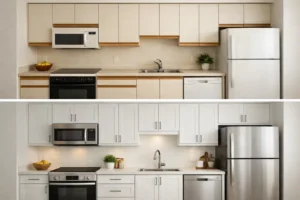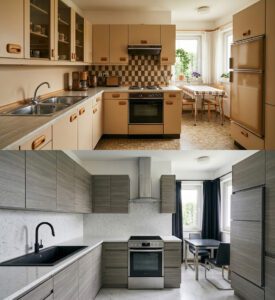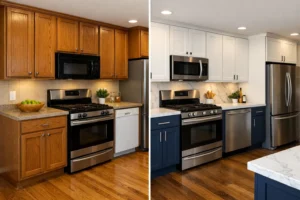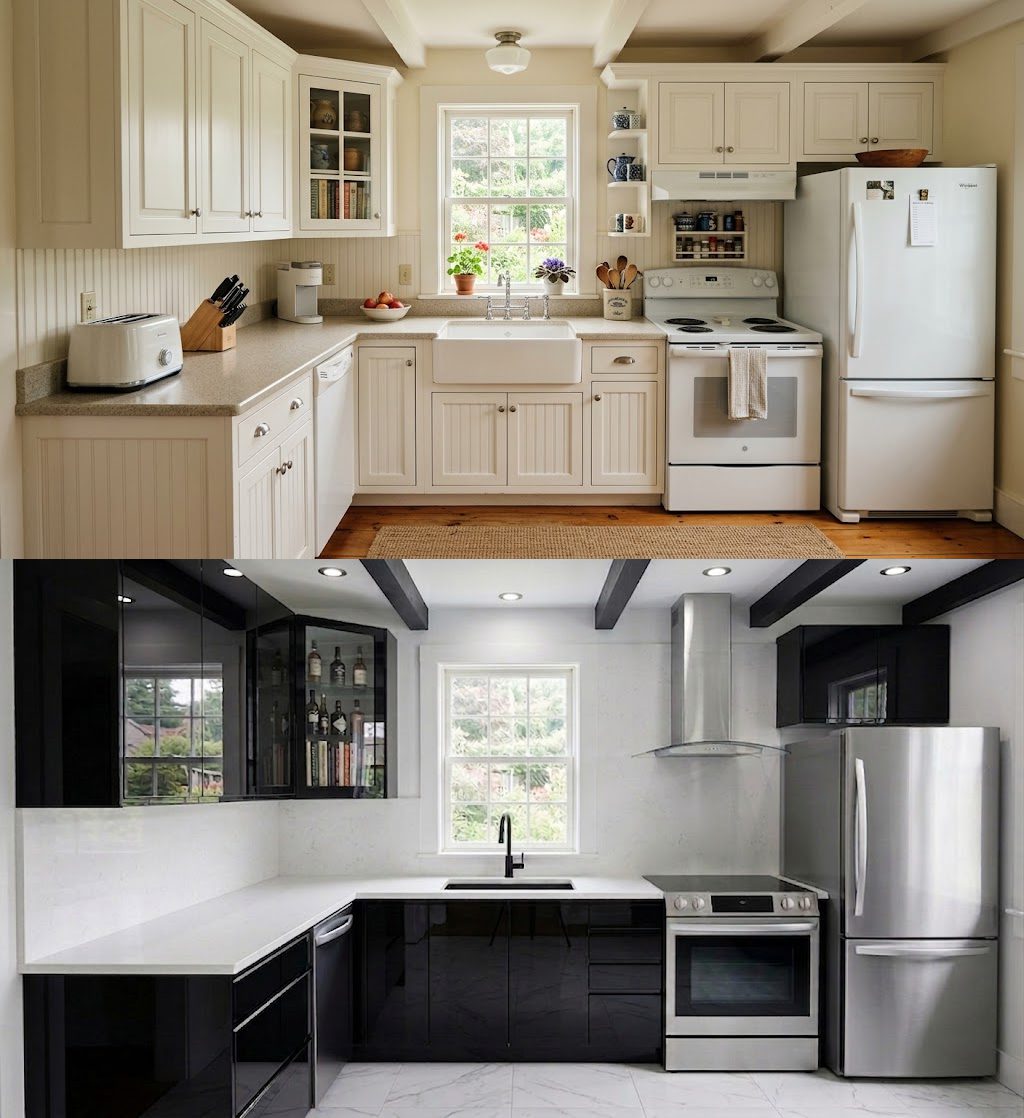
A kitchen can feel tired long before it stops working. Perhaps the oak cabinets from the 1980s are still sturdy, the drawers still glide, and the layout still makes sense for your family. But dated doors, worn finishes, and an old backsplash can make the whole room feel like a project you have been putting off. Kitchen makeovers do not always require tearing everything out to create a remarkable change.
For many homeowners, the most satisfying transformation starts by preserving what is already sound. Cabinet refacing replaces the parts you see and touch every day – doors, drawer fronts, hardware, and finishes – while keeping well-built cabinet boxes in place. The result can look like a completely new kitchen, with far less disruption to your home.
Kitchen Facelift is your planning expert if you live in the Greater Hamilton Area.
Click to see the map for the area (Oakville to Hamilton to Niagara and north to Milton).
Start With What Your Kitchen Already Does Well
A full renovation has its place. If your cabinet boxes are damaged, the layout is frustrating, or you need to move plumbing and walls, rebuilding may be the right path. But a renovation should solve a real problem, not simply create more work around a kitchen that is fundamentally functional.
Look at the bones of the room first. Are the cabinets solid? Does the existing footprint support how you cook, gather, and move through the space? Are you happy with the locations of your sink, range, and refrigerator? If the answer is yes, a makeover focused on refacing can be the more intelligent way forward.
This approach is especially well suited to established homes across the Golden Horseshoe, where many kitchens were built with durable cabinetry that deserves a second life. You keep the strength of the original construction while changing the visual elements that make the greatest impression.
What Cabinet Refacing Can Change
Refacing is more than putting new doors over old cabinets. A well-planned project considers the details that shape both the appearance and daily use of the kitchen.
New custom-fit doors and drawer fronts can shift the style from traditional to clean-lined and contemporary, or bring warmth and character to a more transitional design. A new finish can brighten a dark room, while updated pulls and handles give the kitchen a more considered, finished feel. These choices work together, which is why seeing physical samples in your own lighting matters.
Kitchen makeovers can also address practical frustrations without rebuilding the entire room. A door cabinet may be converted into drawers for easier access. A dated backsplash can be removed to prepare for a new surface. Cabinetry can be adjusted around a new appliance, and careful preparation can make room for a quartz countertop installation.
The scope depends on the kitchen and your goals. The point is not to avoid every bit of demolition. It is to do only what serves the finished result and leave the rest of your home alone.
A Fresh Look Without Losing a Good Layout
Homeowners often assume a new-looking kitchen requires a new layout. That is not always true. Layout changes are valuable when they improve traffic flow, storage, or accessibility. Yet moving appliances and plumbing can add time, coordination, and disruption that may not improve a kitchen already suited to your household.
Keeping the existing footprint lets you put your investment into the finishes and functionality you will notice every day. It can also protect a countertop you already love. If you have invested in granite or quartz and your cabinets remain structurally sound, refacing may allow you to refresh the room without disturbing that surface unnecessarily.
The Difference Is in the Assessment
Not every kitchen is a refacing candidate, and honest advice matters here. Cabinet boxes with serious water damage, structural issues, or an impractical configuration may call for a different solution. A professional assessment should make that clear rather than forcing one approach onto every home.
The good news is that many solid wood and plywood cabinets from past decades were built to last. Their style may be dated, but their construction is often worth preserving. That is where a custom assessment becomes valuable: it separates a kitchen that needs to be replaced from one that simply needs to be reimagined.
At Kitchen Facelift, the process begins with practical clarity. Homeowners can share photos for a ballpark estimate, then review samples and precise measurements during an in-home visit. That sequence helps you understand what is possible before making big decisions, without turning your kitchen into a construction zone just to get answers.
Plan a Makeover Around Real Life
The most beautiful kitchen makeover is one that fits the way your household actually lives. Before choosing a door style or finish, think about the moments that happen in the room: weekday breakfasts, grocery unloading, family dinners, hosting friends, and the quiet coffee at the counter before everyone wakes up.
If you have young children, easy-to-clean surfaces and drawers that make daily storage simpler may matter more than an elaborate decorative detail. If you entertain often, you may prioritize a countertop update and cabinetry that makes serving pieces easier to reach. If you are preparing to sell, a clean, current kitchen can make the entire home feel more cared for, especially when the work is completed efficiently.
It also helps to consider light. Dark cabinets can feel elegant in a large, sun-filled room, while a lighter finish can make a compact kitchen feel more open. Hardware should feel good in the hand, not just look good on a sample board. And while trends can spark ideas, choose a design that still feels like home to you after the trend cycle moves on.
Questions Worth Asking Before You Begin
A good plan answers a few practical questions early. What do you like about the kitchen now? What do you avoid because it is inconvenient? Which changes will have the most visible impact? And how much disruption can your household reasonably accommodate?
These answers shape the right scope. They may point toward a straightforward refacing project, or they may reveal that adding drawers, replacing a backsplash, or coordinating new counters will make the transformation feel complete. Clear priorities keep decisions grounded and help prevent a project from growing beyond what you truly need.
Why Timing and Installation Matter
A kitchen renovation can affect nearly every part of the house. Dust travels, routines change, and meals become harder to manage when the room is out of service for weeks. For busy households, the timeline is not a minor detail. It is part of the decision.
When cabinet boxes are retained and the work is properly planned, most refacing transformations can be completed in two to three days. That does not mean rushing craftsmanship. It means the doors and components are custom-made before installation begins, so the on-site work is focused, organized, and respectful of your space.
Precision is particularly important when new doors, drawer fronts, and finishes meet existing cabinetry. Custom manufacturing and professional installation help create the clean lines that make a refaced kitchen feel intentional rather than pieced together. You should expect careful measurements, a clear plan for any required adjustments, and installers who protect the parts of your home that are not being changed.
A Better Way to Think About Value
Value is not simply about choosing the smallest possible project. It is about spending where it improves your home and avoiding work that does not. Preserving sound cabinetry reduces unnecessary waste and keeps the focus on the transformation you want to see: beautiful doors, thoughtful finishes, useful storage, and a kitchen that feels current again.
For homeowners who could pursue a full renovation but do not need one, that can be a confident choice. You are not settling for less. You are choosing a process that respects the solid work already in your home while delivering a premium result with less mess and less time away from your kitchen.
The right makeover should leave you with more than a room that photographs well. It should make you glad you kept what was worth keeping, changed what was holding the space back, and made a decision that feels right every time you walk in.