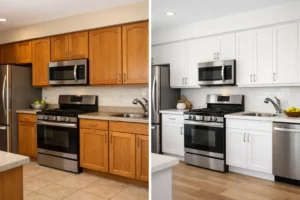
A refacing consultation should not feel like the start of a long, confusing renovation. It should feel like getting clear answers about the kitchen you already have: what can stay, what can change, what it may cost, and how soon you can enjoy the result. Knowing how to organize a refacing consultation helps you make the most of that conversation and move forward with confidence.
If your cabinet boxes are solid and your kitchen layout still works for your household, refacing can be a thoughtful way to create a dramatically different space without removing everything that is already doing its job. A little preparation makes it easier for a specialist to assess your kitchen accurately and recommend options that suit your home, style, and priorities.
Kitchen Facelift is your planning expert if you live in the Greater Hamilton Area.
Click to see the map for the area (Oakville to Hamilton to Niagara and north to Milton).
Start With What You Want to Keep
Before choosing door styles or paint colors, take a moment to think about what is working in your kitchen. This is the central question behind cabinet refacing.
Perhaps you like where the sink, stove, and refrigerator are located. Maybe your cabinet boxes are well-built, your drawers still function properly, or you have a granite or quartz countertop you want to preserve. Those details are not limitations. They are often the foundation of a smart transformation.
Write down the parts of your kitchen you would like to retain, along with the frustrations you want to solve. For example, you may want to replace dated oak doors, add drawer storage where a lower cabinet currently has doors, update decorative panels, or prepare the room for a new backsplash. Be specific where you can, but do not worry about having every answer. The consultation is where possibilities become a plan.
It also helps to separate true needs from nice-to-haves. Better access to pots and pans may be a daily need. A glass-front display cabinet may be a finishing detail you will consider if it fits the design and budget. Both deserve discussion, but knowing your priorities helps guide the conversation.
Gather a Few Simple Details Before You Reach Out
You do not need architectural drawings to begin. Clear photos and a few basic details are usually enough for an initial conversation and a ballpark estimate.
Take photos of each wall of the kitchen, plus wider shots from the doorway or adjoining room. Open a few cabinet doors and drawers so the condition and construction are easier to see. Include the countertop, backsplash, and areas around appliances. Natural daylight is helpful, but ordinary phone photos are perfectly fine as long as they are clear.
Along with the photos, make note of your kitchen’s approximate dimensions, the age of the cabinetry if you know it, and any planned changes. A new range, a larger refrigerator, quartz countertops, or a backsplash removal can affect the scope of the project. Mentioning these early prevents surprises later.
If there are areas of concern, photograph those too. Water damage beneath a sink, a cabinet that has settled, or a drawer that no longer glides properly does not automatically rule out refacing. It simply gives your consultant the information needed to advise you honestly.
Have a Budget Range in Mind
A consultation works best when everyone can speak plainly about investment. You do not need to arrive with a fixed number, but it is helpful to know the range that feels comfortable for your household.
Cabinet refacing is custom work. The final investment depends on the number and type of doors and drawer fronts, the finish and style selected, storage modifications, trim details, and any necessary preparation for countertops or appliances. Sharing a realistic range allows your consultant to focus on options that make sense rather than showing you ideas that do not match your goals.
A good specialist will be equally clear about what is included, where variables may exist, and which decisions have the greatest effect on the final scope. That clarity is far more useful than a vague promise.
Decide Who Should Be Part of the Conversation
Kitchen decisions tend to involve more than one person, especially when the space is used by a busy family every day. Whenever possible, have all key decision-makers present for the in-home consultation. It saves time, avoids relaying half-remembered details afterward, and lets everyone see the samples in the actual light of the room.
This does not mean every family member needs to agree on every finish before the appointment. It means the people responsible for the decision should be able to discuss priorities together. One person may care most about a clean, contemporary look. Another may be focused on storage, installation timing, or preserving an existing stone countertop. Those are all useful perspectives.
If someone cannot attend, ask whether they can join briefly by phone or video at the point when selections and options are being reviewed.
Prepare Questions That Lead to Useful Answers
The best consultation questions are practical. They help you understand how the work will affect your home, not just how the finished kitchen will look.
Ask whether your existing cabinet boxes are suitable for refacing and why. Ask what work, if any, is needed to accommodate a new countertop, backsplash, appliance, or cabinet conversion. If you are considering changing doors to drawers, ask how that will function and what it will look like once completed.
You should also ask about materials, how the doors and drawer fronts are made, and what installation involves. For homeowners who value Canadian-made craftsmanship, this is the right time to understand where products are manufactured and how they are customized to fit the existing cabinetry.
Timing matters too. Ask how long installation is expected to take, what areas of the kitchen will be unavailable during the work, and what preparation is needed before the installers arrive. Many refacing projects can be completed in two to three days, but the right timeline depends on the scope. Countertop work, plumbing adjustments, appliance changes, and related updates may require coordination beyond the refacing itself.
Use the In-Home Visit to See, Not Just Imagine
Photos are an excellent place to start, but an in-home consultation is where a kitchen plan becomes precise. Your consultant can measure the cabinetry, inspect the condition of the boxes, identify details that affect fit, and bring physical samples for you to view in your own space.
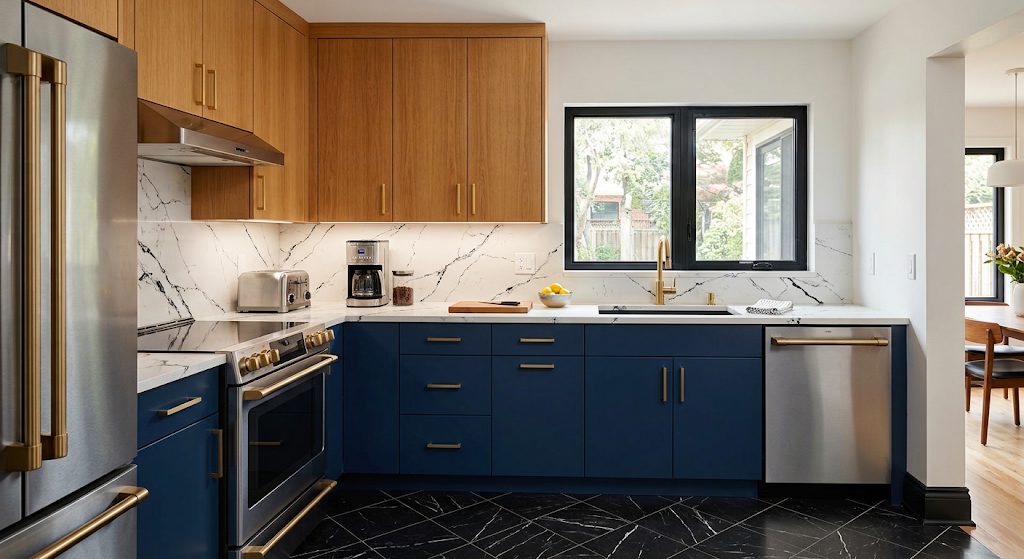
This is especially valuable because color behaves differently from one home to another. A warm white door can look crisp in a sun-filled kitchen and softer beside a cool-toned quartz countertop. Wood-grain finishes, hardware, and trim details all need to work with the floor, wall color, and lighting you already have.
Rather than trying to choose from every possible option, start with the overall feeling you want. Do you want the room to feel lighter? More tailored? More current while still fitting the character of the home? A skilled consultant can narrow the choices and show combinations that support that direction.
Bring inspiration photos if you have them, but use them as a conversation starter rather than a rulebook. A beautiful kitchen online may have different light, ceiling height, countertop material, and cabinet proportions than yours. The goal is not to copy someone else’s kitchen. It is to make your kitchen feel right for your home.
Talk Through the Details That Affect Daily Life
A successful refacing project goes beyond new doors. During the consultation, consider the small changes that can make the kitchen more enjoyable every day.
Think about the cabinets you use most often. Would deep drawers improve access to cookware? Is there an awkward corner, an unused cabinet section, or a dated valance that could be reworked? Are you replacing hardware, adding crown molding, or updating end panels so the finished kitchen looks intentional from every angle?
At the same time, be open to the trade-offs. Refacing is ideal when the existing footprint and cabinet structure are worth preserving. If you need to move walls, relocate plumbing, change the kitchen layout completely, or address widespread structural damage, a different approach may be more appropriate. An honest consultation should make that distinction clear.
Confirm the Plan Before You Commit
Before making a final decision, make sure you understand the proposed scope in plain language. You should know which cabinet areas are being refaced, which modifications are included, what finishes and hardware have been selected, and what is excluded from the work.
Review the installation sequence as well. Ask what needs to be cleared from cabinets, whether you should remove countertop items or wall decor, and how the work area will be protected. A professional team should respect your home and explain how they will keep disruption contained.
This is also the time to confirm who is handling related work. If a backsplash is being removed, appliances are changing, or countertops are being installed, clear coordination keeps the project moving smoothly. There is no benefit in rushing past unanswered questions. The best decisions are the ones that still feel right after you have had time to consider them.
For homeowners across the Golden Horseshoe, Kitchen Facelift begins with that same straightforward approach: an initial photo-based estimate, an in-home visit with samples and measurements, and a plan built around the cabinetry worth keeping.
A well-organized consultation does more than prepare you for new cabinet doors. It gives you a clearer picture of what your kitchen can become – and how comfortably you can get there.