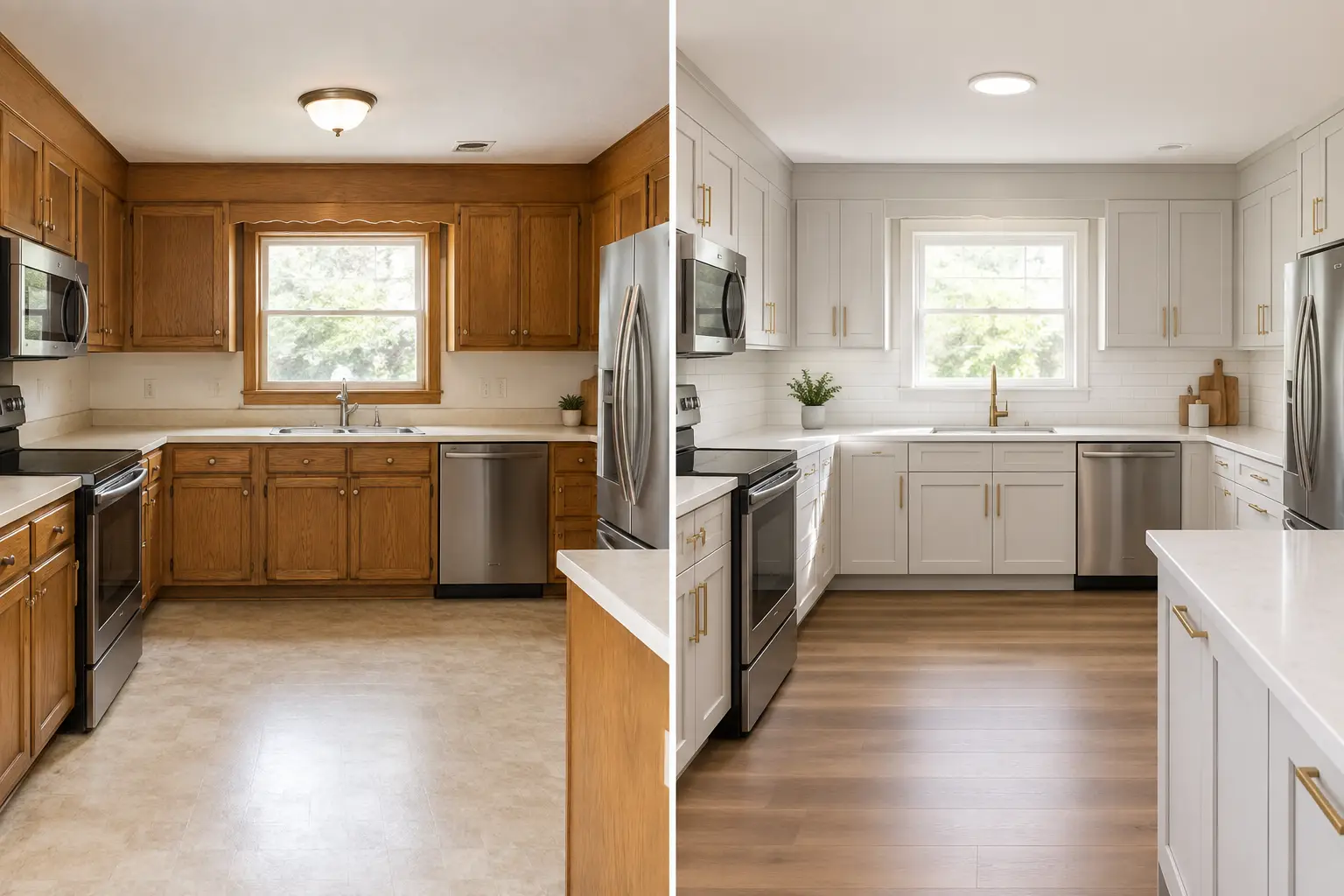
A kitchen can feel dated long before it stops working. Maybe the oak doors and visible hinges belong to another era, but the cabinet boxes are solid. Maybe your layout still makes sense, your drawers are where you need them, and you cannot imagine living through weeks of construction just to change the look.
That is where kitchen refacing earns a closer look. It is a thoughtful way to transform the visible parts of a kitchen while preserving cabinetry that is still structurally sound. Done well, it is not a shortcut or a coat of paint. It is a custom, professionally installed update that can make an established kitchen feel current, personal, and ready for the years ahead.
Kitchen Facelift is your planning expert if you live in the Greater Hamilton Area.
Click to see the map for the area (Oakville to Hamilton to Niagara and north to Milton).
What kitchen refacing actually changes
Kitchen refacing replaces the elements you see and touch every day: cabinet doors, drawer fronts, exterior panels, and the finish applied to the cabinet frames. The result is a coordinated new kitchen face, built around the cabinetry already in place.
This approach is particularly well suited to homes with solid cabinets from the 1980s and 1990s. Many were built with durable materials and practical layouts that remain useful. Removing them simply because the door style feels tired may create more disruption than the project requires.
Refacing lets you choose a different door profile, color, hardware, and finish without discarding the foundation of the room. A traditional raised-panel kitchen can become clean and contemporary. Dark, dated surfaces can become a warm wood tone, crisp white, or a deeper custom shade. The transformation is visible from the moment you walk in, but the process respects what is already working behind the doors.
A professional assessment matters here. Cabinet boxes must be in good condition, properly installed, and suitable for a new finish. Refacing is designed for kitchens with a sound foundation, not for cabinets damaged by long-term moisture, structural movement, or severe wear.
Why homeowners choose kitchen refacing
The strongest reason is usually not just appearance. It is control. Homeowners who enjoy their kitchen footprint often want a better experience without turning their home into a construction zone.
A full renovation can involve removing cabinetry, opening walls, relocating plumbing or electrical, repairing floors, and coordinating multiple trades. Sometimes that is absolutely the right path, especially when the layout no longer serves the household. But when the room functions well, much of that work may be unnecessary.
Kitchen refacing focuses the investment where it has the greatest visual and daily impact. There is less demolition, less material sent away, and far less interruption to family routines. At Kitchen Facelift, most transformations are completed in 2-3 days, with the scope carefully planned before installation begins.
That pace can be especially meaningful for busy families, people working from home, or homeowners preparing a property for sale. You still get a kitchen that feels intentionally designed, but your life does not need to pause for weeks.
Refacing versus replacing: the decision comes down to the bones
The right choice is rarely about following a trend. It comes down to what needs to change and what is worth preserving.
Refacing is often a strong fit if you like the current layout, have sturdy cabinet boxes, and want a meaningful visual update. It is also a sensible option when you have existing granite or quartz countertops you would like to keep. Preserving the cabinetry underneath can help protect an investment that is still beautiful and functional.
Replacement may make more sense when the layout creates daily frustration. If you need to move walls, change the location of the sink, add an island, or solve significant storage limitations, new cabinetry may give you more freedom. The same is true when cabinet boxes are deteriorated or no longer provide a reliable base.
There is also a middle ground. A refacing project can include carefully selected improvements, such as converting cabinet doors to drawers, adjusting cabinetry for a new appliance, removing a backsplash, or preparing the space for new quartz countertops. The goal is not to preserve everything at all costs. It is to make smart changes without creating unnecessary work.
What a well-planned refacing project can include
The finished look should feel complete, not like a partial update. That begins with doors and drawer fronts designed for your exact cabinetry, then continues through the details that make the kitchen feel cohesive.
Door style sets the tone. A simple slab door can create a modern, streamlined feel, while a Shaker profile offers a familiar balance of classic and current. Finishes deserve the same care. The right white can brighten a room without feeling stark; a natural wood finish can add warmth without taking the kitchen backward in time.
Hardware is a smaller choice with an outsized effect. It changes how the kitchen feels in your hands every morning and can reinforce the character of the new design. New panels, trim, and end pieces help ensure the updated cabinetry looks integrated from every angle, rather than refreshed only from the front.
The best projects also consider how you use the space. A drawer conversion can make everyday items easier to reach. An appliance adjustment can improve fit and function. These decisions should be based on your habits, not a generic package.
The process should feel clear before work begins
A kitchen update becomes less stressful when there are no surprises about the scope. That starts with an honest conversation about your goals, your cabinetry, and the changes you want to see.
For many homeowners, a photo-based virtual estimate is a helpful first step. It can provide a realistic ballpark before anyone spends time measuring. If the project appears to be a good fit, an in-home consultation follows, with physical samples, precise measurements, and a closer look at the details that affect installation.
This is the point to discuss countertops, backsplashes, appliance plans, and any functional changes. It is also the time to ask direct questions about the schedule, how the home will be protected, and what access the installers will need. Clear answers are part of a premium experience.
Once the design is confirmed, custom doors, drawer fronts, and finishes are produced to fit the kitchen. Professional installation then brings everything together quickly and carefully. The work may be efficient, but it should never feel rushed.
How to know whether your kitchen is a candidate
Start by looking beyond the doors. Open cabinets and drawers. Check whether boxes feel stable, shelves are in good shape, and hinges or drawer hardware can be updated as part of the project. Think honestly about the room’s flow. Does it support how your household cooks, gathers, and stores everyday items?
Then consider what is bothering you most. If the answer is the color, door style, worn surfaces, or an overall dated appearance, refacing may offer exactly the change you are looking for. If the answer is that the kitchen is cramped, poorly arranged, or missing essential storage, it may be worth discussing broader options.
Budget also deserves a practical conversation. The investment in kitchen refacing varies with the size of the kitchen, door selection, finish, modifications, hardware, and any related work such as countertop preparation. A clear ballpark early in the process helps you decide with confidence, rather than falling in love with a plan that does not fit your priorities.
A new kitchen feeling, without starting from zero
The most satisfying renovations are not always the ones with the most demolition. They are the ones that solve the right problem well.
For homeowners across the Golden Horseshoe who have solid cabinetry and a layout worth keeping, refacing can be a remarkably intelligent choice: custom-made appearance, thoughtful function, Canadian craftsmanship, and a far lighter impact on your home. If your kitchen’s structure still serves you, there is real value in giving it a fresh face instead of starting over.