A kitchen can look completely new in a matter of days, but homeowners rightly ask a longer-term question before choosing refacing: will it hold up? Cabinet refacing durability is not about applying a cosmetic cover and hoping for the best. Done properly, it is a lasting upgrade built on cabinet boxes that are already structurally sound, well-made doors and drawer fronts, and careful professional installation.
For many homes with solid cabinetry from the 1980s or 1990s, refacing is a practical way to preserve what is working while replacing the parts you see and use every day. The result can serve your household beautifully for many years, without the demolition and extended disruption of replacing an entire kitchen.
Kitchen Facelift is your planning expert if you live in the Greater Hamilton Area.
Click to see the map for the area (Oakville to Hamilton to Niagara and north to Milton).
What cabinet refacing durability really depends on
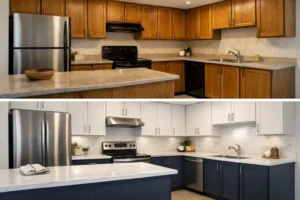
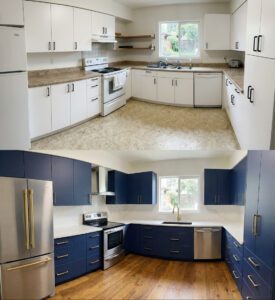
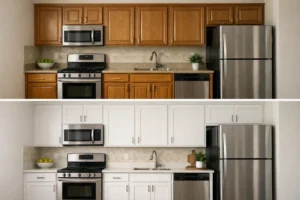
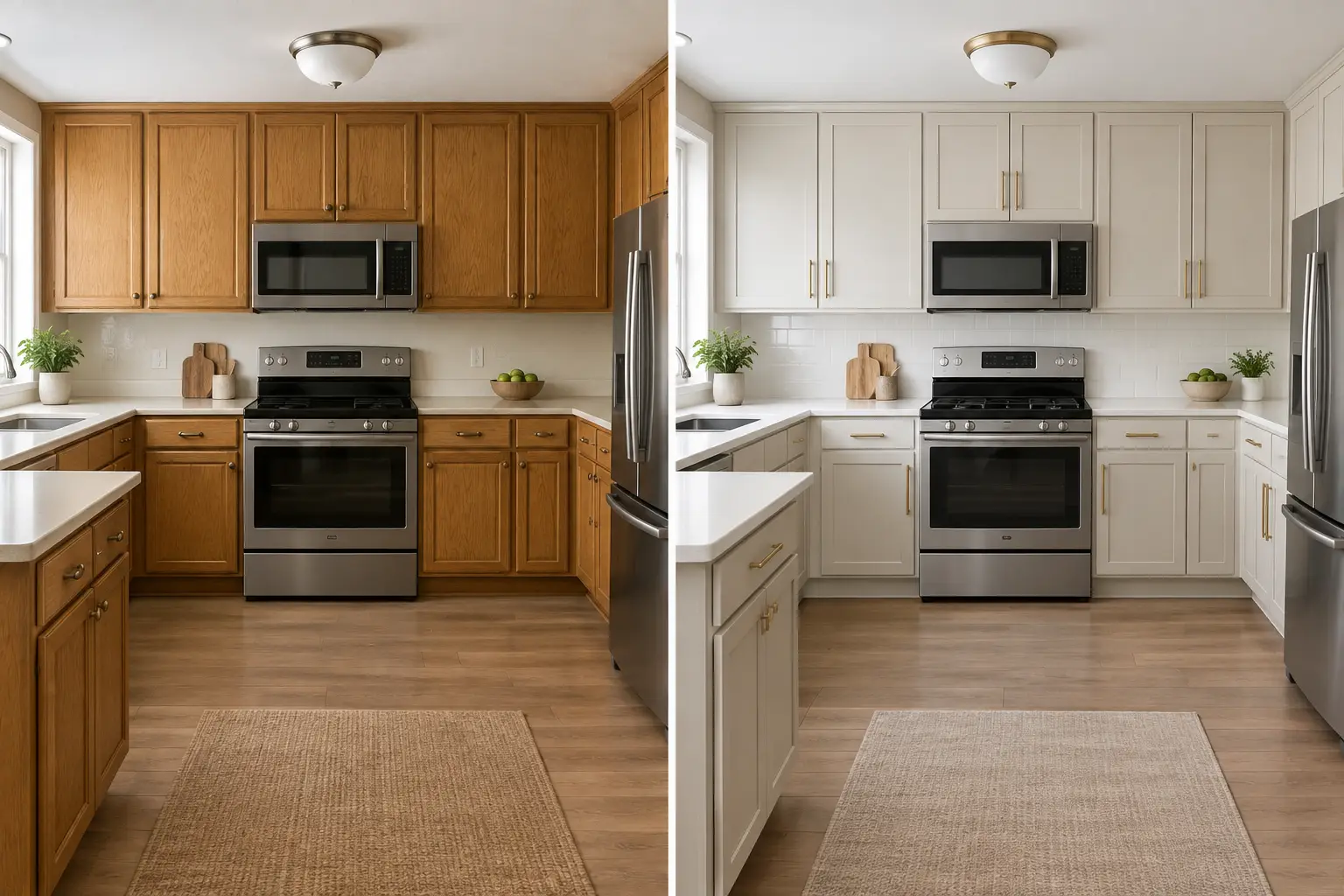
Refacing changes the visible surfaces of your kitchen. New custom doors and drawer fronts are installed, the cabinet frames are refinished or covered to match, and details such as hardware, molding, and trim bring the design together. The original cabinet boxes remain in place.
That last point is why the condition of the existing cabinetry matters so much. A strong cabinet box provides a dependable foundation for the new finish, doors, and hardware. Many older kitchens were built with sturdy materials and have plenty of life left in them, even when their door style or finish feels dated.
A professional assessment should look beyond appearances. Are the boxes level and securely fastened? Is there evidence of water damage beneath the sink or around the dishwasher? Are the sides, shelves, and face frames stable? Can drawer openings be adjusted to work with new drawer fronts or updated storage? These are the questions that determine whether refacing is the right investment.
If the cabinet structure is compromised by extensive moisture damage, sagging, or serious warping, refacing may not be the best path. Honest advice at the beginning protects both the finished result and your peace of mind.
The materials behind long-lasting results
Not all refacing materials perform the same way. Daily kitchen life involves fingerprints, steam, cooking residue, busy drawers, and the occasional bumped chair or dropped pan. Materials should be selected for more than their appearance in a sample.
Quality doors and drawer fronts should be made for repeated use, with durable finishes that are appropriate for the room. The finish on the cabinet frames matters just as much. A precise, well-bonded surface resists everyday wear better than a rushed application or poorly prepared substrate.
Hardware also plays a quiet but meaningful role in durability. Hinges that are properly fitted and adjusted help doors close cleanly rather than rubbing against one another. Drawer systems need to be aligned, supported, and matched to how the kitchen will be used. A deep drawer holding cookware has different demands than a shallow drawer for cutlery.
At Kitchen Facelift, custom-fit components are designed and manufactured in Canada, then professionally installed for the individual kitchen. That fit is not a small detail. Doors that sit evenly, drawer fronts that align, and trim that meets cleanly all help a refaced kitchen look polished now and continue to function well over time.
Moisture deserves special attention
Water is the most common threat to any kitchen cabinetry, whether it is refaced or brand new. A small leak under the sink can do more damage than years of normal use if it goes unnoticed. Before refacing, a careful installer should identify areas affected by moisture and address them appropriately.
Afterward, the same common-sense care applies: wipe up standing water promptly, repair plumbing leaks quickly, and avoid repeatedly soaking cabinet edges or seams. Good ventilation when cooking also helps limit prolonged exposure to steam and grease.
Installation is where durability is won or lost
Premium materials cannot compensate for imprecise installation. Refacing involves measurements, surface preparation, fitting, trimming, and adjustment. Each stage affects how the finished kitchen wears.
Cabinet frames must be clean, stable, and properly prepared before new surfaces are applied. Door and drawer placement needs to account for uneven floors, walls, or older cabinet boxes that have shifted slightly over decades. This is normal in established homes, but it takes experience to correct visually.
Professional installation also matters when your project includes practical changes. Perhaps you want to convert a door cabinet into drawers, remove a backsplash before installing new counters, or make space for a new appliance. These adjustments should be planned as part of the whole kitchen, not treated as afterthoughts.
A fast project should never mean a hurried one. When the work is carefully scoped in advance, many refacing transformations can be completed in two to three days with far less disruption than a full tear-out. That efficiency comes from preparation, accurate measurements, and a focused installation process.
How long can a refaced kitchen last?
There is no single number that applies to every kitchen because use, materials, installation quality, and maintenance all matter. But when strong existing cabinet boxes are paired with quality components and skilled installation, refacing is designed to be a long-term kitchen improvement, not a temporary visual fix.
Think about your household honestly. A kitchen used by a large, active family will show wear differently than one used lightly by two adults. Doors near the garbage pullout, dishwasher, and sink typically work harder than upper cabinets that store serving pieces. These realities do not make refacing less durable. They simply make thoughtful material selection and proper care more valuable.
Homeowners who have invested in granite or quartz countertops often find refacing especially worthwhile. Keeping stable cabinet boxes in place can avoid disturbing stone that is still in excellent condition, while new doors and finishes modernize the entire room around it.
Simple habits that protect your refaced cabinets
Caring for refaced cabinetry does not require a complicated routine. Use a soft cloth with a mild, non-abrasive cleaner, then dry the surface rather than leaving moisture behind. Avoid harsh scouring pads, abrasive powders, and strong solvents that can dull or damage finished surfaces.
Take a moment every few months to notice how doors and drawers are operating. If a hinge loosens or a drawer begins to rub, having it adjusted early can prevent unnecessary wear. Do not hang heavy items from cabinet doors, and use handles or pulls instead of repeatedly gripping door edges.
Just as importantly, treat leaks as urgent. Check beneath the sink occasionally, especially after plumbing work or appliance changes. A dry, well-maintained cabinet box is one of the best protections for the longevity of the entire refacing project.
When refacing is the durable choice
Refacing makes the most sense when you like your kitchen layout and the underlying cabinetry is in good shape. It is a particularly strong option for homeowners who want a meaningful visual transformation without discarding functional materials simply because the style has aged.
It may be less suitable when you need to move plumbing, substantially change the footprint, or replace cabinetry that has reached the end of its structural life. The right choice is not about forcing every kitchen into one solution. It is about assessing what your home needs and investing where it will make the greatest difference.
A well-refaced kitchen should feel settled, not superficial. The doors should close smoothly, the finish should look intentional from every angle, and the room should support the way you live. When the foundation is sound and the work is done with care, choosing to preserve what is good can be one of the most lasting decisions you make for your home.