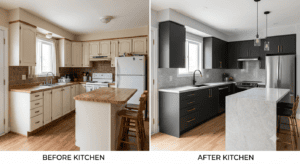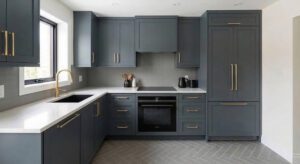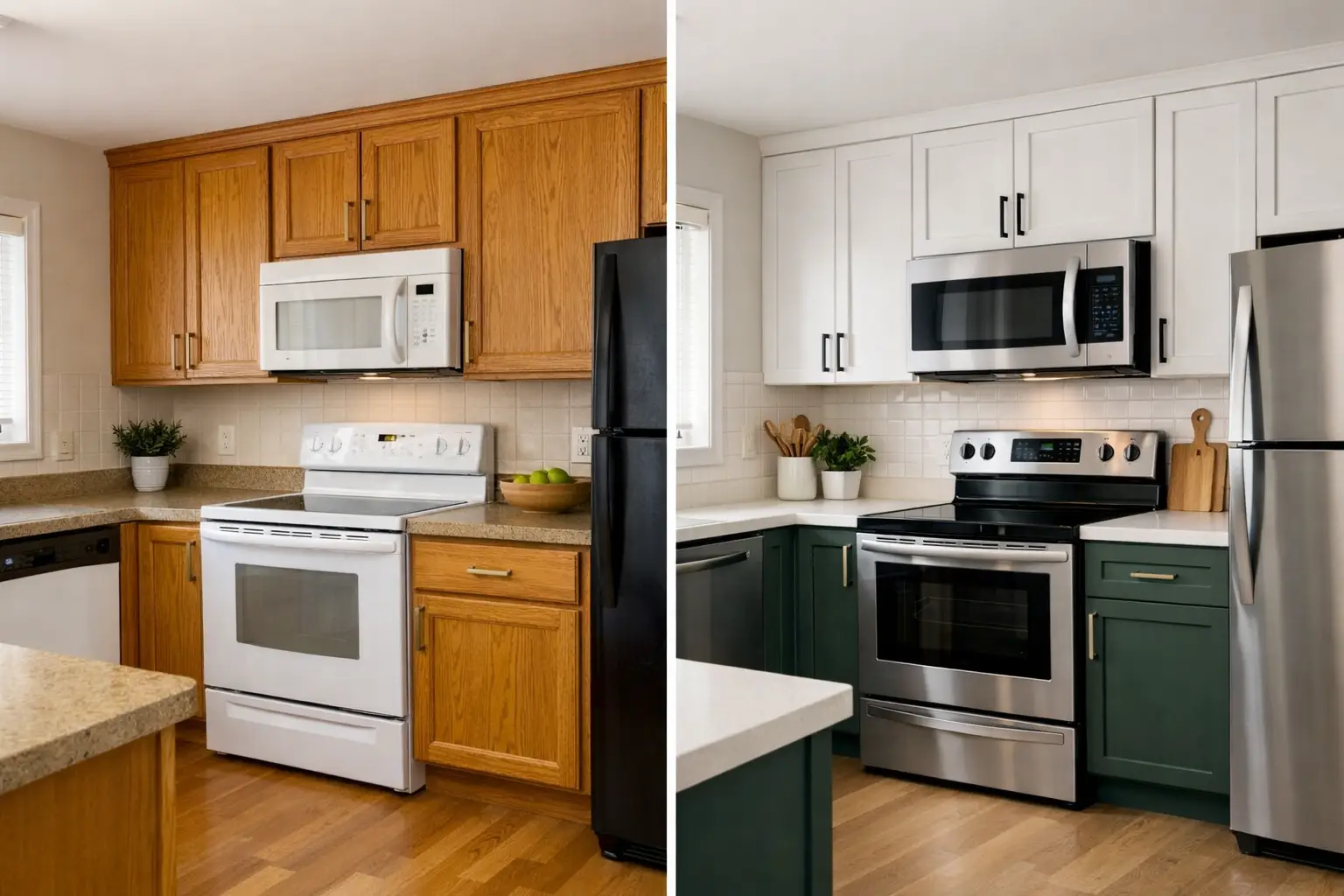
Those solid oak cabinet doors from the 1980s or 1990s may be the reason your kitchen feels dated. But the cabinet boxes behind them are often exceptionally well built: sturdy, properly installed, and still perfectly suited to the way your household uses the room. A solid wood cabinet makeover gives you a way to keep that strength while changing nearly everything you see and touch.
For homeowners who like their kitchen layout, a full tear-out can be more disruption than the project requires. If the boxes are sound, the smarter question is not, “Should we replace everything?” It is, “What needs to change for this kitchen to feel like ours again?”
Kitchen Facelift is your planning expert if you live in the Greater Hamilton Area.
Click to see the map for the area (Oakville to Hamilton to Niagara and north to Milton).
Start With What Is Worth Keeping
Older solid wood cabinetry has a reputation for lasting because it was often built to do exactly that. The boxes tend to be substantial, the shelving is dependable, and the layout has already proven itself through years of real family life. Replacing it all simply because the door style feels heavy or the finish feels dark is not always the best use of your renovation budget.
A thoughtful assessment comes first. Cabinet refacing is especially well suited when the cabinet boxes are level, structurally sound, and arranged in a footprint that still works. You can retain the storage locations you know, avoid unnecessary demolition, and create a dramatic visual change with custom-made doors, drawer fronts, panels, and finish details.
There are times when more extensive work is warranted. Water damage, failing boxes, a layout that creates daily frustration, or a need to move plumbing and walls can change the conversation. A good renovation partner should tell you that plainly. But when the foundation is strong, preserving it is a practical decision, not a compromise.
What a Solid Wood Cabinet Makeover Can Change
Refacing is not the same as putting a new coat of paint on old doors. Paint may be an option for certain projects, but it does not change a dated door profile, improve drawer function, or create the tailored finish of a professionally designed kitchen. A cabinet makeover through refacing is a more complete transformation of the visible surfaces.
New custom-fit doors and drawer fronts can take a kitchen from raised-panel oak to a clean shaker profile, a slim contemporary style, or a warm woodgrain look that feels current without being stark. The cabinet boxes are refinished or carefully matched so the finished kitchen reads as one cohesive design.
This is also the right moment to improve the details that affect daily use. Perhaps a bank of lower doors would serve your family better as deep drawers. Maybe a tired valance can be removed for a cleaner line, or a refrigerator surround needs adjusting to accommodate a new appliance. Those targeted changes can make the room function better without turning the project into a full reconstruction.
The best makeovers balance appearance with proportion. Bright white cabinetry can make a compact kitchen feel more open, while a soft greige or natural wood tone can bring warmth to a larger space. Hardware, lighting, backsplash, and countertop choices all matter, but they should support the cabinetry rather than compete with it.
Protect the Parts of Your Kitchen You Already Love
Many homeowners hesitate to renovate because they have already invested in a quartz or granite countertop. That concern is understandable. Countertop removal can introduce expense, risk, and disruption that may not be necessary.
With the right planning and precise measurements, cabinet refacing can be designed around existing stone. The goal is to refresh the cabinetry while respecting the countertop you chose and the investment it represents. If you are planning new quartz, the cabinet work can also be coordinated to prepare the kitchen for installation.
The same principle applies to the rest of your home. A well-managed makeover focuses demolition only where it is genuinely needed. That may mean removing an old backsplash, altering a cabinet for a new range, or converting selected doors to drawers. It does not mean treating a functional kitchen as disposable.
Choose Materials and Finishes for Real Life
A beautiful kitchen has to hold up to breakfasts before school, busy evenings, entertaining, and all the small moments in between. Door style is important, but material quality and installation are what help the finished space continue to feel good years later.
Custom Canadian-made doors and drawer fronts offer a level of fit that off-the-shelf components rarely achieve. They can be made to suit the exact dimensions of your cabinets, including unusual openings common in established homes. That precision matters around appliances, crown molding, corner cabinets, and countertop edges.
Finish selection should be honest about your household. A very dark finish can look striking, but may show dust or fingerprints more readily. A bright white kitchen can feel fresh and timeless, though the undertone needs to work with your flooring, backsplash, and existing stone. Textured woodgrain finishes can bring visual softness and are often forgiving in active homes.
A consultation with physical samples is more useful than choosing colors from a screen. Hold the door finish beside your countertop. Look at it in morning and evening light. Consider the rooms that connect to the kitchen. The right choice is the one that looks at home in your house, not merely the one that looked good in a photograph.
Expect a Process That Respects Your Home
The renovation experience matters as much as the finished kitchen. A solid wood cabinet makeover should not leave you wondering who is coming into your home, what will be removed, or how long your kitchen will be out of commission.
At Kitchen Facelift, each project begins with a practical conversation about your kitchen, goals, and budget range. Photos can provide a helpful starting point for a virtual estimate, followed by an in-home visit for precise measurements and material samples. That early clarity prevents surprises later and gives you space to make confident decisions.
Once the design is finalized and your custom components are ready, installation is efficient and focused. Most kitchen transformations are completed in two to three days. Your existing cabinet boxes stay in place, which is a major reason the work can move quickly compared with a full renovation.
There will still be some preparation. Clear your countertops, remove fragile items from nearby areas, and plan simple meals while work is underway. But the aim is straightforward: protect the home, limit the mess, and leave you with a kitchen that feels remarkably different without putting life on hold.
Know When Refacing Is the Right Fit
Refacing makes the most sense when you are satisfied with the kitchen’s basic footprint and want a major change in style, finish, and functionality. It is particularly appealing for homeowners who value the strength of their existing solid wood boxes, want to avoid unnecessary waste, or need a project completed on a manageable timeline.
It may be less suitable if you want to relocate the sink, remove walls, expand the room, or completely rethink where appliances live. Those goals can require construction beyond the scope of a cabinet refresh. There is no one right path for every kitchen. The right path is the one that solves the problems you actually have.
For many homes across the Golden Horseshoe, the answer is hiding in plain sight behind dated doors: a durable kitchen that does not need to be discarded. It needs a new face, a better fit for the way you live now, and craftsmanship that honors what was built well in the first place.
If you are looking at your solid wood cabinets and wondering whether they are worth saving, trust that instinct. Grab a cup of your favorite beverage, take a clear look at what works, and begin with a conversation about what your kitchen could become.