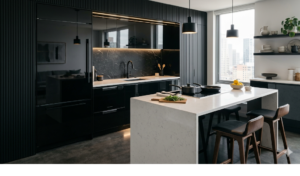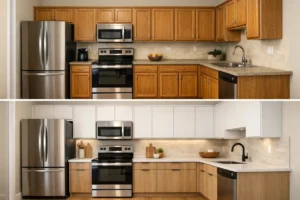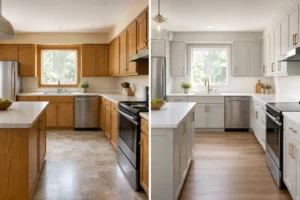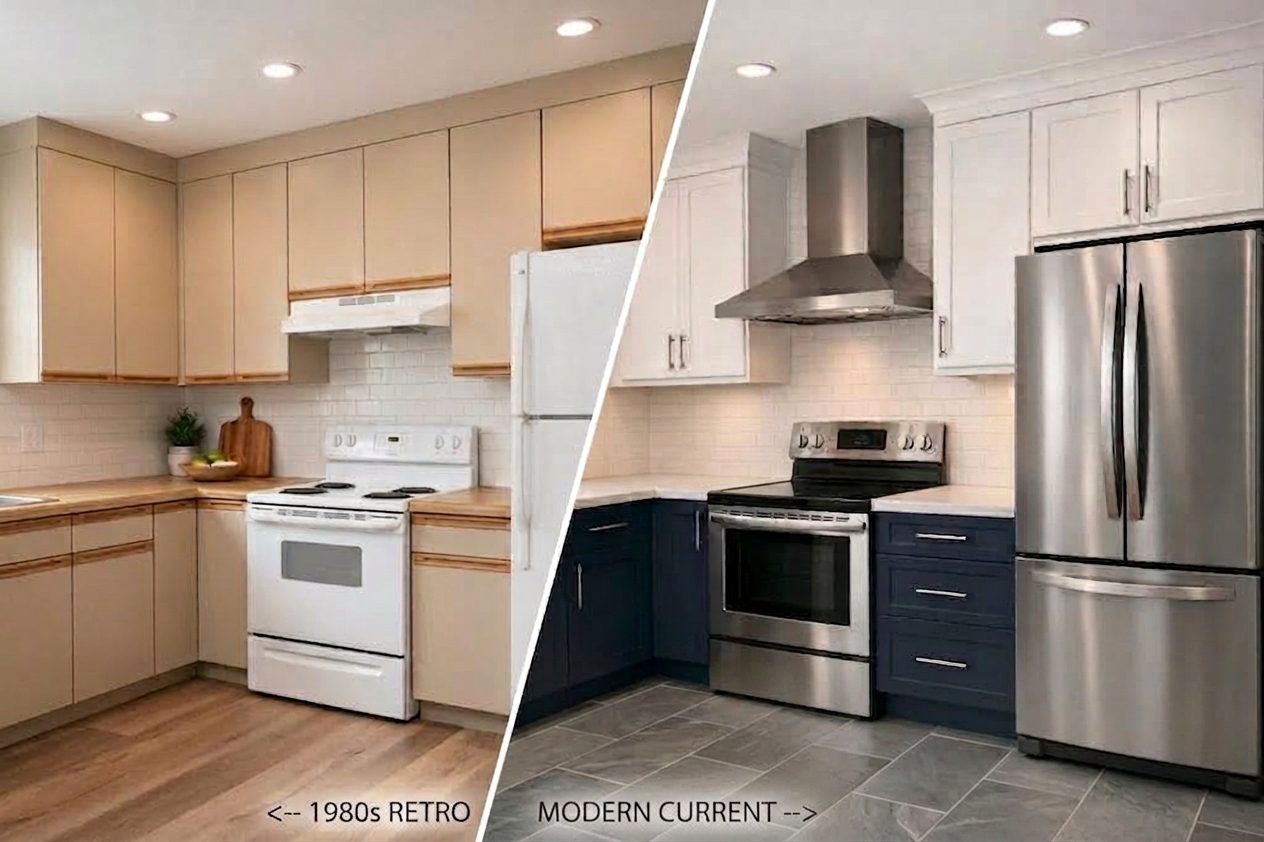
A kitchen can work perfectly well and still feel stuck in another decade. Honey-oak doors, dated pulls, shadowy task areas, and a backsplash that has seen better days can make the room feel tired, even when the cabinet boxes are solid. The best upgrades for older kitchens focus on what you see, touch, and use every day, while preserving the parts of the room that already serve your household well.
That distinction matters. A full renovation is the right path when the layout fails, plumbing needs to move, or cabinets are damaged beyond repair. But many 1980s and 1990s kitchens have well-built cabinetry and a functional footprint. In those cases, targeted improvements can create a dramatic change with far less disruption to your home.
Kitchen Facelift is your planning expert if you live in the Greater Hamilton Area.
Click to see the map for the area (Oakville to Hamilton to Niagara and north to Milton).
Start With the Cabinet Boxes, Not the Cabinet Doors
Before choosing a door style or a countertop, take an honest look at the cabinet structure. Open the doors. Check for water damage beneath the sink, swollen particleboard, loose joints, sagging shelves, and drawers that no longer operate properly. Solid, stable boxes are a valuable foundation, even if the doors and drawer fronts feel dated.
If the cabinetry is structurally sound and the layout works for your family, cabinet refacing is often the most meaningful upgrade available. The existing cabinet boxes remain in place, while new custom-fit doors, drawer fronts, and matching exterior finishes transform the visible surfaces. The result can feel like an entirely new kitchen without removing useful cabinetry simply because its style has changed.
Refacing also gives you the chance to correct small daily frustrations. A little-used lower cabinet can become deep drawers for pots and pans. An awkward door arrangement can be reworked for better access. These practical changes are often where an older kitchen starts feeling truly current, not merely redecorated.
The Best Upgrades for Older Kitchens, Prioritized
Not every kitchen needs every update. The strongest plans put the largest visual and functional improvements first, then add details that make the room feel considered.
1. New doors and drawer fronts
Doors occupy a large share of the kitchen’s visual space, which is why replacing them changes the room so quickly. A simple shaker profile brings a classic, tailored look to many homes, while a slimmer contemporary style can make a heavy older kitchen feel lighter. The right finish is just as important. Warm whites, natural wood looks, soft greiges, and deep accent colors each create a different mood.
Choose based on the home’s character, the amount of natural light, and your tolerance for visible fingerprints and wear. Very dark finishes can be striking but may show dust more readily. Bright white can feel fresh, though it benefits from balanced undertones in the countertop and backsplash.
2. A countertop that supports the new look
A new countertop is one of the clearest ways to move an older kitchen forward. Quartz remains a popular choice because it offers a clean, consistent appearance and stands up well to daily family life. It can also make a refaced kitchen feel fully integrated rather than like a collection of separate updates.
This upgrade deserves careful planning when you already own granite or quartz. A sound existing stone countertop may be worth keeping, especially if its color works with the new doors. In that case, select door samples against the actual slab, not under showroom lighting alone. If the countertop is being replaced, decide on the edge profile, sink, and faucet early so measurements and installation are coordinated properly.
3. A backsplash with a quieter visual rhythm
Older kitchens often have a busy backsplash, small decorative tiles, or a pattern that competes with everything around it. A new backsplash can calm the room and make the cabinetry the focus. Large-format tile, a softly veined stone look, or a simple handmade-style tile can all work beautifully.
The trade-off is maintenance. Highly textured tile and bright white grout can require more attention around the range. Larger tiles usually mean fewer grout lines, while a simpler finish provides a more timeless backdrop if you like changing accessories over the years.
4. Better lighting where work happens
A single ceiling fixture rarely provides enough useful light for chopping, reading recipes, or cleaning up at the end of the day. Under-cabinet lighting is one of the most satisfying upgrades in an older kitchen because it improves both function and atmosphere. It removes shadows from the counter and gives the room a warm evening glow.
Pair it with well-placed ceiling lighting and a statement fixture over an island or dining area, if your kitchen has one. Keep the color temperature consistent. Light that is too cool can make warm cabinet finishes look flat, while overly yellow light can change the appearance of white doors and countertops.
5. Storage that matches how you cook
A kitchen can have plenty of cabinets and still be frustrating to use. Older base cabinets frequently hide items behind deep, dark spaces, forcing you to kneel and reach past what is in front. Converting selected lower cabinets to drawers is a high-value improvement for households that cook often.
Consider where your everyday items naturally collect. Deep drawers near the range suit cookware. A pullout beside the prep area can hold oils and spices. Recycling and waste pullouts keep a busy area contained. The goal is not to add organizers everywhere. It is to make the items you use most easy to reach and easy to put away.
6. Hardware that feels substantial in the hand
Hardware is a finishing detail, but it can make a surprising difference. Replacing small, ornate knobs with longer pulls or clean-lined knobs gives doors a more intentional look. It also improves comfort, especially on wide drawers and integrated appliances.
Finish selection should relate to the faucet, lighting, and nearby finishes without requiring an exact match. Matte black offers contrast in a light kitchen. Brushed nickel is restrained and familiar. Warm brass can add character, particularly with wood tones or creamy painted cabinetry. Before committing, view samples in the kitchen at different times of day.
7. A sink and faucet that earn their space
A worn faucet is more than a cosmetic issue. A modern pull-down faucet, a deeper single-bowl sink, or a well-sized double-bowl option can improve cleanup every day. The best choice depends on how you use the kitchen. A large single bowl handles sheet pans and big pots easily, while separate bowls suit households that like to wash and rinse at the same time.
Do not treat the faucet as an afterthought. Its finish, scale, and placement need to work with the backsplash, window location, and countertop configuration.
8. Appliance updates planned around the cabinetry
New appliances can make an older kitchen feel current, but they should be planned as part of the whole upgrade. Measure carefully, including door swing, ventilation clearances, and the depth of a new refrigerator. A slightly deeper appliance can disrupt a walkway or protrude beyond surrounding cabinetry more than expected.
If you are refacing, appliance changes may require thoughtful adjustments to panels, openings, or surrounding cabinets. Planning them together avoids the look of an appliance that was squeezed into a kitchen designed for something else.
9. Fresh wall color and a finished perimeter
Once the cabinets, stone, and tile are selected, wall color becomes easier to choose. Paint is not the main event, but the wrong undertone can make new finishes feel disconnected. Test large samples beside the cabinets and backsplash in morning, afternoon, and evening light.
Finish the room with details that older kitchens often lack: clean trim, repaired drywall, and a purposeful transition where cabinets meet walls or ceilings. These quiet improvements help the transformation feel complete.
When Refacing Is the Smarter First Move
A beautiful kitchen does not require unnecessary demolition. If your footprint is practical, cabinet boxes are in good condition, and major services do not need to move, refacing can direct your investment toward the parts of the kitchen that change your daily experience most.
It is also a considerate choice for a lived-in home. Rather than turning the kitchen into a long-term construction zone, a professionally planned refacing project can often be completed in two to three days, depending on the scope. That matters for busy families, homeowners preparing to sell, and anyone who wants their home treated with care.
Kitchen Facelift helps homeowners across Ontario’s Golden Horseshoe assess these decisions with real samples, precise measurements, and a plan tailored to the cabinets they already have. The right answer is never a standard package. It is the combination of upgrades that respects your home, your routines, and the value already built into your kitchen.
Before you choose finishes, stand in your kitchen during a normal weekday evening. Notice where people gather, what you reach for, where the light falls short, and which parts still work beautifully. That is where a lasting transformation begins.