Quartz counters earn their place in a busy kitchen. They have a polished, consistent look, stand up well to everyday use, and do not need the regular sealing that natural stone requires. Still, knowing how to protect quartz countertops matters. A few practical habits can prevent the dull spots, stains, chips, and heat damage that take away from an otherwise beautiful kitchen.
The good news is that quartz care is not demanding. You do not need specialty routines or a cabinet full of products. You need the right daily approach, a little restraint around heat and harsh chemicals, and an understanding of what quartz can and cannot handle.
Kitchen Facelift is your planning expert if you live in the Greater Hamilton Area.
Click to see the map for the area (Oakville to Hamilton to Niagara and north to Milton).
How to Protect Quartz Countertops From Daily Wear
Engineered quartz is made from crushed natural quartz combined with resins and pigments. That resin content gives the surface its nonporous finish, which is why most spills stay on the surface rather than soaking in. It also means quartz responds differently than granite or marble when exposed to high heat, strong cleaners, or direct cutting.
For daily cleaning, use a soft cloth or nonabrasive sponge with warm water and a small amount of mild dish soap. Wipe the surface dry afterward, especially around the sink and faucet, where minerals in hard water can leave a cloudy film over time. A clean microfiber cloth is usually all you need to restore the counter’s natural sheen.
The simplest protection is also the most effective: wipe up spills when they happen. Coffee, tea, cooking oil, tomato sauce, red wine, and fruit juice are unlikely to penetrate a quality quartz surface immediately, but leaving residue to dry can create stubborn marks or a sticky buildup. The same goes for toothpaste, hand soap, and cosmetics on a bathroom vanity.
If something has dried onto the counter, soften it first with warm, soapy water. Then gently lift it with a plastic scraper held at a low angle. Avoid metal blades or aggressive scraping. They can leave fine scratches or damage the finish near seams and edges.
Use Cutting Boards, Even on Durable Quartz
Quartz is hard, but it is not a cutting board. Chopping directly on the surface can dull knives and may leave scratches, especially along a polished finish or at the edge of an overhang. It also creates an unnecessary food-prep concern, since knife marks can hold residue that is harder to clean thoroughly.
Keep a cutting board close to the prep area and use it every time. This is one of those small kitchen habits that protects both your counters and your knives. For families who cook often, a large wood or composite board can stay out as a useful, attractive work surface.
Keep Heat Away From the Surface
Heat is one of the most common causes of avoidable quartz damage. The stone portion of quartz is heat resistant, but the resins that bind it can be affected by sudden or sustained high temperatures. A hot pot placed directly from the stove, a cast-iron skillet, a slow cooker, or an air fryer venting heat in one spot can leave discoloration, dullness, or cracking in severe cases.
Use trivets, hot pads, or a cooling rack under hot cookware. This matters near the range, but also beside the oven, where a baking sheet may be set down in a hurry. If you are hosting, set out a trivet before serving dishes reach the table or island.
Small appliances deserve some thought as well. Toasters, electric griddles, pressure cookers, and air fryers can produce concentrated heat and steam. Place them where there is airflow and avoid pushing them directly against a backsplash or under upper cabinets. A heat-resistant mat can help, but following the appliance manufacturer’s clearance guidance is the safer choice.
Avoid Cleaners That Can Dull Quartz
A stronger cleaner does not necessarily mean a cleaner countertop. Quartz does best with mild, pH-balanced products. Repeated exposure to harsh chemicals can break down or discolor the resin binder, leaving patches that look dull, faded, or uneven.
Skip oven cleaner, drain cleaner, paint stripper, concentrated bleach, highly acidic cleaners, and strongly alkaline degreasers. Abrasive powders and scouring pads are not a good fit either. They may seem useful for a stubborn mark, but they can change the surface finish rather than solve the underlying problem.
Be mindful of products that are not intended for countertops. Nail polish remover, permanent marker, hair dye, iodine, and some household adhesives can cause staining or damage if left sitting. If one of these spills, wipe it up promptly, rinse with water, and use the countertop manufacturer’s approved cleaning method if a mark remains.
There is one useful rule when choosing a cleaner: if you would hesitate to use it on a glossy finished surface, do not use it on quartz without checking the label. When in doubt, mild dish soap and water are still the dependable first step.
Prevent Chips at Edges and Around the Sink
Most quartz countertop chips happen at exposed edges, corners, and cutouts rather than across the main surface. A heavy pot knocked into an island corner or a cast-iron pan dropped near the sink can cause damage that is difficult to make invisible.
Take particular care when unloading cookware, moving small appliances, or working around an undermount sink. Do not use the countertop edge to crack open a jar lid or support a heavy object. If you have young children who pull stools up to the island, rounded edges can be more forgiving, but they still need the same day-to-day care.
A professional repair may improve a small chip, depending on the color, pattern, location, and finish of the slab. But prevention is always the better route. Treat exposed edges as a finished furniture surface, not a utility ledge.
Do Quartz Countertops Need to Be Sealed?
In most cases, no. Unlike many natural stone counters, engineered quartz is nonporous and does not require routine sealing. Applying a stone sealer without the countertop manufacturer’s approval can leave streaks, haze, or residue that is difficult to remove.
This is an easy point of confusion because countertop care advice is often written as though every stone surface behaves the same way. Granite, marble, quartzite, and engineered quartz each have different care needs. Your specific manufacturer’s care instructions should always take priority, particularly if your countertop has a specialty finish or a warranty requirement.
Protect Quartz During a Kitchen Update
If you already have quartz countertops and are refreshing the rest of the kitchen, planning makes a meaningful difference. Countertops are heavy, precisely fitted, and vulnerable at seams, edges, and sink cutouts when nearby work is rushed.
Before cabinet refacing, backsplash removal, appliance changes, or new flooring, ask how the countertop will be covered and protected. A proper work plan should account for dust control, safe removal of adjacent materials, and the condition of the cabinets supporting the stone. Quartz needs a stable, level foundation. If cabinetry shifts or is altered without proper assessment, stress can transfer to the countertop.
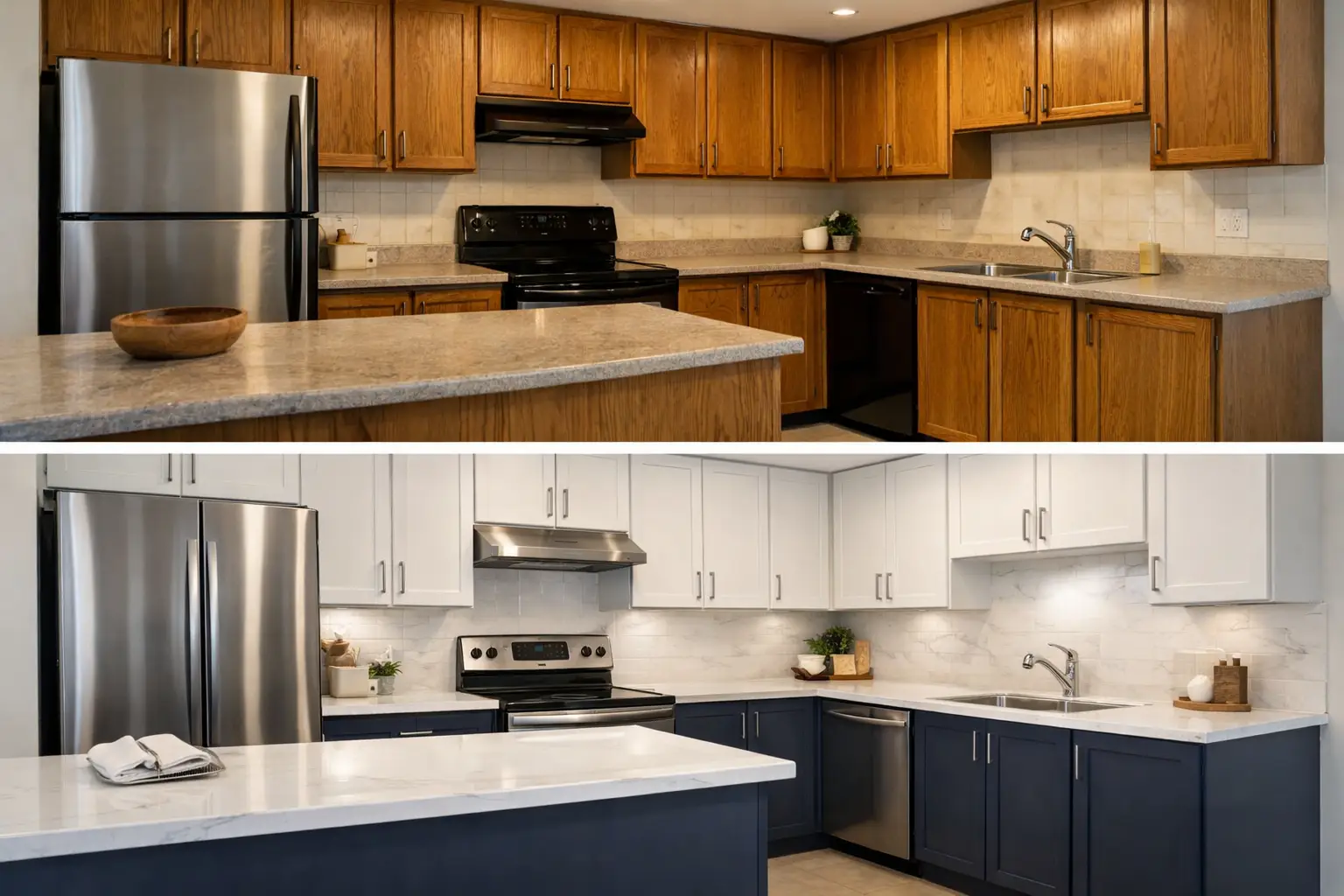
This is one reason a thoughtful kitchen refresh can be the right path when the existing layout and counters still work well. At Kitchen Facelift, countertop protection is part of respecting the home and the investment already in place. The goal is to transform the cabinetry around a quartz surface without treating that surface as an afterthought.
Watch Sun Exposure and Standing Water
Most interior quartz performs well in naturally bright kitchens, but long-term direct ultraviolet exposure can affect certain colors or resin formulations. If a counter receives intense sun through a large window or patio door every afternoon, shades, blinds, or UV-filtering window treatments can help protect the finish and surrounding cabinetry alike.
Standing water is less of a threat to quartz itself than to the areas around it. Dry the counter near seams, faucets, and backsplash joints, and address failing caulk promptly. This helps protect cabinet boxes, wall materials, and sink supports from moisture that can travel where you cannot see it.
A Simple Routine That Keeps Quartz Looking New
A well-cared-for quartz countertop does not need much attention. Clean it after meal prep, use a cutting board, place hot cookware on a trivet, and save strong chemicals for the surfaces they were made to clean. Once a week, take a moment to wipe around the faucet, edges, and backsplash line where residue tends to collect.
If you notice a stubborn stain, a new dull spot, a chip, or a crack, avoid experimenting with harsh products. Take a photo, check your manufacturer’s care guidance, and speak with a qualified countertop professional if needed. Early advice can prevent a small issue from becoming a lasting distraction.
Your kitchen should make daily life easier, not give you another delicate surface to worry about. With sensible care and a little protection in the high-use zones, quartz can keep looking polished through years of breakfasts, family dinners, holiday baking, and everything in between.